


As a supplier of Integrated Stepper Motors, I often get asked about how to test the performance of these motors. It's a crucial step, whether you're a manufacturer looking to ensure quality control or an end - user wanting to make sure you're getting the best out of your motor. In this blog, I'll walk you through the key steps and methods for testing the performance of an Integrated Stepper Motor.
Understanding the Basics of Integrated Stepper Motors
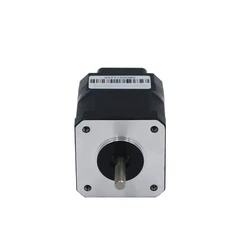
Before we dive into the testing process, let's quickly go over what an Integrated Stepper Motor is. It combines a stepper motor with a driver, controller, and sometimes even additional features like sensors. This integration simplifies the setup and operation, making it a popular choice in many applications such as robotics, 3D printers, and CNC machines.
We offer different types of Integrated Stepper Motors, like the Integrated Dc Motor, CAN Bus Control Integrated Stepper Motor, and Closed Loop Stepper Integrated Motor. Each type has its own unique characteristics and performance requirements.
Pre - Test Preparation
First things first, you need to do some pre - test preparation. This includes getting all the necessary equipment. You'll need a power supply that can provide the appropriate voltage and current for your motor. Make sure it's stable, as fluctuations can affect the test results.
You'll also need a motor driver that's compatible with your Integrated Stepper Motor. Check the datasheet of your motor to find out the recommended driver specifications. And don't forget about a controller. It can be a simple microcontroller or a more advanced motion controller, depending on your testing needs.
Another important thing is to set up a proper testing environment. The temperature and humidity can impact the motor's performance. Try to keep the testing area at a stable temperature, around 20 - 25 degrees Celsius, and a moderate humidity level.
Testing the Electrical Characteristics
The electrical characteristics of an Integrated Stepper Motor are fundamental to its performance. One of the first things you should test is the resistance of the motor windings. You can use a multimeter to measure the resistance between the motor's phases. Compare the measured values with the specifications in the datasheet. If the resistance is too high or too low, it could indicate a problem with the windings, like a short - circuit or an open - circuit.
Next, test the inductance of the windings. Inductance affects the motor's response time and torque. You can use an LCR meter to measure the inductance. Again, refer to the datasheet to see if the measured value is within the acceptable range.
Also, check the insulation resistance. This is important for safety and preventing electrical leakage. Use a megohmmeter to measure the insulation resistance between the motor windings and the motor frame. A low insulation resistance could lead to electrical failures or even pose a safety hazard.
Torque Testing
Torque is one of the most important performance indicators of a stepper motor. There are a few ways to test the torque. One common method is to use a torque sensor. You can connect the torque sensor to the motor shaft and then load the motor gradually.
Start by applying a small load and measure the torque output at different step frequencies. As you increase the load, the motor's torque output will change. Plot a torque - speed curve based on your measurements. This curve will show you how the motor's torque varies with speed.
Another way to test torque is through a static torque test. In this test, you lock the motor shaft and apply a gradually increasing load until the motor starts to move. The maximum load that the motor can withstand before moving is the holding torque. This value is important for applications where the motor needs to hold a position without moving.
Speed and Acceleration Testing
Testing the speed and acceleration of an Integrated Stepper Motor is also crucial. You can use an encoder to measure the motor's speed accurately. Connect the encoder to the motor shaft and then use a speed controller to vary the motor's speed.
Measure the motor's speed at different step frequencies and compare it with the expected values. You can also test the acceleration and deceleration times. Start the motor from rest and measure how long it takes to reach a certain speed. Then, stop the motor and measure the deceleration time.
A smooth and accurate speed and acceleration performance is essential for applications that require precise motion control, like in robotics and 3D printing.
Step Accuracy Testing
Step accuracy is what makes stepper motors so popular in many applications. To test the step accuracy, you can use a high - resolution encoder. The encoder will measure the actual movement of the motor shaft for each step command.
Send a series of step commands to the motor and compare the actual movement with the expected movement. Calculate the step error, which is the difference between the actual and expected movement. A low step error indicates a high - accuracy motor.
Thermal Testing
Stepper motors can generate heat during operation, and excessive heat can affect their performance and lifespan. You can use a thermal camera or a temperature sensor to monitor the motor's temperature.
Run the motor at different loads and speeds for a certain period of time and record the temperature changes. Make sure the motor doesn't overheat. If the temperature rises too high, it could lead to a decrease in torque and even damage the motor.
Noise and Vibration Testing
Noise and vibration can be a sign of a problem with the motor or its operation. You can use a sound level meter to measure the noise level generated by the motor during operation. Compare the noise level with the acceptable values in the datasheet.
For vibration testing, you can use a vibration sensor. Mount the vibration sensor on the motor and measure the vibration amplitude and frequency. Excessive vibration could indicate issues like misalignment, unbalanced loads, or mechanical problems inside the motor.
Conclusion
Testing the performance of an Integrated Stepper Motor is a comprehensive process that involves checking various aspects, from electrical characteristics to mechanical performance. By following the steps and methods I've outlined in this blog, you can ensure that your motor is performing at its best.


If you're in the market for high - quality Integrated Stepper Motors or need more information about testing and optimizing their performance, feel free to reach out for a procurement discussion. We're here to help you find the best motor solutions for your applications.
References
- "Stepper Motor Handbook", published by a leading motor technology research institute.
- Technical datasheets of various Integrated Stepper Motors.


