


In the realm of geological sample analysis, precision and efficiency are of utmost importance. Scientists and researchers often rely on advanced equipment to obtain accurate data and insights from geological specimens. One such piece of equipment that has gained significant attention is the motorized lab jack. As a leading supplier of motorized lab jacks, I am often asked whether these devices can be effectively used for geological sample analysis. In this blog post, I will explore the potential applications of motorized lab jacks in geological research and discuss their benefits and limitations.
Understanding Motorized Lab Jacks
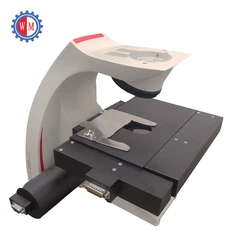
Before delving into their use in geological sample analysis, it is essential to understand what motorized lab jacks are and how they work. A motorized lab jack is a device that provides precise vertical movement, allowing users to adjust the height of a sample or instrument with great accuracy. These jacks are typically equipped with a motorized drive system, which enables smooth and controlled motion. They are commonly used in laboratory settings for a variety of applications, including microscopy, spectroscopy, and sample preparation.
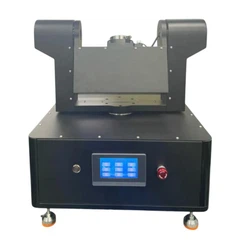
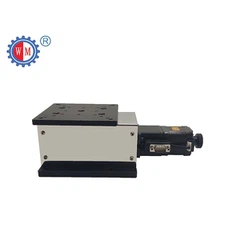
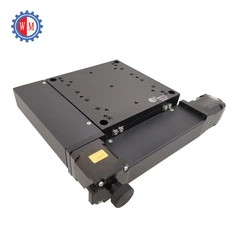
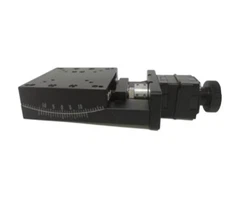
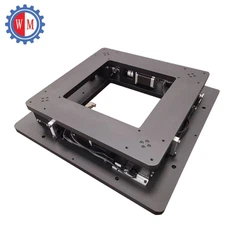
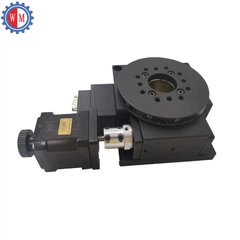
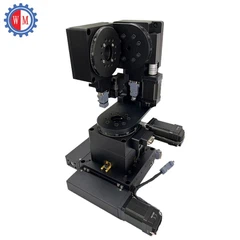
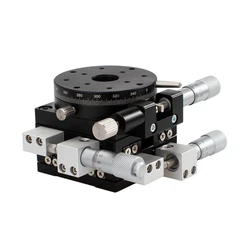
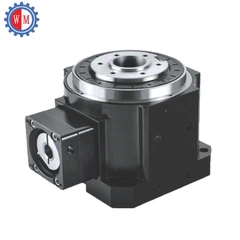
There are several types of motorized lab jacks available on the market, each with its own unique features and capabilities. Some of the most common types include the Motor Z Translation Stage, Motorized Lift Stage, and Short Travel Motor Elevating Stage. These stages differ in terms of their travel range, load capacity, and precision, allowing users to choose the one that best suits their specific needs.
Applications of Motorized Lab Jacks in Geological Sample Analysis
Motorized lab jacks offer several advantages that make them well-suited for geological sample analysis. One of the primary applications of these devices is in the preparation of thin sections. Thin sections are slices of rock or mineral samples that are typically less than 30 micrometers thick. They are used in petrographic analysis to study the mineralogy, texture, and structure of geological specimens under a microscope.
In the preparation of thin sections, motorized lab jacks can be used to precisely position the sample during the cutting, grinding, and polishing processes. The precise vertical movement provided by the jack allows for accurate control of the thickness of the section, ensuring that it is uniform and suitable for microscopic examination. This precision is crucial in obtaining high-quality thin sections that can provide valuable information about the geological history and composition of the sample.
Another application of motorized lab jacks in geological sample analysis is in the field of scanning electron microscopy (SEM). SEM is a powerful imaging technique that uses a beam of electrons to produce high-resolution images of the surface of a sample. In SEM analysis, motorized lab jacks can be used to position the sample accurately in the electron beam path, allowing for detailed examination of the sample's surface morphology and elemental composition.
The precise vertical movement provided by the motorized lab jack enables users to focus the electron beam on specific areas of the sample, enhancing the quality of the images obtained. This is particularly useful in the study of fine-grained geological materials, where small variations in surface topography can provide important clues about the sample's formation and history.
Motorized lab jacks can also be used in the analysis of geological samples using other techniques, such as X-ray diffraction (XRD) and energy-dispersive X-ray spectroscopy (EDS). In XRD analysis, motorized lab jacks can be used to position the sample in the X-ray beam path, allowing for the determination of the crystal structure and mineral composition of the sample. In EDS analysis, motorized lab jacks can be used to position the sample in the electron beam path, enabling the detection and quantification of the elemental composition of the sample.
Benefits of Using Motorized Lab Jacks in Geological Sample Analysis
The use of motorized lab jacks in geological sample analysis offers several benefits that can enhance the efficiency and accuracy of the research process. One of the primary benefits is the increased precision and control provided by these devices. The motorized drive system allows for smooth and controlled vertical movement, enabling users to adjust the height of the sample with great accuracy. This precision is essential in obtaining high-quality data and results, particularly in applications where small variations in sample position can have a significant impact on the analysis.


Another benefit of using motorized lab jacks is the improved reproducibility of the analysis. The precise vertical movement provided by the jack ensures that the sample is positioned in the same location for each measurement, reducing the variability in the data and increasing the reliability of the results. This is particularly important in geological research, where the ability to reproduce experimental results is crucial for validating hypotheses and drawing conclusions.
Motorized lab jacks also offer increased efficiency in the research process. The automated vertical movement provided by the jack eliminates the need for manual adjustment of the sample position, saving time and reducing the risk of human error. This allows researchers to focus on the analysis of the sample rather than the mechanics of positioning it, increasing the productivity of the research team.
In addition to these benefits, motorized lab jacks are also relatively easy to use and maintain. The user-friendly interface and controls make it easy for researchers to operate the device, even with minimal training. The robust construction and high-quality components ensure that the jack is durable and reliable, reducing the need for frequent repairs and replacements.
Limitations of Using Motorized Lab Jacks in Geological Sample Analysis
While motorized lab jacks offer several benefits for geological sample analysis, they also have some limitations that should be considered. One of the primary limitations is the cost of these devices. Motorized lab jacks are typically more expensive than their manual counterparts, which can be a significant factor for researchers working with limited budgets.
Another limitation is the limited travel range of some motorized lab jacks. In some applications, such as the analysis of large geological samples, a greater travel range may be required. In these cases, a more specialized motorized lab jack or a different type of positioning device may be necessary.
Finally, motorized lab jacks may not be suitable for all types of geological samples. Some samples may be too large, heavy, or irregularly shaped to be easily positioned using a motorized lab jack. In these cases, alternative methods of sample preparation and analysis may need to be considered.
Conclusion
In conclusion, motorized lab jacks can be effectively used for geological sample analysis, offering increased precision, control, reproducibility, and efficiency. These devices are particularly useful in applications such as thin section preparation, SEM analysis, XRD analysis, and EDS analysis. However, they also have some limitations, such as cost, limited travel range, and suitability for certain types of samples.
As a supplier of motorized lab jacks, I am committed to providing high-quality products that meet the needs of researchers in the geological sciences. Our range of motorized lab jacks includes the Motor Z Translation Stage, Motorized Lift Stage, and Short Travel Motor Elevating Stage, each offering unique features and capabilities to suit different applications.
If you are interested in learning more about the use of motorized lab jacks in geological sample analysis or would like to discuss your specific requirements, please do not hesitate to contact us. Our team of experts is available to provide you with detailed information and assistance in selecting the right motorized lab jack for your research needs. We look forward to the opportunity to work with you and contribute to the advancement of geological research.
References
- Adams, J. M., & MacKenzie, W. S. (1998). Petrographic Microscopy: Principles and Practice. Longman.
- Goldstein, J. I., Newbury, D. E., Echlin, P., Joy, D. C., Romig, A. D., Lyman, C. E., … & Fiori, C. E. (2003). Scanning Electron Microscopy and X-Ray Microanalysis. Springer.
- Klug, H. P., & Alexander, L. E. (1974). X-Ray Diffraction Procedures for Polycrystalline and Amorphous Materials. Wiley.


