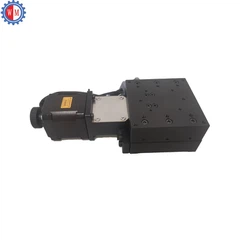
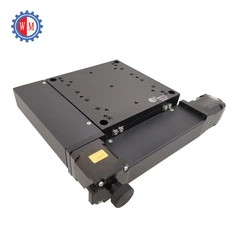
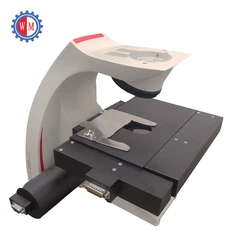
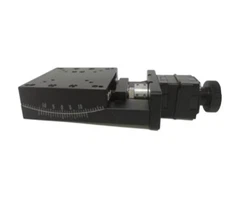
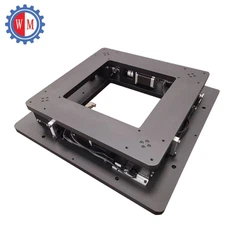
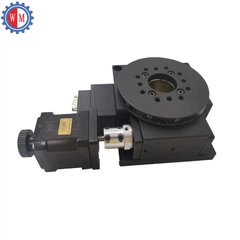
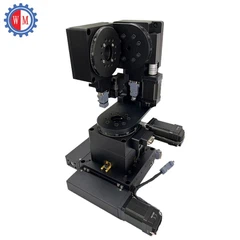
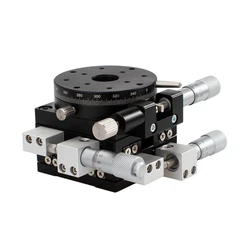


As a supplier of Manual Z - Axis stages, I often encounter various inquiries from customers, and one question that frequently arises is whether manual Z - Axis stages can be used in high - temperature environments. This is a crucial topic as different industrial applications have diverse environmental requirements, and high - temperature conditions are common in many manufacturing and research settings.
Understanding Manual Z - Axis Stages
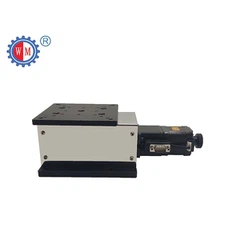
Before delving into the compatibility of manual Z - Axis stages with high - temperature environments, let's first understand what manual Z - Axis stages are. Manual Z - Axis stages, also known as Manual Vertical Stage, are mechanical devices designed to provide precise vertical movement. They are widely used in microscopy, semiconductor manufacturing, optical alignment, and other fields where accurate positioning along the Z - axis is required.
These stages typically consist of a base, a moving platform, and a mechanism for manual adjustment. The adjustment mechanism can be a screw, a knob, or a lever, allowing users to control the vertical position of the platform with a certain degree of precision. The simplicity and reliability of manual Z - Axis stages make them a popular choice in many applications.


Challenges of High - Temperature Environments
High - temperature environments pose several challenges to mechanical components, including manual Z - Axis stages. One of the primary issues is thermal expansion. Most materials expand when heated, and this expansion can cause dimensional changes in the stage components. For example, the screw or the guide rails of the stage may expand, leading to changes in the pitch of the screw or the clearance between the moving parts. These dimensional changes can affect the accuracy and smoothness of the stage movement.
Another challenge is the degradation of materials. High temperatures can accelerate the oxidation and corrosion of metals, which can weaken the structural integrity of the stage. In addition, some lubricants used in the stage may lose their viscosity or even evaporate at high temperatures, resulting in increased friction and wear between the moving parts.
Compatibility of Manual Z - Axis Stages with High - Temperature Environments
Whether manual Z - Axis stages can be used in high - temperature environments depends on several factors, including the design of the stage, the materials used, and the specific temperature range.
Design Considerations
Some manual Z - Axis stages are designed with features that enhance their resistance to high temperatures. For example, the stage may have a heat - resistant coating on the surface to protect the underlying materials from oxidation and corrosion. The design may also incorporate thermal insulation to reduce the heat transfer from the environment to the critical components of the stage.
Material Selection
The choice of materials is crucial for the performance of manual Z - Axis stages in high - temperature environments. Some metals, such as stainless steel and titanium, have good heat resistance and can maintain their mechanical properties at relatively high temperatures. Ceramic materials are also an option, as they have low thermal expansion coefficients and excellent heat resistance. However, the use of these materials may increase the cost of the stage.
Temperature Range
The maximum temperature that a manual Z - Axis stage can withstand depends on its design and materials. In general, most standard manual Z - Axis stages are designed for use in normal temperature environments, typically between - 20°C and 60°C. However, there are specialized stages that can operate at much higher temperatures, up to several hundred degrees Celsius.
Applications in High - Temperature Environments
Despite the challenges, there are still many applications where manual Z - Axis stages can be used in high - temperature environments.
Semiconductor Manufacturing
In semiconductor manufacturing, high - temperature processes such as annealing and diffusion are common. Manual Z - Axis stages can be used for wafer handling and alignment in these processes. By using heat - resistant materials and proper design, the stages can maintain their accuracy and reliability even in high - temperature chambers.
Material Testing
In material testing laboratories, high - temperature furnaces are used to study the properties of materials under extreme conditions. Manual Z - Axis stages can be used to position specimens in the furnace for accurate measurement and analysis.
Glass Processing
In the glass processing industry, high - temperature environments are required for processes such as glass melting and shaping. Manual Z - Axis stages can be used to position glass substrates or tools during these processes.
Mitigating the Effects of High Temperatures
If you need to use manual Z - Axis stages in high - temperature environments, there are several measures you can take to mitigate the effects of high temperatures.
Cooling
One of the most effective ways to reduce the temperature of the stage is to use cooling systems. For example, water - cooled jackets can be installed around the stage to dissipate heat. Air - cooling systems can also be used, especially in applications where water is not suitable.
Lubrication
Using high - temperature lubricants is essential to reduce friction and wear between the moving parts of the stage. These lubricants are designed to maintain their viscosity and lubricating properties at high temperatures.
Monitoring and Maintenance
Regular monitoring and maintenance are necessary to ensure the long - term performance of manual Z - Axis stages in high - temperature environments. This includes checking the dimensional accuracy of the stage, the condition of the lubricants, and the integrity of the materials. Any signs of wear or damage should be addressed promptly to prevent further deterioration.
Conclusion
In conclusion, manual Z - Axis stages can be used in high - temperature environments, but it requires careful consideration of the design, materials, and temperature range. By choosing the right stage and taking appropriate measures to mitigate the effects of high temperatures, you can ensure the accurate and reliable operation of the stage in high - temperature applications.
If you are looking for manual Z - Axis stages for high - temperature environments, we are here to help. Our company offers a wide range of manual Z - Axis stages with different designs and materials to meet your specific requirements. Contact us to discuss your needs and explore the best solutions for your applications.
References
- "Mechanical Design Handbook for High - Temperature Applications", McGraw - Hill
- "Semiconductor Manufacturing Technology", Prentice Hall
- "Materials Science and Engineering: An Introduction", John Wiley & Sons


