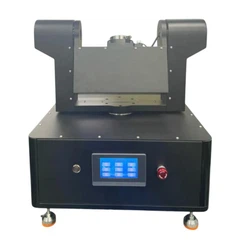
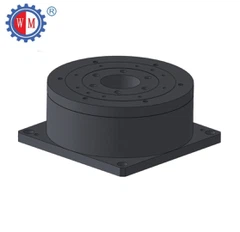
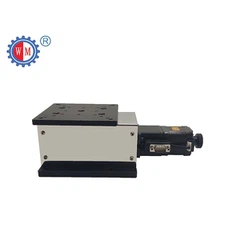
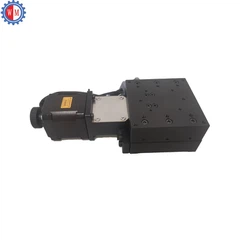
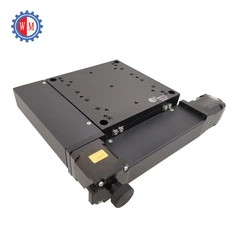
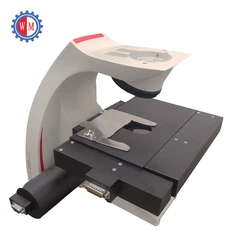
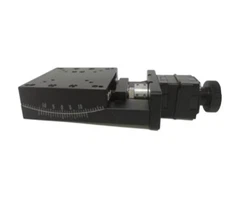
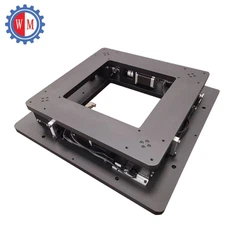
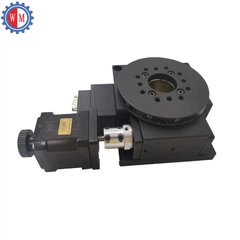
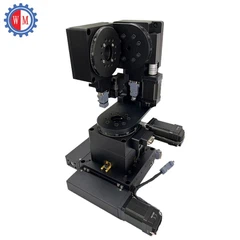
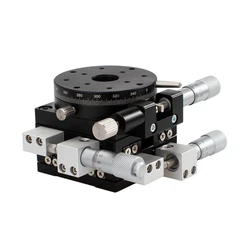
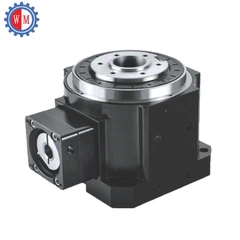
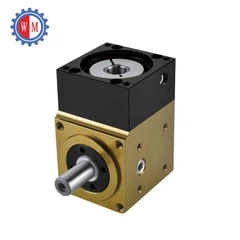


In the realm of precision engineering and automation, motorized rotation stages play a crucial role in a wide range of applications, from optical testing and semiconductor manufacturing to scientific research. As a leading supplier of motorized rotation stages, we understand the importance of providing high - quality products that meet the stringent requirements of our customers. One of the key factors that can significantly impact the performance of a motorized rotation stage is temperature drift. In this blog post, we will delve into what temperature drift is, its causes, effects, and how we address it in our products.
What is Temperature Drift?
Temperature drift refers to the change in the performance characteristics of a motorized rotation stage as a result of temperature variations. These performance characteristics can include angular position accuracy, repeatability, and speed stability. When the temperature of the environment in which the rotation stage operates changes, the materials that make up the stage expand or contract. This physical change can lead to misalignments, changes in the mechanical properties of components, and ultimately, deviations in the stage's performance.
For instance, if a motorized rotation stage is set to a specific angular position, temperature drift might cause the actual position to deviate from the setpoint over time as the temperature changes. This can be a major problem in applications where high precision is required, such as in optical alignment systems where even a small angular deviation can lead to significant errors in the optical path.
Causes of Temperature Drift in Motorized Rotation Stages
There are several factors that can contribute to temperature drift in motorized rotation stages.
1. Thermal Expansion of Materials
Most motorized rotation stages are made up of various materials, including metals and plastics. Different materials have different coefficients of thermal expansion (CTE). The CTE is a measure of how much a material expands or contracts per unit length for a given change in temperature. When the temperature changes, components made of different materials will expand or contract at different rates. This differential expansion can cause mechanical stress, misalignments in gears, bearings, and other moving parts, and ultimately lead to temperature drift.
For example, the worm gear in a Motorized Rotary Stage with Worm Gear Device may expand at a different rate than the housing it is mounted in. This can result in changes in the gear meshing, affecting the smoothness of rotation and the accuracy of the angular position.
2. Heat Generation from the Motor
The motor in a motorized rotation stage is a significant source of heat. As the motor operates, electrical energy is converted into mechanical energy, and a portion of this energy is dissipated as heat. The heat generated by the motor can increase the temperature of the surrounding components, including the stage itself. If the heat is not properly managed, it can cause thermal expansion and lead to temperature drift.
In a Programmable Motor Rotation Stage, continuous operation at high speeds or under heavy loads can cause the motor to generate more heat. This increased heat can then spread to the mechanical components of the stage, causing them to expand and potentially affecting the stage's performance.
3. Environmental Temperature Changes
The ambient temperature of the environment in which the motorized rotation stage operates can also cause temperature drift. If the stage is used in an environment where the temperature fluctuates widely, such as in an industrial setting or an outdoor environment, the components of the stage will expand and contract in response to these temperature changes.
For example, in a manufacturing facility where the temperature can vary throughout the day due to production processes and ventilation, a Precision Optical Motorized Rotation Stage may experience temperature drift as the ambient temperature changes.
Effects of Temperature Drift on Motorized Rotation Stages
The effects of temperature drift on motorized rotation stages can be far - reaching and can have a significant impact on the overall performance of the system in which the stage is used.
1. Reduced Angular Accuracy
As mentioned earlier, temperature drift can cause the actual angular position of the rotation stage to deviate from the setpoint. This reduced angular accuracy can be a major problem in applications where precise positioning is required. For example, in optical microscopy, where the stage is used to position samples for imaging, a small angular deviation can result in blurry or misaligned images.
2. Decreased Repeatability
Repeatability refers to the ability of the rotation stage to return to the same angular position consistently. Temperature drift can affect the repeatability of the stage by causing changes in the mechanical properties of the components over time. This means that the stage may not return to the exact same position each time it is commanded to do so, leading to inconsistent results in applications such as automated testing and measurement.
3. Speed Instability
Temperature drift can also cause speed instability in motorized rotation stages. As the temperature changes, the electrical and mechanical properties of the motor and the drive system can be affected. This can result in fluctuations in the rotational speed of the stage, which can be a problem in applications where a constant speed is required, such as in laser scanning systems.
How We Address Temperature Drift in Our Motorized Rotation Stages
As a supplier of motorized rotation stages, we take several measures to minimize the effects of temperature drift in our products.
1. Material Selection
We carefully select materials with low coefficients of thermal expansion for the critical components of our motorized rotation stages. By using materials that expand and contract less with temperature changes, we can reduce the amount of mechanical stress and misalignment caused by thermal expansion. For example, we may use special alloys or composite materials in the construction of gears and bearings to improve the temperature stability of the stage.
2. Heat Management
We implement effective heat management strategies to dissipate the heat generated by the motor. This can include the use of heat sinks, fans, and thermal insulation. Heat sinks are used to absorb and transfer the heat away from the motor, while fans can be used to increase the airflow and enhance the cooling effect. Thermal insulation can be used to prevent the heat from spreading to other components of the stage.


3. Calibration and Compensation
We provide calibration services for our motorized rotation stages to ensure accurate angular positioning. In addition, we have developed compensation algorithms that can adjust for temperature - related errors. These algorithms use temperature sensors to monitor the temperature of the stage and make real - time adjustments to the position and speed control parameters to compensate for temperature drift.
Conclusion
Temperature drift is a critical issue in the performance of motorized rotation stages. It can be caused by thermal expansion of materials, heat generation from the motor, and environmental temperature changes. The effects of temperature drift include reduced angular accuracy, decreased repeatability, and speed instability. As a leading supplier of motorized rotation stages, we are committed to providing high - quality products that minimize the effects of temperature drift. Through careful material selection, effective heat management, and advanced calibration and compensation techniques, we ensure that our stages meet the high - precision requirements of our customers.
If you are in need of a motorized rotation stage for your application and are concerned about temperature drift, we invite you to contact us for a detailed discussion. Our team of experts is ready to assist you in selecting the right product and addressing any questions or concerns you may have. We look forward to working with you to find the best solution for your needs.
References
- [1] Smith, J. (2018). Precision Engineering: Thermal Management in Rotation Stages. Journal of Precision Engineering, 45(2), 123 - 135.
- [2] Johnson, A. (2019). Effects of Temperature on Motorized Rotation Stage Performance. Proceedings of the International Conference on Automation and Robotics, 345 - 352.
- [3] Brown, C. (2020). Material Selection for Temperature - Stable Rotation Stages. Materials Science and Engineering Journal, 56(3), 210 - 221.


