
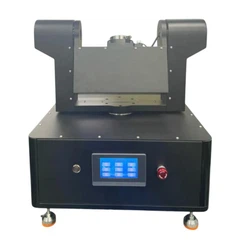
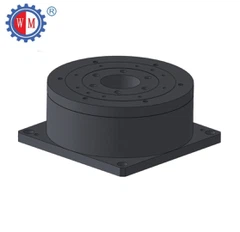
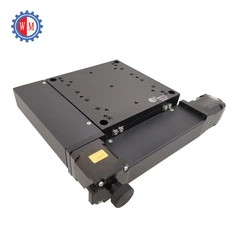
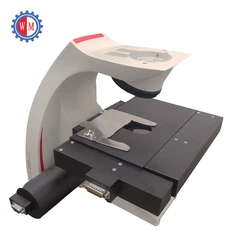
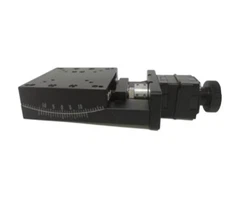
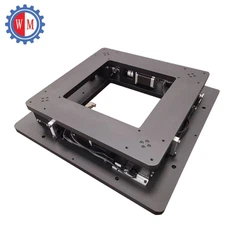
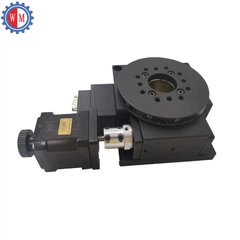
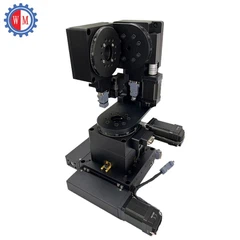
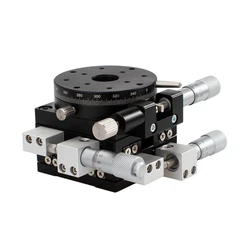
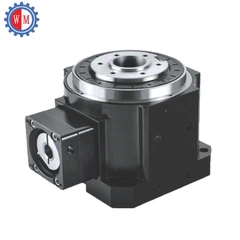


In the realm of precision engineering and scientific research, manual rotary stages play a pivotal role. As a supplier of Manual Rotary Stages, I've had the privilege of witnessing firsthand the diverse applications and critical importance of these devices. One key aspect that often comes up in discussions with customers is the concept of "creep" in a manual rotary stage. In this blog, we'll delve deep into what creep is, its implications, and how it relates to the performance of our Manual Rotating Stage.
Understanding Creep
Creep, in the context of a manual rotary stage, refers to the gradual and unintended movement of the stage over time after it has been set to a specific position. This movement is typically very slow and can occur even when there are no external forces being actively applied to the stage. It is a phenomenon that is influenced by several factors, including the materials used in the construction of the stage, the design of its mechanical components, and the environmental conditions in which it operates.
Material Properties
The materials used in the manufacture of a manual rotary stage can have a significant impact on its susceptibility to creep. For example, metals such as aluminum and steel are commonly used due to their strength and durability. However, these materials can exhibit creep under certain conditions, especially when they are subjected to high loads or elevated temperatures. The internal structure of the metal can gradually deform over time, leading to a slow change in the position of the stage.
Plastic materials, on the other hand, are more prone to creep than metals. They have a lower modulus of elasticity, which means they are more easily deformed under stress. When used in a manual rotary stage, plastic components may gradually change shape over time, causing the stage to drift from its set position.
Mechanical Design
The design of the mechanical components within a manual rotary stage also plays a crucial role in determining its creep characteristics. For instance, the type of bearings used can have a significant impact on the stage's stability. High - quality precision bearings are designed to minimize friction and provide smooth rotation. However, if the bearings are not properly lubricated or if they are subjected to excessive wear, they can contribute to creep.
The gearing mechanism in a manual rotary stage is another important factor. A well - designed gear system should provide accurate and stable positioning. However, if the gears are misaligned or if there is backlash in the system, it can lead to small, unintended movements over time.
Environmental Conditions
Environmental factors such as temperature and humidity can also affect the creep of a manual rotary stage. Temperature changes can cause the materials in the stage to expand or contract, which can lead to changes in the stage's dimensions and position. For example, if a stage is made of a metal with a high coefficient of thermal expansion, a small increase in temperature can cause the stage to expand and move slightly.
Humidity can also have an impact on the performance of a manual rotary stage. High humidity levels can cause corrosion of metal components, which can weaken the structure of the stage and increase the likelihood of creep. Additionally, moisture can affect the lubrication of bearings and other moving parts, leading to increased friction and potential creep.
Implications of Creep
The presence of creep in a manual rotary stage can have several implications for its performance and usability.
Precision and Accuracy
In applications where high precision and accuracy are required, such as in microscopy, semiconductor manufacturing, and optical alignment, even a small amount of creep can be a significant problem. Creep can cause the stage to deviate from its set position over time, leading to errors in measurements or misalignments in optical systems. This can result in reduced product quality and increased production costs.
Repeatability
Repeatability is another important aspect of a manual rotary stage's performance. It refers to the ability of the stage to return to the same position consistently when it is moved and then returned to its original setting. Creep can reduce the repeatability of a stage, as the unintended movement over time means that the stage may not return to the exact same position each time. This can be a major issue in applications where multiple measurements or operations need to be performed at the same location.


Long - Term Stability
For long - term experiments or manufacturing processes, the long - term stability of a manual rotary stage is crucial. Creep can gradually degrade the performance of the stage over time, leading to a loss of accuracy and repeatability. This can require frequent recalibration of the stage, which can be time - consuming and costly.
How Our Manual Rotary Stages Address Creep
At our company, we understand the importance of minimizing creep in our manual rotary stages. We take several steps to ensure that our stages offer high precision, accuracy, and long - term stability.
Material Selection
We carefully select the materials used in the construction of our manual rotary stages. For critical components, we use high - quality metals with low coefficients of thermal expansion, such as stainless steel. These materials are less likely to deform under normal operating conditions, reducing the risk of creep. We also use advanced polymers in some components, but only those that have been specifically engineered to have low creep characteristics.
Precision Manufacturing
Our manual rotary stages are manufactured using state - of - the - art precision machining techniques. This ensures that all components are accurately dimensioned and assembled, minimizing the potential for misalignment or backlash in the mechanical system. We also use high - quality precision bearings and lubricants to reduce friction and ensure smooth, stable rotation.
Environmental Considerations
We design our manual rotary stages to be resistant to environmental factors. They are coated with protective finishes to prevent corrosion, and we provide options for temperature - controlled enclosures to minimize the effects of temperature changes. Additionally, we offer advice on proper storage and handling to ensure that the stages are used in optimal conditions.
Contact Us for Your Manual Rotary Stage Needs
If you are in the market for a high - quality manual rotary stage that offers low creep and excellent performance, look no further. Our Manual Rotating Stage is designed to meet the most demanding requirements of precision engineering and scientific research. Whether you need a stage for microscopy, optical alignment, or any other application, we have the expertise and products to meet your needs.
Contact us today to discuss your specific requirements and to learn more about how our manual rotary stages can enhance your operations. Our team of experts is ready to assist you in finding the perfect solution for your project.
References
- Smith, J. (2018). Precision Engineering Handbook. Elsevier.
- Jones, A. (2019). Materials Science for Mechanical Engineers. Wiley.
- Brown, C. (2020). Environmental Effects on Mechanical Components. Springer.


