
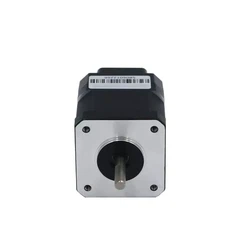


As a supplier of Integrated Stepper Motors, I understand the importance of high resolution in various applications. Resolution refers to the smallest increment of movement that a stepper motor can achieve. A higher resolution allows for more precise positioning and smoother motion control, which is crucial in industries such as robotics, CNC machines, and 3D printers. In this blog post, I will share some effective ways to improve the resolution of an Integrated Stepper Motor.
1. Microstepping
Microstepping is one of the most common methods to enhance the resolution of a stepper motor. Traditional full - step operation divides the motor's rotation into discrete steps. For example, a standard stepper motor might have 200 full steps per revolution, which means each step is 1.8 degrees (360 degrees / 200 steps).
Microstepping allows the motor to move in smaller increments by applying partial currents to the motor windings. Instead of just full on or off states, the driver can control the current in a more gradual way. For instance, with 16 - microstep operation, the number of steps per revolution increases from 200 to 3200 (200 steps * 16 microsteps per step), reducing the step angle to 0.1125 degrees (360 degrees / 3200 steps).
The advantage of microstepping is that it significantly improves the smoothness of motion and reduces vibration. However, it also has some limitations. Higher microstepping levels require more complex driver circuits and may result in reduced torque at high microstep settings. When choosing a microstepping level, it is essential to balance the need for resolution and torque based on the specific application requirements.
2. Gear Reduction
Another effective method to improve the resolution of an Integrated Stepper Motor is through gear reduction. By using a gearbox, the output shaft of the motor rotates at a slower speed than the motor's internal shaft, but with increased torque.
The relationship between the motor's step angle and the output shaft's angular resolution is determined by the gear ratio. For example, if a stepper motor has a step angle of 1.8 degrees and is coupled with a gearbox with a gear ratio of 10:1, the effective step angle at the output shaft becomes 0.18 degrees (1.8 degrees / 10).
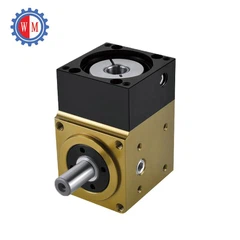
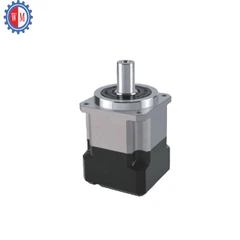
Gear reduction can be achieved using different types of gearboxes, such as spur gears, planetary gears, or worm gears. Planetary gearboxes are particularly popular in stepper motor applications due to their high efficiency, compact size, and high torque - to - weight ratio. However, gearboxes also introduce some drawbacks, such as backlash (the play between the gears), which can affect the accuracy of positioning. To minimize backlash, it is important to choose high - quality gearboxes and use appropriate backlash compensation techniques.
3. Closed - Loop Control
Closed - loop control is a more advanced approach to improving the resolution and performance of an Integrated Stepper Motor. In a traditional open - loop stepper motor system, the motor is commanded to move a certain number of steps without feedback on its actual position. This can lead to issues such as step loss, especially under high - load or high - speed conditions.
A Closed Loop Stepper Integrated Motor uses a feedback device, such as an encoder or a resolver, to continuously monitor the motor's position. The controller compares the actual position with the commanded position and makes adjustments to the motor's drive signals accordingly.
This feedback mechanism allows the motor to correct for any position errors, ensuring more accurate and reliable operation. Closed - loop control can also improve the motor's ability to handle variable loads and disturbances. For example, if the load on the motor suddenly increases, the controller can adjust the current to the motor to maintain the desired position.
However, closed - loop control systems are more complex and expensive than open - loop systems. They require additional components such as encoders and more sophisticated control algorithms. When implementing a closed - loop system, it is important to choose a suitable feedback device and tune the control parameters carefully to achieve optimal performance.
4. High - Quality Motor Design and Manufacturing
The design and manufacturing quality of the Integrated Stepper Motor itself also play a crucial role in determining its resolution. A well - designed motor with high - quality materials and precise manufacturing processes can provide better performance.
The magnetic circuit design of the motor affects its torque and step accuracy. A motor with a more optimized magnetic circuit can generate higher torque with less variation between steps. The quality of the motor windings also matters. Uniform winding distribution and low resistance can improve the motor's efficiency and reduce heat generation, which is beneficial for long - term operation.
In addition, the mechanical construction of the motor, such as the bearing quality and shaft alignment, can impact the motor's smoothness and accuracy. High - precision bearings can reduce friction and ensure stable rotation, while proper shaft alignment can prevent misalignment - related errors.
5. Advanced Driver Technology
The motor driver is an important component that directly affects the motor's performance. Advanced driver technologies can provide more precise control over the motor's current and voltage, thereby improving the resolution.


Some modern drivers use techniques such as current profiling and adaptive control. Current profiling allows the driver to adjust the current waveform to the motor based on the motor's operating conditions. For example, during acceleration and deceleration, the driver can provide a different current profile to optimize the motor's performance.
Adaptive control algorithms can automatically adjust the driver's parameters based on the load and speed of the motor. This ensures that the motor operates at its best performance under different conditions. For instance, if the load on the motor increases, the driver can increase the current to maintain the desired torque and resolution.
6. System Integration and Tuning
Finally, proper system integration and tuning are essential for achieving the best resolution from an Integrated Stepper Motor. This includes ensuring proper electrical connections, mechanical mounting, and software configuration.
When integrating the motor into a system, it is important to pay attention to the electrical noise. Electrical noise can interfere with the motor's control signals and cause position errors. Using proper shielding and grounding techniques can help reduce electrical noise.
Mechanical mounting also matters. The motor should be mounted securely to prevent vibration and misalignment. Any looseness in the mounting can lead to inaccurate positioning.
In terms of software configuration, the control parameters of the motor driver and the overall system need to be tuned carefully. This includes setting the appropriate microstepping level, current limit, and acceleration/deceleration rates. By fine - tuning these parameters, the system can achieve the optimal balance between resolution, torque, and speed.
In conclusion, improving the resolution of an Integrated Stepper Motor requires a comprehensive approach that involves microstepping, gear reduction, closed - loop control, high - quality motor design, advanced driver technology, and proper system integration. Each method has its own advantages and limitations, and the choice of methods depends on the specific requirements of the application.
If you are interested in our CAN Bus Control Integrated Stepper Motor or Integrated Dc Motor, or if you have any questions about improving the resolution of stepper motors, please feel free to contact us for further discussion and potential procurement. We are committed to providing high - quality products and professional technical support to meet your needs.
References
- "Stepper Motor Handbook" by Michael J. Grimble and Michael A. Johnson
- "Motion Control Basics" by Baldor Electric Company
- "Modern Power Electronics and AC Drives" by Bimal K. Bose


