
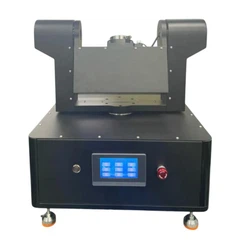
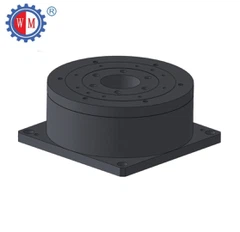
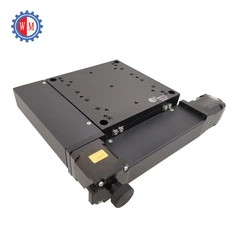
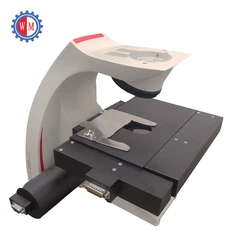
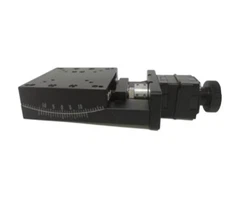
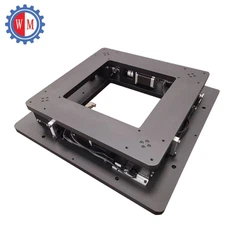
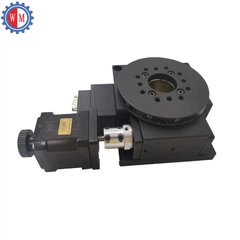
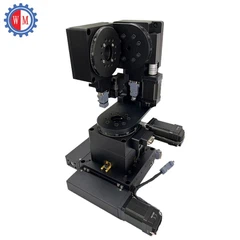
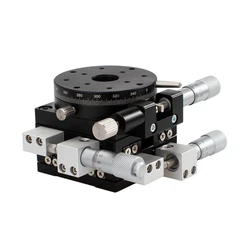
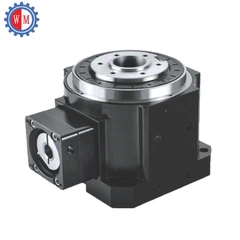


In the world of precision engineering and scientific research, manual rotary stages play a crucial role. These devices are used in a wide range of applications, from microscopy and optical alignment to semiconductor manufacturing and robotics. One question that often arises among potential users is: Are there any manual rotary stages with a locking mechanism? The answer is a resounding yes, and in this blog post, I'll delve into the details as a supplier of Manual Rotary Stages.
The Importance of a Locking Mechanism in Manual Rotary Stages
A locking mechanism in a manual rotary stage is not just an added feature; it's a necessity in many scenarios. When you're working on a project that requires precise positioning, you need to ensure that the stage stays exactly where you set it. Without a reliable locking mechanism, even the slightest vibration or accidental bump can cause the stage to move, throwing off your measurements and potentially ruining your experiment or manufacturing process.


For example, in microscopy, where you might be examining a delicate biological sample, any movement of the stage can blur the image and make it difficult to analyze. A locking mechanism allows you to secure the stage in place, ensuring that you can focus on your observations without worrying about unwanted movement. Similarly, in optical alignment, where precision is key, a locked stage ensures that your optical components remain in the correct position, optimizing the performance of your system.
Types of Locking Mechanisms in Manual Rotary Stages
There are several types of locking mechanisms used in manual rotary stages, each with its own advantages and disadvantages.
Clamping Locking Mechanisms
Clamping locking mechanisms are one of the most common types. They work by applying pressure to the rotating part of the stage, effectively "clamping" it in place. This type of locking mechanism is relatively simple and easy to operate. You can usually tighten a screw or a lever to apply the clamping force.
One of the main advantages of clamping locking mechanisms is their high holding force. Once the stage is clamped, it can withstand a significant amount of external force without moving. However, one potential drawback is that over-tightening the clamp can cause damage to the stage, especially if the material is relatively soft.
Friction Locking Mechanisms
Friction locking mechanisms rely on the friction between two surfaces to hold the stage in place. This can be achieved through various means, such as using a rubber or plastic pad that presses against the rotating part of the stage.
Friction locking mechanisms are often more gentle on the stage than clamping mechanisms, as they don't apply as much pressure. They are also relatively easy to adjust, allowing you to fine-tune the locking force. However, the holding force of friction locking mechanisms is generally lower than that of clamping mechanisms, so they may not be suitable for applications where a high degree of stability is required.
Indexing Locking Mechanisms
Indexing locking mechanisms are designed to lock the stage at specific, pre-determined positions. This is useful in applications where you need to repeat the same position multiple times. For example, in a manufacturing process where you're producing multiple identical parts, an indexing locking mechanism can ensure that the stage is always in the correct position for each part.
Indexing locking mechanisms typically use a series of detents or holes to lock the stage in place. You can usually move the stage to the desired position and then engage the locking mechanism to secure it. One advantage of indexing locking mechanisms is their high accuracy and repeatability. However, they are generally more complex and expensive than other types of locking mechanisms.
Our Manual Rotary Stages with Locking Mechanisms
As a supplier of Manual Rotary Stages, we offer a wide range of products with different types of locking mechanisms to meet the diverse needs of our customers. Our Manual Rotating Stage is designed with precision and durability in mind.
Our clamping locking mechanism models provide a high holding force, ensuring that the stage remains stable even in demanding environments. The clamping force can be easily adjusted using a simple screw, allowing you to fine-tune the locking according to your specific requirements.
For applications where a more gentle locking mechanism is needed, our friction locking mechanism models are a great choice. They offer a good balance between holding force and ease of adjustment, ensuring that the stage can be locked securely without causing damage.
If you need to repeat specific positions accurately, our indexing locking mechanism models are the ideal solution. They are equipped with a high-precision indexing system that allows you to lock the stage at precise intervals, ensuring consistent results every time.
Benefits of Choosing Our Manual Rotary Stages
When you choose our Manual Rotary Stages, you're not just getting a high-quality product; you're also getting a range of benefits that set us apart from other suppliers.
High Precision
All of our manual rotary stages are manufactured using the latest precision machining techniques, ensuring that they offer high levels of accuracy and repeatability. This is essential for applications where precise positioning is critical.
Durability
We use only the highest quality materials in the construction of our manual rotary stages, ensuring that they are built to last. Our stages can withstand the rigors of daily use in a variety of environments, making them a reliable choice for long-term projects.
Customization
We understand that every customer has unique requirements, which is why we offer a range of customization options for our manual rotary stages. Whether you need a specific size, a special locking mechanism, or a custom finish, we can work with you to create a solution that meets your exact needs.
Excellent Customer Support
Our team of experienced engineers and customer service representatives is always on hand to provide you with the support you need. Whether you have a question about our products, need help with installation or maintenance, or want to discuss a custom solution, we're here to assist you.
Contact Us for Procurement and洽谈
If you're interested in learning more about our Manual Rotary Stages with locking mechanisms or would like to discuss your specific requirements, we'd love to hear from you. Our team is ready to provide you with detailed information, answer your questions, and help you find the perfect solution for your project.
Don't hesitate to reach out to us to start the procurement process. We look forward to working with you and helping you achieve your goals with our high-quality manual rotary stages.
References
- Smith, J. (2018). Precision Engineering Handbook. New York: Wiley.
- Brown, A. (2019). Optical Alignment Techniques. London: Elsevier.
- Johnson, R. (2020). Manufacturing Processes for Semiconductors. San Francisco: McGraw-Hill.


