
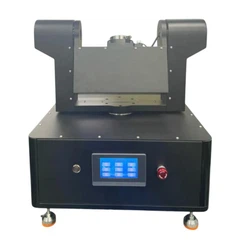
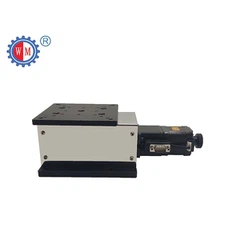
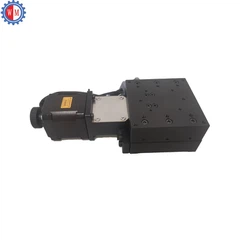
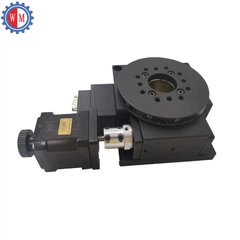
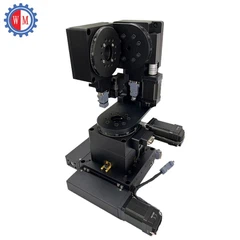
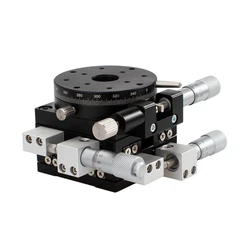
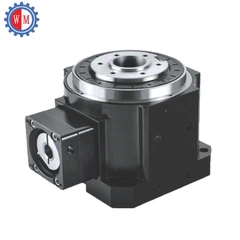


Hey there! As a supplier of Motorized Vertical Stages, I often get asked if these nifty devices can be used in medical applications. Well, the short answer is yes, and in this blog, I'll dive into the details of how and why motorized vertical stages are a great fit for the medical field.
What is a Motorized Vertical Stage?
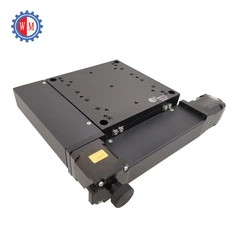
Before we get into the medical stuff, let's quickly go over what a motorized vertical stage is. Simply put, it's a device that can move an object up and down in a controlled manner. It's powered by a motor, which allows for precise and repeatable movements. These stages come in different sizes and specifications, depending on the application. For example, we offer a High Precision Motorized Z Axis Stage that's designed for applications where extremely accurate positioning is required.


Why Use a Motorized Vertical Stage in Medical Applications?
Precision and Accuracy
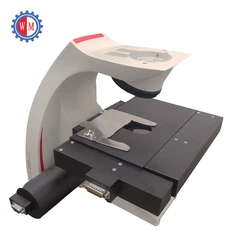
In the medical field, precision is everything. Whether it's performing a delicate surgery, conducting a microscopic analysis, or administering a precise dose of medication, even the slightest error can have serious consequences. Motorized vertical stages offer high levels of precision and accuracy, allowing medical professionals to perform tasks with greater confidence. For instance, in microscopy, a motorized vertical stage can be used to precisely focus on a sample, ensuring clear and detailed images.
Repeatability
Many medical procedures require repeated movements. For example, in robotic surgery, the same movement may need to be performed multiple times with the exact same precision. Motorized vertical stages are designed to provide excellent repeatability, meaning they can perform the same movement over and over again with minimal variation. This is crucial for ensuring consistent results in medical applications.
Automation
Automation is becoming increasingly important in the medical field. It can help reduce human error, increase efficiency, and improve patient outcomes. Motorized vertical stages can be easily integrated into automated systems, allowing for hands-free operation. For example, in a laboratory setting, a motorized vertical stage can be used to automate the process of moving samples under a microscope, saving time and reducing the risk of contamination.
Specific Medical Applications of Motorized Vertical Stages
Microscopy
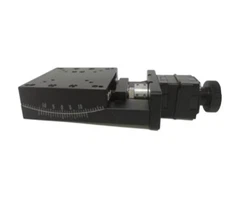
Microscopy is one of the most common applications of motorized vertical stages in the medical field. In both research and clinical settings, microscopes are used to examine cells, tissues, and microorganisms. A motorized vertical stage allows for precise focusing and positioning of the sample, making it easier to obtain clear and detailed images. Our Short Travel Motorized Vertical Positioning Stage is ideal for microscopy applications, as it offers a short but precise travel range.
Robotic Surgery
Robotic surgery is a rapidly growing field that offers many advantages over traditional surgery, such as smaller incisions, less pain, and faster recovery times. Motorized vertical stages play a crucial role in robotic surgery systems, allowing for precise movement of surgical instruments. They can be used to position the instruments accurately and perform delicate maneuvers with high precision.
Drug Delivery
In some cases, drugs need to be delivered to specific locations in the body with high precision. Motorized vertical stages can be used in drug delivery systems to control the position and movement of the delivery device. For example, in a targeted drug delivery system, a motorized vertical stage can be used to position a needle or catheter at the exact location where the drug needs to be delivered.
Radiation Therapy
Radiation therapy is a common treatment for cancer. In radiation therapy, a high-energy beam is directed at the tumor to destroy cancer cells. Motorized vertical stages can be used to position the patient accurately, ensuring that the radiation beam is delivered to the correct location. This helps to minimize damage to healthy tissue and improve the effectiveness of the treatment.
Challenges and Considerations
While motorized vertical stages offer many benefits in medical applications, there are also some challenges and considerations that need to be taken into account.
Sterilization
In medical applications, it's essential to maintain a sterile environment to prevent the spread of infection. Motorized vertical stages need to be designed in a way that allows for easy cleaning and sterilization. This may require the use of special materials and coatings that are resistant to chemicals and high temperatures.
Safety
Safety is always a top priority in the medical field. Motorized vertical stages need to be designed with safety features to prevent accidents and injuries. For example, they may need to be equipped with emergency stop buttons, limit switches, and overload protection.
Compatibility
Motorized vertical stages need to be compatible with other medical equipment and systems. This may require careful consideration of factors such as electrical compatibility, mechanical interfaces, and software integration.
Conclusion
In conclusion, motorized vertical stages can be a valuable tool in a wide range of medical applications. Their precision, accuracy, repeatability, and automation capabilities make them well-suited for tasks such as microscopy, robotic surgery, drug delivery, and radiation therapy. However, it's important to carefully consider the challenges and considerations associated with using motorized vertical stages in medical applications, such as sterilization, safety, and compatibility.
If you're in the medical field and are interested in learning more about how our motorized vertical stages can benefit your applications, we'd love to hear from you. Whether you're looking for a High Precision Motorized Z Axis Stage, a Short Travel Motorized Vertical Positioning Stage, or a Precision Motorized Vertical Lift Stage, we have the expertise and products to meet your needs. Feel free to reach out to us for more information and to discuss your specific requirements. We're here to help you take your medical applications to the next level.
References
- "Medical Robotics: Technologies and Applications" by S. E. Salcudean, et al.
- "Microscopy: Principles and Applications" by P. Bradbury.
- "Radiation Oncology Physics: A Handbook for Teachers and Students" by International Atomic Energy Agency.


