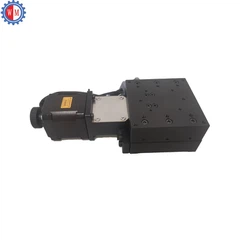
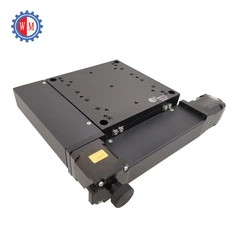
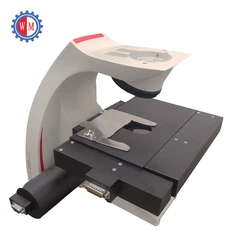
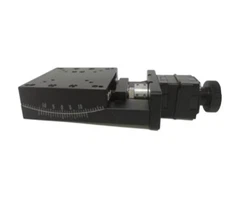


Hey there! As a supplier of Manual XY - Axis Stages, I often get asked about the straightness of these nifty devices. So, let's dive right in and break down what straightness means in the context of Manual XY - Axis Stages.
What is Straightness?
Straightness, in simple terms, refers to how closely a moving part of the stage follows a perfectly straight line during its motion. When you're using a Manual XY - Axis Stage, you want the platform to move precisely along the X and Y axes without any deviations or wobbling. Think of it like driving a car on a straight road; you want to go in a straight line without veering off to the side.
In the world of Manual XY - Axis Stages, straightness is crucial because it directly affects the accuracy of your positioning. Whether you're using these stages for microscopy, laser machining, or any other precision application, a high level of straightness ensures that your samples or tools are placed exactly where you want them.
Why is Straightness Important?
Let's say you're working on a delicate micro - assembly project. You need to position tiny components with extreme precision. If your Manual XY - Axis Stage has poor straightness, the components might not align correctly, leading to faulty products or inaccurate experimental results.
In scientific research, where every millimeter counts, straightness can make or break an experiment. For example, in a microscopy setup, if the stage doesn't move straight, the image you're capturing might be distorted, and you could miss out on important details.
Measuring Straightness
Measuring the straightness of a Manual XY - Axis Stage is not as straightforward as it might seem. There are several methods used to quantify straightness, and each has its own advantages and limitations.
One common method is using a laser interferometer. This device emits a laser beam that reflects off a mirror attached to the moving part of the stage. By analyzing the interference pattern of the reflected beam, you can measure the deviations from a straight line with high precision.
Another method is using a straightedge and a dial indicator. You place the straightedge along the path of the stage's movement and use the dial indicator to measure the distance between the straightedge and the moving part at different points. This method is more basic but can still give you a good idea of the stage's straightness.
Factors Affecting Straightness
Several factors can affect the straightness of a Manual XY - Axis Stage. One of the most significant factors is the quality of the linear guides. Linear guides are the components that allow the stage to move smoothly along the X and Y axes. If the linear guides are of poor quality or are damaged, they can cause the stage to deviate from a straight line.
The manufacturing process also plays a crucial role. Any imperfections in the machining of the stage's components can lead to reduced straightness. For example, if the rails are not perfectly flat or parallel, the stage will not move straight.
Environmental factors can also have an impact. Temperature changes can cause the materials in the stage to expand or contract, which can affect the straightness. Vibration and shock can also cause the stage to lose its alignment over time.


Our Manual XY - Axis Stages and Straightness
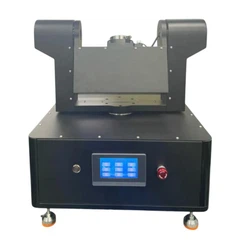
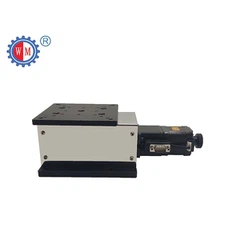
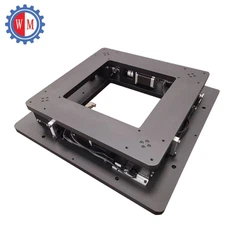
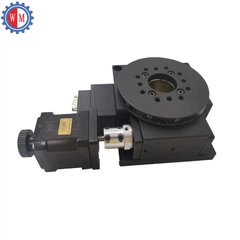
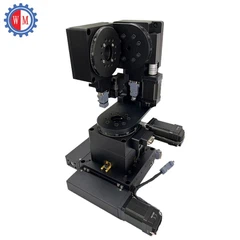
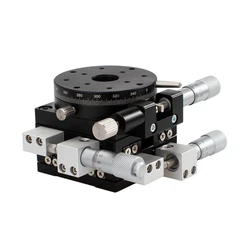
At our company, we take straightness very seriously. We use high - quality linear guides in all our Manual Linear Positioning Slide products. These guides are carefully selected and tested to ensure they provide smooth and straight movement.
Our manufacturing process is also top - notch. We use advanced machining techniques to ensure that all the components of our XY Manual Linear Translation Stage are made with high precision. This helps us achieve a high level of straightness in our stages.
We also take environmental factors into account. Our stages are designed to be robust and resistant to temperature changes and vibrations. This ensures that they maintain their straightness even in challenging working conditions.
Improving Straightness
If you already have a Manual XY - Axis Stage and you're experiencing issues with straightness, there are a few things you can do. First, make sure the stage is properly installed and leveled. An uneven surface can cause the stage to move unevenly.
Regular maintenance is also important. Keep the linear guides clean and lubricated to ensure smooth movement. If you notice any signs of wear or damage, replace the worn - out parts as soon as possible.
Conclusion
In conclusion, straightness is a critical aspect of Manual XY - Axis Stages. It directly affects the accuracy and performance of these stages in various applications. As a supplier, we understand the importance of straightness, and we strive to provide high - quality Manual XY Positioning Stage products that meet the needs of our customers.
If you're in the market for a Manual XY - Axis Stage and you want a product with excellent straightness, we'd love to hear from you. Whether you're a researcher, an engineer, or a hobbyist, we have the right stage for your needs. Contact us to start a conversation about your requirements and how we can help you with your project.
References
- Smith, J. (2020). Precision Engineering Handbook. New York: Engineering Press.
- Brown, A. (2019). Linear Motion Systems: Design and Applications. London: Mechanical Books.


