
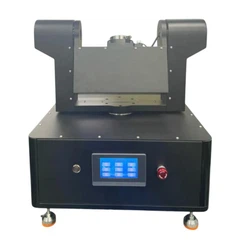
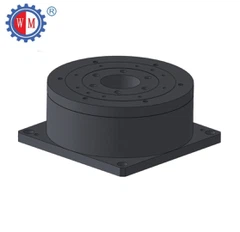
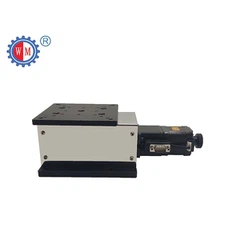
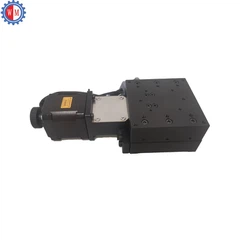
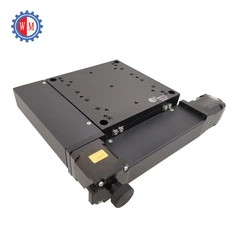
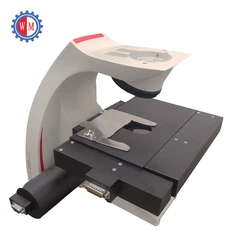
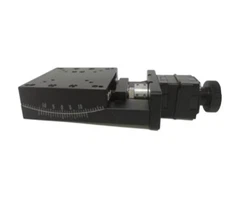
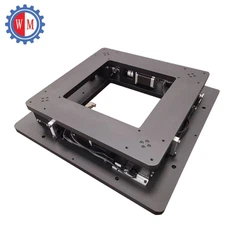
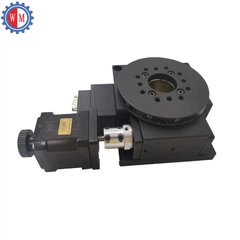
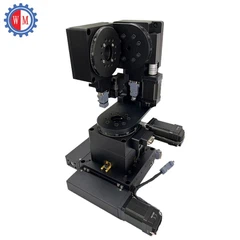
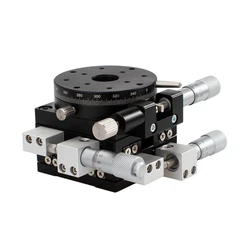
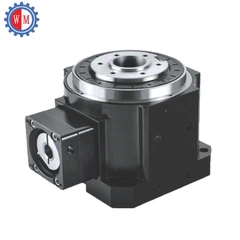


What is the repeatability of a manual rotary stage? Well, let me break it down for you in a way that's easy to understand. I'm a supplier of Manual Rotary Stages, and I've seen firsthand how important repeatability is in various applications.
First off, what exactly is a manual rotary stage? It's a device that allows you to rotate an object around a central axis manually. You can find these stages in all sorts of industries, from research labs to manufacturing plants. They're used for tasks like aligning optical components, positioning samples for inspection, and much more.
Now, let's talk about repeatability. Repeatability in a manual rotary stage refers to how consistently the stage can return to a specific position when it's moved and then brought back. In other words, if you set the stage to a certain angle, move it around, and then try to get it back to that same angle, how close will it actually get?
High repeatability is crucial for a lot of reasons. In precision manufacturing, for example, even the slightest deviation from a set position can lead to defective products. If you're using a manual rotary stage to position a cutting tool in a machining process, and the stage can't return to the exact same position every time, you'll end up with parts that don't meet the required specifications.
In scientific research, repeatability is equally important. Let's say you're conducting an experiment where you need to rotate a sample to a specific angle multiple times. If the manual rotary stage can't repeat that position accurately, your results might be inconsistent, and you won't be able to draw reliable conclusions from your data.
So, what factors affect the repeatability of a manual rotary stage? One of the main factors is the quality of the mechanical components. A well - made stage with high - precision bearings and gears will generally have better repeatability. The bearings need to be smooth and free of play, so that the rotation is stable and accurate. Gears should be properly machined and meshed to ensure that the movement is consistent.
Another factor is the design of the stage. Some manual rotary stages have features like fine - adjustment knobs or locking mechanisms that can improve repeatability. A fine - adjustment knob allows you to make small, precise changes to the position, while a locking mechanism can hold the stage in place once you've set it to the desired angle.
The material used in the construction of the stage also matters. For example, a stage made of a high - strength, low - expansion material will be less likely to warp or deform over time, which can affect its repeatability.
At our company, we take repeatability very seriously. We use only the highest - quality materials and components in our Manual Rotating Stage. Our stages are designed with precision in mind, and we test each one to ensure that it meets our strict repeatability standards.
When you're choosing a manual rotary stage, it's important to look at the manufacturer's specifications for repeatability. These specifications are usually given in degrees or arc - minutes. A lower value means better repeatability. For example, a stage with a repeatability of ±0.01° is more precise than one with a repeatability of ±0.1°.
But it's not just about the numbers. You also need to consider how the stage will perform in your specific application. For some applications, a relatively low - precision stage might be sufficient, while for others, you'll need a stage with extremely high repeatability.
Let's take a look at a real - world example. Suppose you're working in an optics lab, and you need to align a laser beam with a detector. You'll be rotating a mirror on a manual rotary stage to get the beam in the right position. In this case, you'll need a stage with very high repeatability. If the stage can't return to the same position accurately, the laser beam won't hit the detector consistently, and your experiment won't work properly.
On the other hand, if you're using a manual rotary stage in a less critical application, like positioning a small display for a trade show booth, you might not need as high a level of repeatability.
In addition to repeatability, there are other factors you should consider when choosing a manual rotary stage. These include the range of rotation, the load capacity, and the ease of use. The range of rotation refers to how far the stage can be rotated. Some stages can rotate a full 360°, while others have a more limited range.
The load capacity is important if you're going to be mounting heavy objects on the stage. You need to make sure that the stage can support the weight without losing its accuracy.
Ease of use is also a key factor. A stage that's difficult to operate will slow you down and might lead to errors. Look for a stage with intuitive controls and a design that makes it easy to adjust the position.
At our company, we offer a wide range of manual rotary stages to meet different needs. Whether you need a high - precision stage for a critical application or a more basic stage for a less demanding task, we've got you covered. Our team of experts is always available to help you choose the right stage for your specific requirements.
If you're in the market for a manual rotary stage, don't just focus on the price. Remember, a high - quality stage with good repeatability will save you time and money in the long run by reducing errors and improving the quality of your work.
So, if you're interested in learning more about our Manual Rotating Stage or have any questions about repeatability or other features, don't hesitate to get in touch. We're here to help you find the perfect solution for your needs. Whether you're a researcher, a manufacturer, or someone in between, we can provide you with the information and support you need to make an informed decision. Contact us today to start the conversation about your manual rotary stage requirements.
References


- Precision Motion Control Handbook, various industry experts
- Journal of Precision Engineering, multiple research papers on motion control devices


