


Hey there! As a supplier of Manual XY - Axis Stages, I often get asked about what the parallelism of these stages really means. So, let's dive right in and break it down.
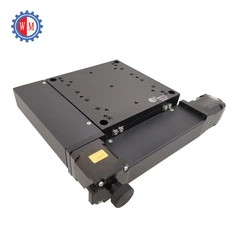
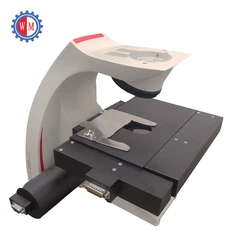
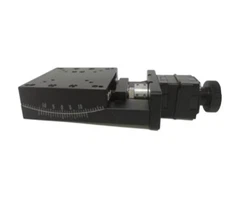
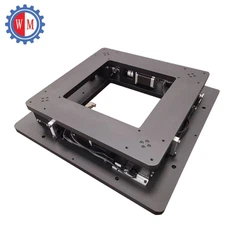
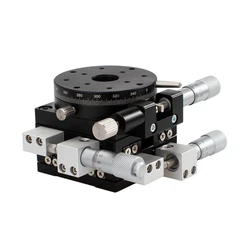
First off, what are Manual XY - Axis Stages? Well, they're these nifty devices used in a whole bunch of fields, like microscopy, photonics, and even some types of precision manufacturing. These stages let you move things around in two directions - the X and the Y axis - by hand. You can think of them like a little adjustable platform where you can place your sample or equipment and then move it around precisely to get the right position.
Now, onto parallelism. Parallelism in the context of Manual XY - Axis Stages refers to how well the two axes (X and Y) are aligned parallel to each other. In an ideal world, the movement along the X - axis should be perfectly parallel to the base plane, and the same goes for the Y - axis. This might seem like a small thing, but it's actually super important.
Let's say you're working in a microscopy lab. You've got a tiny sample on your Manual XY - Axis Stage, and you're trying to get a clear view of different parts of it. If the parallelism of the stage is off, it can cause all sorts of problems. For example, when you move the sample along one axis, it might tilt or shift in an unexpected way. This can make it really hard to get accurate measurements or clear images. You might end up wasting a lot of time trying to correct for these errors, and in some cases, you might even get inaccurate data.
In photonics, parallelism is also crucial. When you're aligning optical components, even the slightest misalignment due to poor parallelism can lead to a significant loss of signal. You want your light beams to travel in a straight and predictable path, and a stage with good parallelism helps ensure that.
So, how do we measure the parallelism of Manual XY - Axis Stages? There are a few different methods. One common way is to use a precision measuring tool, like a laser interferometer. This device can measure very small changes in distance and angle, allowing us to determine how parallel the axes of the stage are. Another method is to use a high - precision alignment target. You place the target on the stage and then move it along the axes, checking for any deviations from a straight line.
At our company, we take parallelism very seriously. We use state - of - the - art manufacturing techniques and quality control processes to ensure that our Manual XY - Axis Stages have excellent parallelism. We know that our customers rely on these stages for their critical applications, and we don't want them to have to deal with the headaches that come with poor parallelism.
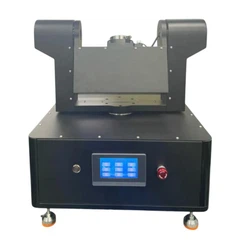
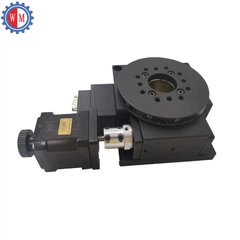
Now, let me tell you a bit about some of the products we offer. We have the Manual Laboratory Translation Stage. This stage is perfect for laboratory settings where you need precise manual movement. It's designed with high - quality materials and has a smooth operation, which helps maintain good parallelism.
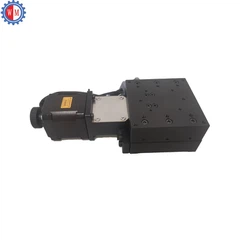
Another great product is the XY Manual Linear Translation Stage. This stage is known for its durability and accuracy. It can handle a fair amount of weight while still providing precise movement along the X and Y axes, all thanks to its well - maintained parallelism.
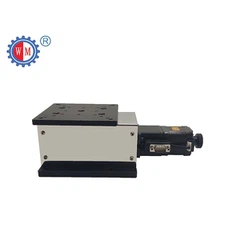
And then there's the Manual XY Positioning Stage. This stage is ideal for applications that require adjustable precision. You can fine - tune the movement to get exactly the position you need, and the parallelism ensures that your adjustments are accurate.
When it comes to choosing a Manual XY - Axis Stage, parallelism isn't the only thing to consider. You also need to think about things like the range of motion, the load capacity, and the ease of use. But parallelism is definitely up there as one of the most important factors.
If you're in the market for a Manual XY - Axis Stage, I encourage you to reach out to us. We're here to help you find the right stage for your specific needs. Whether you're a researcher in a lab or a manufacturer in a precision engineering shop, we've got a solution for you. Our team of experts can answer all your questions and guide you through the selection process.
In conclusion, parallelism is a key characteristic of Manual XY - Axis Stages. It affects the accuracy and reliability of your work, and choosing a stage with good parallelism can save you a lot of time and frustration. So, don't overlook this important factor when making your decision.


If you have any questions or are interested in learning more about our products, don't hesitate to get in touch. We're always happy to have a chat and discuss how we can meet your requirements.
References
- "Precision Motion Control: Design and Applications" by Peter R. Nist.
- "Optical Alignment Techniques" by John C. Stover.


