

When it comes to precision positioning and alignment in various scientific, industrial, and research applications, manual stages play an indispensable role. As a dedicated supplier of manual stages, I've witnessed firsthand how these tools have transformed operations across a wide range of sectors. In this blog, I'll delve into the numerous benefits of manual stages and explore why they remain a popular choice for many professionals.
Precision and Control
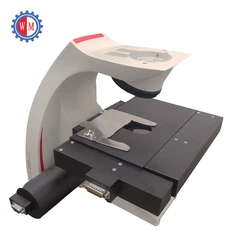
One of the primary advantages of manual stages is the high level of precision and control they offer. These stages are designed with fine - threaded screws, micrometer heads, or other precision - adjustment mechanisms that allow users to make minute, accurate movements. For instance, in microscopy, where the tiniest adjustment can mean the difference between a clear image and a blurry one, manual stages enable researchers to place specimens precisely in the field of view. The ability to control the movement with such precision gives users the confidence to perform tasks that require exact positioning.
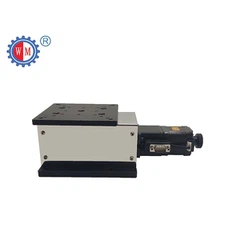
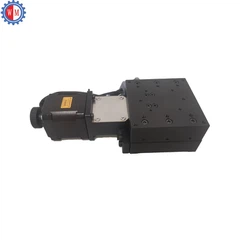
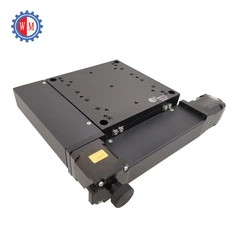
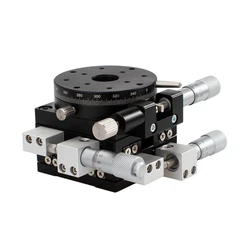
The Manual XZ Translation Stage from our product line is a great example. It provides smooth and accurate movement in both the X and Z axes. With precision - ground ways and high - quality screws, it allows users to adjust the position of an object in multi - dimensions, facilitating complex alignment tasks in optical or mechanical systems.
Cost - Effectiveness
In many cases, manual stages are a more cost - effective solution compared to their automated counterparts. Automated stages often come with a higher price tag due to the inclusion of motors, controllers, and complex software. For small - scale research projects, educational institutions, or startups with limited budgets, manual stages offer a practical alternative without sacrificing too much in terms of functionality.
They also have lower maintenance costs. Without the need for electrical components that can malfunction, such as motors or circuit boards, the probability of breakdowns is reduced. Basic maintenance usually involves simple cleaning and lubrication, which can be carried out in - house by the users themselves. This cost - effectiveness makes them an attractive option for budget - conscious organizations.
Simplicity and Ease of Use
Manual stages are inherently simple to operate. Unlike automated stages that require programming knowledge and an understanding of complex control panels, manual stages can be used by anyone with basic training. All it takes is a turn of a knob or a twist of a screw to make adjustments. This simplicity is especially valuable in educational settings, where students are learning about precision positioning for the first time.
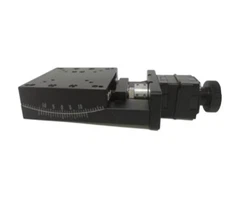
For example, the Manual Micro X Axis Stage is straightforward to use. It has a clear and easy - to - understand adjustment mechanism, allowing users to quickly and accurately move an object along the X - axis. This ease of use also means less time is spent on training and troubleshooting, which boosts overall productivity.


Reliability in Harsh Environments
Manual stages are more resistant to harsh environmental conditions compared to automated stages. In environments with high levels of electromagnetic interference (EMI), automated stages may experience glitches or malfunctioning due to the sensitive electronic components. Manual stages, on the other hand, do not rely on electronics for operation, making them a more reliable choice.
They are also less affected by temperature and humidity variations. In industrial environments where temperature and humidity can fluctuate significantly, manual stages can maintain their performance and accuracy. For instance, in a manufacturing plant where heat is generated during the production process, manual stages can continue to function properly without being affected by the heat, ensuring consistent quality control.
Customization and Flexibility
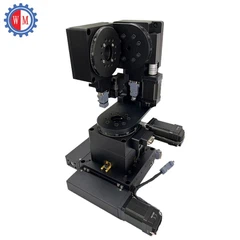
Manual stages offer a high degree of customization. They can be easily modified or adapted to suit specific application requirements. Users can choose different sizes, materials, and adjustment ranges according to their needs. For example, if a particular project requires a stage with a longer travel distance, we can customize a manual stage to meet that requirement.
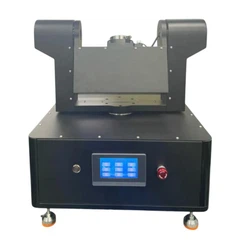
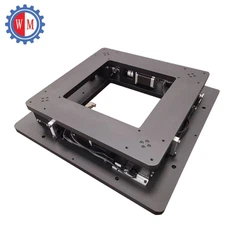
The Manual Optical Alignment Stage can be customized with different mounting options and precision levels. This flexibility allows users to integrate the stage into their existing systems seamlessly, enhancing the overall functionality of the setup.
Training and Skill Development
Working with manual stages provides an excellent opportunity for skill development. For new technicians and researchers, it offers a hands - on way to understand the principles of precision positioning and alignment. By manually adjusting the stage, they can gain a better feel for how small changes in position can impact the overall outcome of an experiment or a manufacturing process.
Moreover, the skills acquired through using manual stages are transferable. Even if in the future, the user transitions to working with automated stages, the fundamental understanding of positioning and alignment principles will remain useful. This makes manual stages a valuable tool for training and skill enhancement in the field of precision engineering.
Complementary to Automated Systems
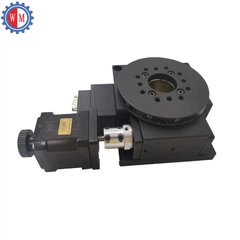
Manual stages can also work in conjunction with automated systems. In some scenarios, an automated system may lack the finesse required for certain tasks. Manual stages can be used for fine - tuning and delicate adjustments after the initial rough positioning by an automated system. This combination of manual and automated control can optimize the overall performance of a system, providing both the speed of automation and the precision of manual adjustment.
Invitations for Contact and Purchase
If you're intrigued by the multitude of benefits that manual stages offer and are considering integrating them into your operations, I encourage you to reach out. Whether you're involved in scientific research, industrial manufacturing, or educational activities, our team of experts is ready to assist you in selecting the most suitable manual stage for your specific needs. We can provide detailed product information, offer advice on customization options, and support you throughout the purchase process. Let's start a conversation about how our manual stages can enhance your work efficiency and precision.
References
- "Precision Stages: Design and Performance" by Glenn A. Smith.
- Scientific literature on microscopy and precision engineering techniques.
- Industry reports on the trends in positioning and alignment systems.


