
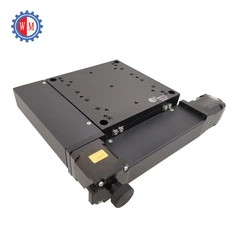
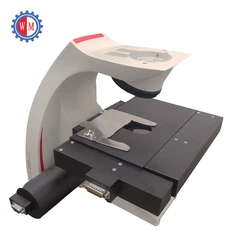
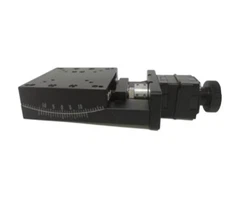
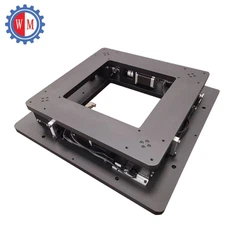
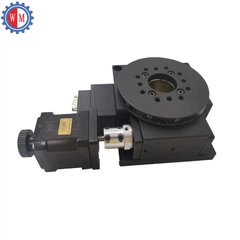
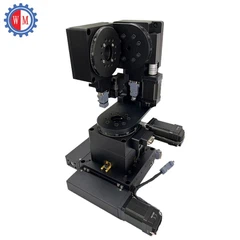
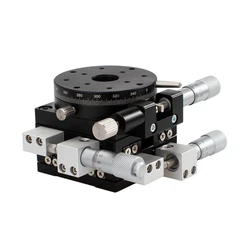
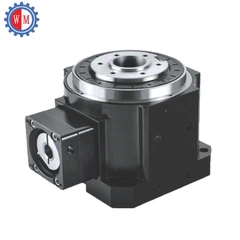


In the realm of precision engineering and scientific research, manual X-axis stages play a crucial role in achieving accurate linear motion along the X-axis. These stages are widely used in various applications, such as microscopy, semiconductor manufacturing, and optical alignment. One of the key considerations when using manual X-axis stages is the minimum incremental motion, which determines the smallest distance the stage can be moved with precision. In this blog post, we, as a manual X-axis stages supplier, will explore what the minimum incremental motion of manual X-axis stages is, its significance, and the factors that influence it.
Understanding Minimum Incremental Motion
The minimum incremental motion of a manual X-axis stage refers to the smallest controllable displacement that the stage can achieve along the X-axis. It is a measure of the stage's precision and is typically expressed in units such as micrometers (μm) or nanometers (nm). For example, if a manual X-axis stage has a minimum incremental motion of 1 μm, it means that the stage can be moved in steps of 1 μm along the X-axis.
This parameter is essential because it directly affects the accuracy and resolution of any experiment or manufacturing process that relies on the stage. In applications where high precision is required, such as in microelectronics manufacturing or high-resolution microscopy, a smaller minimum incremental motion is often necessary to ensure that the desired level of accuracy can be achieved.
Significance of Minimum Incremental Motion
The significance of the minimum incremental motion can be understood from various perspectives, especially in different industries.
In the field of microscopy, for instance, researchers often need to precisely position specimens to observe specific features. A manual X-axis stage with a small minimum incremental motion allows for fine adjustments, enabling the observation of microscopic details that would otherwise be missed. This is crucial for biological research, where the study of cells and tissues requires high precision positioning.
In semiconductor manufacturing, the production of integrated circuits demands extremely high precision. Manual X-axis stages are used to position wafers accurately during the lithography process. A small minimum incremental motion ensures that the patterns can be etched onto the wafers with high accuracy, which is essential for the performance and reliability of the final semiconductor products.
Factors Influencing Minimum Incremental Motion
Several factors can influence the minimum incremental motion of manual X-axis stages.
Mechanical Design
The mechanical design of the stage is one of the most important factors. High-quality materials and precise machining are essential for achieving a small minimum incremental motion. For example, stages with ball screws or lead screws are commonly used. Ball screws offer higher precision and smoother motion compared to lead screws, which can result in a smaller minimum incremental motion. Additionally, the quality of the bearings and the overall rigidity of the stage structure also play a role. A more rigid structure can reduce backlash and improve the accuracy of motion, thereby reducing the minimum incremental motion.
Actuation Mechanism
The actuation mechanism used to move the stage also affects the minimum incremental motion. Manual X-axis stages are typically actuated by micrometers or handwheels. Manual Stage Micrometer provides a more precise way of controlling the motion compared to simple handwheels. Micrometers are calibrated to provide accurate and repeatable motion, and they can often achieve smaller minimum incremental motions.
Friction and Lubrication
Friction within the stage can limit the minimum incremental motion. Excessive friction can make it difficult to achieve small, precise movements. Proper lubrication is therefore crucial to reduce friction and ensure smooth motion. The type of lubricant used and the frequency of lubrication can also impact the performance of the stage. For example, using a high-quality, low-viscosity lubricant can help to minimize friction and improve the minimum incremental motion.
Our Product Offerings
As a supplier of manual X-axis stages, we offer a range of products with different minimum incremental motions to meet the diverse needs of our customers.
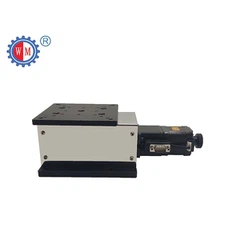
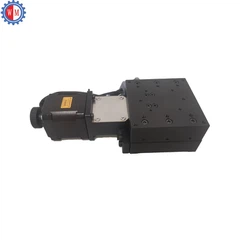
Our Miniature Micrometer Linear Stage is designed for applications where space is limited and high precision is required. This stage features a compact design and a high-quality micrometer for precise actuation. It has a minimum incremental motion of as small as 0.5 μm, making it suitable for applications such as microelectronics testing and optical fiber alignment.


Our Manual X Translation Stage is a versatile option that offers a balance between precision and affordability. It is actuated by a manual handwheel and has a minimum incremental motion of 1 μm. This stage is widely used in general laboratory applications, such as sample positioning in spectroscopy experiments.
How to Choose the Right Minimum Incremental Motion
When choosing a manual X-axis stage, it is important to consider the specific requirements of your application. If your application requires high precision, such as in nanotechnology research or high-resolution imaging, you should choose a stage with a smaller minimum incremental motion. However, if your application does not require extremely high precision, a stage with a larger minimum incremental motion may be sufficient, which can also be more cost-effective.
It is also important to consider other factors such as the load capacity of the stage, the travel range, and the overall stability. A stage with a high load capacity may be required if you need to move heavy objects, while a larger travel range may be necessary for applications that require a wider range of motion.
Contact Us for Procurement
If you are in need of manual X-axis stages for your research or manufacturing processes, we are here to help. Our team of experts can assist you in choosing the right stage with the appropriate minimum incremental motion based on your specific requirements. We offer high-quality products, competitive prices, and excellent customer service.
Whether you are working on a small-scale research project or a large-scale manufacturing operation, we have the solutions to meet your needs. Contact us today to start the procurement process and take advantage of our expertise in manual X-axis stages.
References
- Smith, J. (2018). Precision Motion Control in Scientific Instruments. New York: Academic Press.
- Jones, A. (2019). Handbook of Semiconductor Manufacturing Technology. Boston: Elsevier.
- Brown, C. (2020). Microscopy Techniques for Biological Research. London: Springer.


