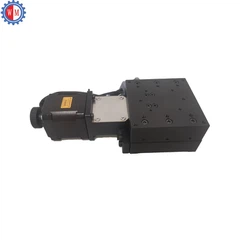
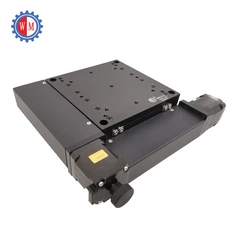
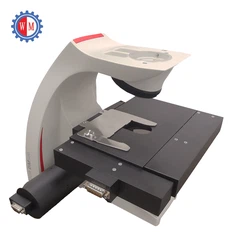
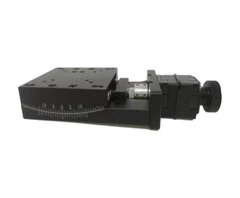


In the realm of precision engineering and scientific research, the choice of equipment for a cleanroom environment is crucial. Cleanrooms are highly controlled spaces designed to minimize particulate contamination, making them ideal for industries such as semiconductor manufacturing, biotechnology, and optics. One question that often arises is whether manual Z - Axis stages can be used in a cleanroom environment. As a supplier of Manual Z - Axis Stages, I am well - positioned to explore this topic in depth.
Understanding Cleanroom Requirements
Cleanrooms are classified based on the number of particles per cubic meter at a specified particle size. For example, a Class 1 cleanroom allows no more than one particle of 0.1 micrometers or larger per cubic meter of air. To meet these strict standards, all equipment used in a cleanroom must be carefully selected. The main concerns are particle generation, outgassing, and ease of cleaning.
Particle generation can occur through mechanical wear, friction, or loose parts. Outgassing refers to the release of volatile organic compounds (VOCs) from materials, which can contaminate the cleanroom environment. Ease of cleaning is also essential, as any equipment in a cleanroom must be regularly sanitized to maintain the required cleanliness level.
Manual Z - Axis Stages: An Overview
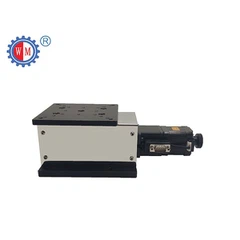
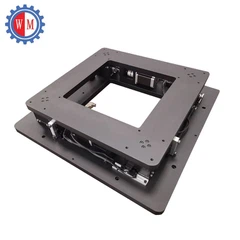
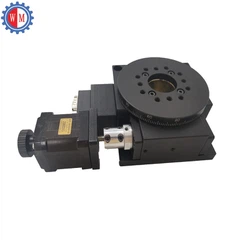
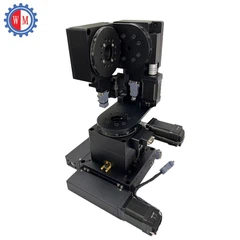
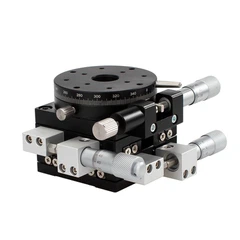
Manual Z - Axis stages, also known as Manual Vertical Stage, are precision devices used to provide vertical motion in a controlled manner. They are typically used in applications where precise positioning is required, such as microscopy, laser machining, and semiconductor testing.
These stages are usually operated by hand, using a micrometer or a handwheel to adjust the vertical position. They come in various designs, including single - axis and multi - axis configurations, and can offer different levels of precision and load capacity.
Compatibility with Cleanroom Environments
Particle Generation
One of the primary concerns when using manual Z - Axis stages in a cleanroom is particle generation. Traditional mechanical stages may produce particles due to the friction between moving parts, such as the screw and nut mechanism. However, modern manual Z - Axis stages are designed with cleanroom - friendly materials and manufacturing processes to minimize particle generation.
For example, some stages use high - quality stainless steel or aluminum alloys, which are less likely to produce particles compared to other materials. Additionally, the moving parts are often lubricated with cleanroom - compatible lubricants that do not generate particles or outgas.
Outgassing
Outgassing is another critical factor to consider. Many materials used in standard industrial equipment can release VOCs, which can contaminate the cleanroom environment. As a supplier, we ensure that our manual Z - Axis stages are made from materials with low outgassing properties.
We use materials such as low - outgassing plastics and specially treated metals that have been tested to meet cleanroom standards. This ensures that the stages do not contribute to the contamination of the cleanroom environment.
Ease of Cleaning
Cleaning is an essential part of maintaining a cleanroom environment. Manual Z - Axis stages should be easy to clean to prevent the accumulation of particles and contaminants. Our stages are designed with smooth surfaces and minimal crevices, making them easy to wipe down and sanitize.
In addition, the stages can be disassembled for more thorough cleaning if necessary. This allows for easy maintenance and ensures that the stages can be kept in a clean and contamination - free state.


Advantages of Using Manual Z - Axis Stages in Cleanrooms
Cost - Effectiveness
Manual Z - Axis stages are generally more cost - effective than their motorized counterparts. This makes them an attractive option for cleanroom applications, especially for smaller research facilities or projects with limited budgets.
Simplicity and Reliability
Manual stages are simple to operate and require minimal maintenance. They do not rely on complex electronic components, which reduces the risk of malfunctions and downtime. This simplicity also makes them easier to troubleshoot and repair, if necessary.
Precision Control
Despite being manually operated, modern manual Z - Axis stages can offer high levels of precision. They can provide positioning accuracy in the micrometer range, which is sufficient for many cleanroom applications.
Case Studies
To illustrate the effectiveness of manual Z - Axis stages in cleanroom environments, let's look at a few case studies.
In a semiconductor manufacturing facility, a manual Z - Axis stage was used for wafer inspection. The stage was required to provide precise vertical positioning to ensure accurate inspection of the wafers. The cleanroom - friendly design of the stage ensured that it did not contribute to particle contamination, and its ease of cleaning made it suitable for the strict cleanroom environment.
In a biotechnology research laboratory, a manual Z - Axis stage was used in a microscopy setup. The stage allowed the researchers to precisely position the samples for imaging. The low outgassing properties of the stage were crucial to prevent contamination of the sensitive biological samples.
Considerations for Selection
When selecting a manual Z - Axis stage for a cleanroom environment, there are several factors to consider.
Cleanroom Class
The cleanroom class will determine the level of particle generation and outgassing that is acceptable. Make sure to choose a stage that is designed to meet the specific requirements of your cleanroom class.
Precision Requirements
Consider the precision required for your application. Different stages offer different levels of positioning accuracy, so choose one that meets your specific needs.
Load Capacity
Determine the maximum load that the stage will need to support. Make sure to choose a stage with a sufficient load capacity to ensure stable and accurate operation.
Conclusion
In conclusion, manual Z - Axis stages can indeed be used in a cleanroom environment. With their cleanroom - friendly designs, low particle generation, and low outgassing properties, they are a viable option for many cleanroom applications.
As a supplier of Manual Z - Axis Stages, we are committed to providing high - quality products that meet the strict requirements of cleanroom environments. Our stages are designed and manufactured with the latest technologies and materials to ensure optimal performance and compatibility with cleanrooms.
If you are in the market for a manual Z - Axis stage for your cleanroom application, we invite you to contact us for more information. Our team of experts can help you select the right stage for your specific needs and provide you with detailed technical support. We look forward to the opportunity to work with you and contribute to the success of your cleanroom projects.
References
- ISO 14644 - 1:2015, Cleanrooms and associated controlled environments — Part 1: Classification of air cleanliness.
- Semiconductor Equipment and Materials International (SEMI) standards for cleanroom equipment.
- Technical literature from leading manufacturers of manual Z - Axis stages.


