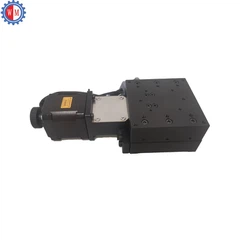
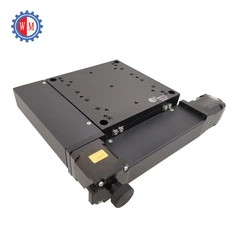
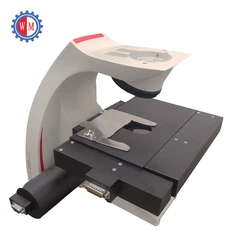
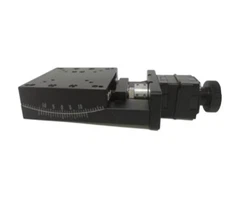


Hey there! As a supplier of planetary actuators, I've seen firsthand the amazing benefits these devices bring to low-speed applications. In this blog, I'm gonna share with you why planetary actuators are a top choice when it comes to low-speed setups.
High Torque Transmission
One of the biggest advantages of using planetary actuators in low-speed applications is their ability to provide high torque. You see, in a planetary gear system, there are multiple planet gears that distribute the load. This means they can handle a lot more force compared to other types of gear systems. For low-speed applications where you need a significant amount of torque to get the job done, planetary actuators are ideal.
Let's say you're working on a conveyor system that moves heavy materials at a slow pace. The conveyor needs to be able to start and stop smoothly, and it has to handle the weight of the materials without stalling. A planetary actuator can deliver the high torque required to start the conveyor and keep it moving steadily, even under heavy loads.
Another example is in industrial mixers. These machines often need to rotate large mixing blades slowly but with a lot of force to blend materials properly. Planetary actuators can provide the necessary torque to turn the blades, ensuring efficient mixing and a high-quality end product.
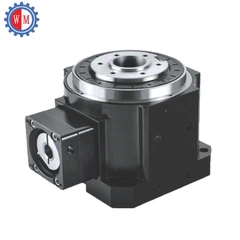
If you're interested in a high-torque option, check out our High Torque Spur Gear Speed Reducer. It's designed to handle tough low-speed, high-torque applications.
Compact Design
Space is often a concern in many low-speed applications. Whether it's in a small manufacturing unit or a piece of mobile equipment, you want a component that can fit into a tight space without sacrificing performance. That's where planetary actuators shine.
Their compact design is a result of the way the planetary gear system is arranged. The planet gears are arranged around a central sun gear, and this layout allows for a high gear ratio in a relatively small package. This means you can get the same level of performance as a larger, bulkier gear system but in a much smaller footprint.
For instance, in robotics, where every inch of space matters, planetary actuators are commonly used. Robotic arms need to be able to move precisely at low speeds, and the compact size of planetary actuators allows them to be integrated easily into the arm's structure. This not only saves space but also reduces the overall weight of the robot, making it more energy-efficient and easier to maneuver.
In automotive applications, such as power windows and seat adjustment mechanisms, space is also limited. Planetary actuators can be used to provide the necessary low-speed, high-torque operation in a small space, ensuring smooth and reliable performance.
High Efficiency
Efficiency is crucial in any application, especially in low-speed ones where energy consumption can add up over time. Planetary actuators are known for their high efficiency. The multiple contact points between the gears in a planetary system distribute the load evenly, reducing friction and wear. This means less energy is lost as heat, and more of the input power is transferred to the output.
In a low-speed application like a solar tracking system, where the actuator needs to move the solar panels slowly to follow the sun, efficiency is key. A more efficient planetary actuator will use less electricity to operate, which translates to cost savings over the long term. It also means the solar panels can generate more electricity because the actuator is using less power from the system.
Let's take a look at a wind turbine pitch control system. These systems need to adjust the angle of the turbine blades slowly and precisely to optimize power generation. Planetary actuators can provide the necessary low-speed operation with high efficiency, ensuring that the wind turbine operates at its best and maximizes energy production.
Precise Motion Control
In many low-speed applications, precise motion control is essential. Whether it's in a medical device, a printing press, or a CNC machine, you need the actuator to move with accuracy and repeatability. Planetary actuators are well-suited for this task.
The gear design of planetary actuators allows for a high degree of control over the output speed and torque. The multiple planet gears work together to provide a smooth and consistent motion, reducing backlash and ensuring that the actuator moves exactly as intended.
For example, in a 3D printer, the extruder needs to move the filament at a slow and steady pace to create accurate layers. A planetary actuator can provide the precise motion control required to ensure that the filament is extruded at the right speed and in the right amount, resulting in high-quality prints.
In a camera pan-tilt system, the actuator needs to move the camera slowly and smoothly to capture the perfect shot. Planetary actuators can provide the precise motion control needed to pan and tilt the camera accurately, allowing for smooth and professional-looking footage.
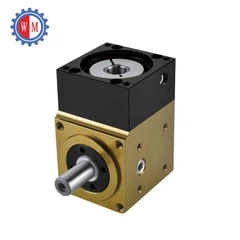
If you're looking for a reliable option for precise motion control, our Spur Gear Right Angle Reducer is a great choice. It's designed to provide accurate and repeatable motion in low-speed applications.
Durability and Reliability
Low-speed applications often involve continuous operation, and you need an actuator that can stand up to the wear and tear. Planetary actuators are built to last. The robust construction of the gear system, with its multiple contact points and even load distribution, reduces stress on the gears and other components.
The materials used in planetary actuators are also chosen for their durability. High-quality alloys and heat-treated steels are commonly used to ensure that the gears can withstand the forces and pressures of the application. This means less maintenance and fewer breakdowns, which translates to lower costs and less downtime for your operation.
Let's consider a mining conveyor system. These systems operate 24/7 in harsh environments, with a lot of dust, dirt, and heavy loads. Planetary actuators can handle these conditions and continue to perform reliably, reducing the need for frequent repairs and replacements.
In a marine application, such as a winch on a boat, the actuator needs to be able to withstand the corrosive effects of saltwater and the constant stress of lifting and lowering heavy loads. Planetary actuators with proper sealing and corrosion-resistant materials can provide the durability and reliability needed for these tough conditions.
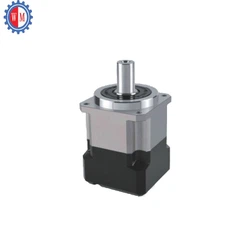
If you need an actuator that can handle tough environments, check out our IP65 Planetary Gearbox. It's designed to be dust-tight and water-resistant, making it suitable for a wide range of harsh applications.
Easy Installation and Maintenance
When it comes to choosing an actuator for your low-speed application, ease of installation and maintenance are important factors. Planetary actuators are relatively easy to install. They often come with standard mounting options and interfaces, which means they can be easily integrated into your existing system.
Maintenance is also straightforward. The simple design of the planetary gear system makes it easy to access and inspect the components. Regular lubrication and occasional checks for wear and tear are usually all that's needed to keep the actuator running smoothly.
For example, in a small workshop where time is of the essence, you don't want to spend hours installing and maintaining an actuator. Planetary actuators can be quickly installed and easily maintained, allowing you to focus on your production and get the job done.
In a large industrial plant, where there are many actuators to manage, the ease of maintenance of planetary actuators can save a lot of time and money. The maintenance team can quickly service the actuators and keep the production line running without significant downtime.
Conclusion
As you can see, there are many advantages to using planetary actuators in low-speed applications. From high torque transmission, compact design, high efficiency, precise motion control, durability, and reliability to easy installation and maintenance, these devices offer a lot of benefits.


If you're in the market for a planetary actuator for your low-speed application, I encourage you to get in touch with us. We have a wide range of products to suit different needs and can help you find the perfect solution for your project. Whether you need a high-torque option, a compact design, or precise motion control, we've got you covered. Let's start a conversation and see how we can work together to make your application a success.
References
- Jones, R. (2018). Gear Systems for Low-Speed Applications. Mechanical Engineering Journal.
- Smith, T. (2019). Planetary Actuators: Design and Performance. Industrial Automation Magazine.
- Brown, S. (2020). Efficiency and Durability of Planetary Gear Systems. Power Transmission Review.


