

Hey there! As a supplier of Integrated Stepper Motors, I often get asked about the maximum acceleration of these motors. It's a crucial question, especially for those looking to optimize the performance of their machinery. So, let's dive right in and explore what the maximum acceleration of an Integrated Stepper Motor really means and what factors can affect it.
Understanding Integrated Stepper Motors
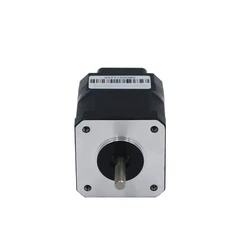
First off, let's quickly go over what an Integrated Stepper Motor is. In simple terms, it's a type of motor that combines a stepper motor with a driver and sometimes other control features into a single unit. This integration makes it easier to install and use, saving both time and space. We offer different types of Integrated Stepper Motors, like the CAN Bus Control Integrated Stepper Motor, Closed Loop Stepper Integrated Motor, and Modbus RS485 Integrated Motor. Each type has its own unique features and applications, but they all share the basic principle of precise step-by-step movement.
What is Acceleration in a Stepper Motor?
Acceleration in a stepper motor refers to how quickly the motor can increase its speed from a standstill to its maximum operating speed. It's measured in steps per second squared (steps/s²). A higher acceleration means the motor can reach its top speed faster, which is great for applications where quick movements are required, like in robotics or high-speed pick-and-place machines.
Factors Affecting Maximum Acceleration
Now, let's talk about the factors that can affect the maximum acceleration of an Integrated Stepper Motor.
Torque
Torque is the rotational force that the motor can produce. The higher the torque, the more force the motor can apply to accelerate the load. If the load is too heavy or the torque is too low, the motor won't be able to accelerate quickly. You can think of it like trying to push a heavy car. If you're not strong enough (low torque), it'll take you a long time to get the car moving (low acceleration).
Inertia
Inertia is the resistance of an object to changes in its motion. The greater the inertia of the load attached to the motor, the more difficult it is for the motor to accelerate it. For example, a large, heavy disk will have more inertia than a small, light one. So, if you're using a stepper motor to rotate a heavy disk, you'll need a motor with enough power to overcome the disk's inertia and accelerate it quickly.
Driver Capability
The driver is responsible for controlling the current and voltage supplied to the motor. A high-quality driver can provide the right amount of power at the right time, allowing the motor to accelerate more efficiently. If the driver is underpowered or not properly configured, it can limit the motor's acceleration.
Step Resolution
Step resolution refers to the number of steps the motor can take per revolution. A higher step resolution means the motor can move more precisely, but it can also affect the acceleration. If the step resolution is too high, the motor may not be able to take steps quickly enough to achieve a high acceleration.
Calculating Maximum Acceleration
Calculating the maximum acceleration of an Integrated Stepper Motor can be a bit tricky, as it depends on all the factors we just discussed. However, there are some general guidelines you can follow.
First, you need to know the motor's torque curve. This curve shows how the motor's torque changes with speed. You can usually find this information in the motor's datasheet. Next, you need to calculate the total inertia of the system, including the motor's rotor and the load. Once you have these values, you can use the following formula to estimate the maximum acceleration:
[a_{max}=\frac{T_{max}}{J}]
Where (a_{max}) is the maximum acceleration, (T_{max}) is the maximum torque available at the desired speed, and (J) is the total inertia of the system.
Keep in mind that this is just an estimate, and the actual maximum acceleration may be lower due to other factors like driver limitations or mechanical losses.
Practical Considerations
When it comes to using an Integrated Stepper Motor in a real-world application, there are a few practical things to keep in mind.
Overloading
If you try to accelerate the motor too quickly or with a load that's too heavy, you may overload the motor. This can cause the motor to overheat, lose steps, or even fail. So, it's important to make sure you're operating the motor within its rated limits.
Smooth Acceleration
In some applications, it's important to have a smooth acceleration to avoid jerky movements. You can achieve this by using a ramp-up function in the motor driver. This function gradually increases the speed of the motor over a set period of time, resulting in a smoother acceleration.


Testing and Tuning
Every application is different, so it's a good idea to test the motor and driver combination in your specific setup. You may need to adjust the acceleration settings to find the optimal balance between speed and smoothness.
Conclusion
So, what's the maximum acceleration of an Integrated Stepper Motor? Well, it depends on a variety of factors, including torque, inertia, driver capability, and step resolution. By understanding these factors and following the guidelines we've discussed, you can choose the right motor and driver for your application and achieve the maximum acceleration possible.
If you're in the market for an Integrated Stepper Motor and want to learn more about how to optimize its performance, or if you have any questions about the maximum acceleration, feel free to reach out. We're here to help you find the best solution for your needs. Whether you're working on a small DIY project or a large industrial application, we have the expertise and products to support you.
References
- Stepper Motor Handbook, various editions
- Technical documentation from stepper motor manufacturers


