
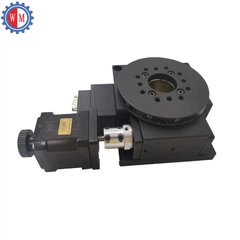
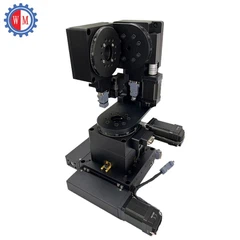
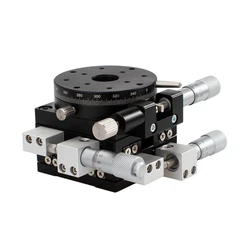
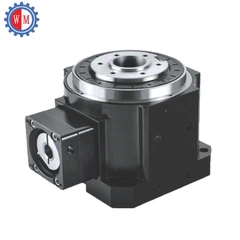


The dynamic response of Manual XY - Axis Stages is a crucial aspect to understand, especially for those involved in precision positioning applications. As a supplier of Manual XY - Axis Stages, I am well - versed in the ins and outs of these devices and their dynamic behaviors.


Understanding Manual XY - Axis Stages
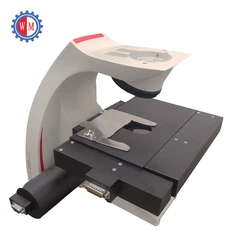
Before delving into the dynamic response, it's essential to have a clear understanding of what Manual XY - Axis Stages are. Manual XY - Axis Stages are mechanical devices designed to provide precise movement in two orthogonal directions (X and Y). They are widely used in various industries such as microscopy, photonics, semiconductor manufacturing, and metrology.
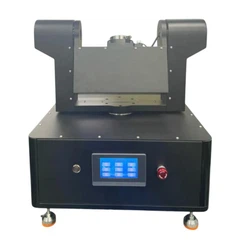
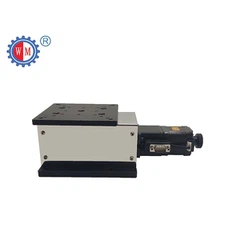
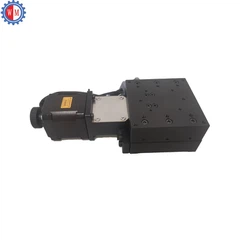
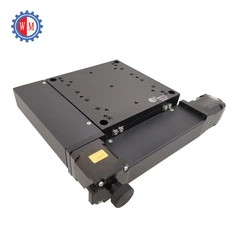
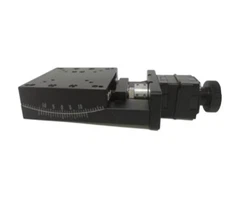
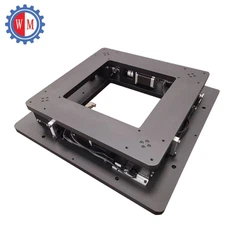
Our company offers a range of Manual XY - Axis Stages, including the Manual XY Motion Stage, Manual Screw - Driven XY Translation Stage, and Manual Linear Positioning Slide. These stages are crafted with high - quality materials and precision engineering to ensure reliable and accurate performance.
What is Dynamic Response?
The dynamic response of a Manual XY - Axis Stage refers to how the stage behaves when subjected to changes in input, such as a sudden movement or a change in the applied force. It encompasses several key parameters, including speed, acceleration, settling time, and repeatability.
Speed
The speed of a Manual XY - Axis Stage is determined by the rate at which the stage can move along the X and Y axes. In manual stages, the speed is typically controlled by the operator turning the adjustment knobs. The design of the stage, including the pitch of the lead screws and the friction in the moving parts, influences the achievable speed. For example, a stage with a finer pitch lead screw may offer more precise movement but at a slower speed compared to a stage with a coarser pitch.
Acceleration
Acceleration is the rate of change of speed. In manual stages, acceleration is not as straightforward as in motor - driven stages since it depends on the operator's ability to turn the knobs quickly. However, the mechanical design of the stage still plays a role. A stage with low inertia and smooth - running components will allow for relatively faster acceleration. For instance, if the stage has well - lubricated bearings and a lightweight platform, it can respond more quickly to the operator's input.
Settling Time
Settling time is the time it takes for the stage to come to rest after a movement. It is an important parameter, especially in applications where precise positioning is required. Factors that affect settling time include the damping characteristics of the stage, the stiffness of the structure, and the friction in the moving parts. A stage with good damping will reduce oscillations and reach a stable position more quickly. For example, a stage with elastomeric damping elements can significantly improve the settling time.
Repeatability
Repeatability refers to the ability of the stage to return to the same position after multiple movements. High repeatability is crucial in applications where the same position needs to be accessed repeatedly, such as in automated testing or sample inspection. The mechanical precision of the stage, including the accuracy of the lead screws and the alignment of the guideways, determines the repeatability. Our Manual XY - Axis Stages are engineered with high - precision components to ensure excellent repeatability.
Factors Affecting Dynamic Response
Several factors can influence the dynamic response of Manual XY - Axis Stages.
Mechanical Design
The mechanical design of the stage is one of the most significant factors. The choice of materials, the geometry of the components, and the assembly process all impact the stage's performance. For example, using high - strength aluminum alloys can reduce the weight of the stage without sacrificing stiffness. The design of the guideways, whether they are linear ball bearings or crossed - roller bearings, also affects the smoothness of movement and the dynamic response.
Friction
Friction is another critical factor. Excessive friction can slow down the movement of the stage, increase the required force for operation, and affect the settling time. Proper lubrication and surface treatment of the moving parts can reduce friction. For instance, applying a high - quality lubricant to the lead screws and guideways can improve the stage's dynamic performance.
Load
The load placed on the stage also affects its dynamic response. A heavier load will increase the inertia of the system, making it more difficult to accelerate and decelerate. Additionally, a large load can cause deflection in the stage structure, which may affect the accuracy and repeatability. It is important to choose a stage with a sufficient load - carrying capacity for the intended application.
Applications and Dynamic Response Requirements
Different applications have different requirements for the dynamic response of Manual XY - Axis Stages.
Microscopy
In microscopy, precise positioning is crucial for observing different areas of a sample. The stage needs to have high repeatability and low settling time to ensure that the same area can be revisited accurately. The speed of movement may not be as critical, as the operator typically makes small, incremental adjustments.
Photonics
In photonics applications, such as fiber optic alignment, the stage needs to have high precision and good dynamic response. The ability to make fine adjustments quickly and accurately is essential for aligning optical components. The stage should also have low vibration and good stability to prevent misalignment during the alignment process.
Semiconductor Manufacturing
In semiconductor manufacturing, high - speed and high - precision movement are required. The stage needs to be able to move quickly between different positions on the wafer for processes such as lithography and inspection. Repeatability is also of utmost importance to ensure consistent manufacturing quality.
How Our Manual XY - Axis Stages Excel in Dynamic Response
Our Manual XY - Axis Stages are designed to meet the diverse dynamic response requirements of different applications.
Precision Engineering
We use state - of - the - art manufacturing techniques and high - precision components to ensure excellent dynamic performance. Our lead screws are machined with high accuracy, and our guideways are carefully assembled to provide smooth and precise movement.
Quality Materials
We select high - quality materials for our stages, such as hardened steel and aluminum alloys. These materials offer a good balance of strength, stiffness, and low inertia, which is beneficial for the stage's dynamic response.
Customization
We understand that different applications may have unique requirements. That's why we offer customization options for our Manual XY - Axis Stages. We can adjust the design parameters, such as the lead screw pitch, the load - carrying capacity, and the damping characteristics, to meet the specific needs of our customers.
Conclusion
The dynamic response of Manual XY - Axis Stages is a complex but important aspect to consider in precision positioning applications. Understanding the key parameters of dynamic response, such as speed, acceleration, settling time, and repeatability, and the factors that affect them, is essential for choosing the right stage for your application.
As a supplier of Manual XY - Axis Stages, we are committed to providing high - quality products with excellent dynamic performance. Whether you are in the microscopy, photonics, or semiconductor manufacturing industry, our Manual XY - Axis Stages can meet your needs.
If you are interested in learning more about our Manual XY - Axis Stages or have specific requirements for your application, we encourage you to contact us for a detailed discussion. Our team of experts is ready to assist you in selecting the most suitable stage and providing you with comprehensive technical support.
References
- "Precision Motion Control: Fundamentals and Practices" by Peter M. F. Ng
- "Mechanical Design Handbook for Optical Engineers" by R. Barry Johnson


