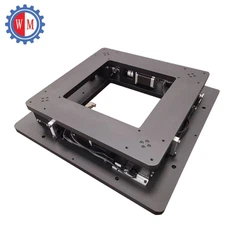
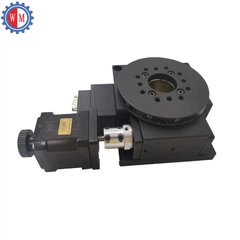
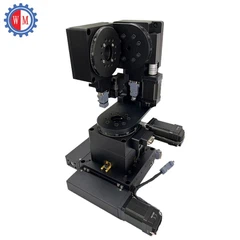
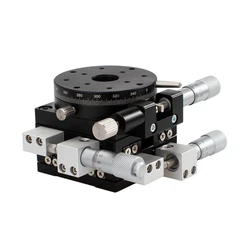


Hey there! As a supplier of Manual Multi - Axis Stages, I often get asked about the load capacity of these nifty devices. So, I thought I'd sit down and write a blog post to shed some light on this topic.
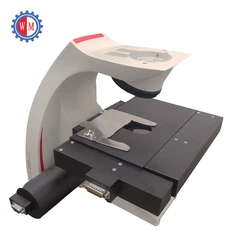
First off, let's talk about what manual multi - axis stages are. They're basically precision positioning tools that allow you to move an object in multiple directions - think X, Y, Z, and sometimes even rotation (R). These stages are super handy in a whole bunch of industries, like microscopy, photonics, and semiconductor manufacturing.
Now, the load capacity of manual multi - axis stages is a crucial factor. It determines how much weight the stage can handle without compromising its performance. You wouldn't want to overload a stage and end up with inaccurate positioning or, even worse, damage to the equipment.
There are a few things that can affect the load capacity of these stages. One of the main factors is the construction material. Stages made from high - strength metals like aluminum or steel can generally handle more weight compared to those made from lighter materials. For example, an aluminum stage might have a decent load capacity for most general - purpose applications, but if you need to handle really heavy loads, a steel stage could be a better choice.
The design of the stage also plays a big role. Stages with a more robust and stable design can support higher loads. This includes things like the thickness of the base, the size and strength of the bearings, and the overall structural integrity. A well - designed stage will distribute the load evenly, reducing the stress on individual components and allowing it to handle more weight.
Another important aspect is the type of movement. Different axes might have different load - handling capabilities. For instance, the Z - axis, which is responsible for vertical movement, often has a lower load capacity compared to the X and Y axes. This is because it has to support the weight of the load against gravity. So, if you're planning to use a stage for vertical positioning, you need to be extra careful about the load you're putting on it.
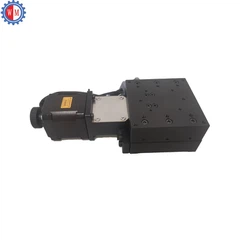
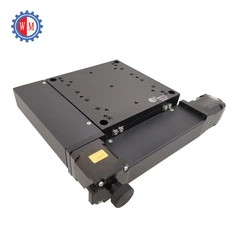
Let's take a look at some of our specific products and their load capacities. Our Manual Linear XYZ Translation Stage is a popular choice for many applications. It's designed to provide precise movement in the X, Y, and Z directions. The load capacity of this stage depends on the specific model, but generally, it can handle a moderate amount of weight. It's great for applications where you need to position small to medium - sized objects with high accuracy.
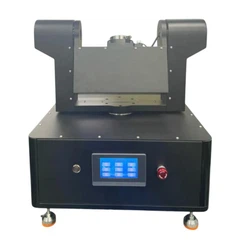
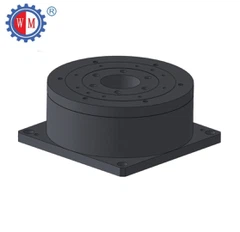
If you need even more flexibility, our XYZR Axis Manual Stage is a great option. This stage allows you to move an object in the X, Y, and Z directions, as well as rotate it. The load capacity of this stage is also determined by its construction and design. It can handle a bit more weight compared to some of the simpler XYZ stages, thanks to its more advanced features and sturdier build.
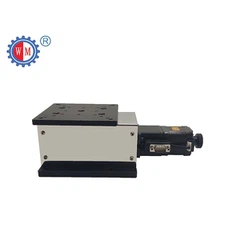
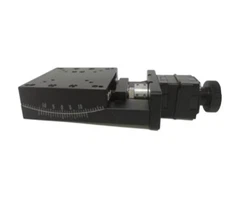
Our Manual XZ Translation Stage is perfect for applications where you only need movement in the X and Z directions. This stage has a relatively high load capacity for its size, making it suitable for applications where you need to handle heavier loads in a more limited range of motion.
When you're choosing a manual multi - axis stage, it's important to consider not only the load capacity but also the accuracy and repeatability you need. Sometimes, you might have to make a trade - off between load capacity and precision. For example, a stage with a very high load capacity might not be as accurate as a stage with a lower load capacity. So, you need to find the right balance based on your specific application requirements.
It's also a good idea to leave some margin of safety when it comes to load capacity. Don't push the stage to its absolute limit. Instead, choose a stage with a load capacity that's higher than the actual weight you'll be putting on it. This will ensure that the stage operates smoothly and has a longer lifespan.
In addition to the load capacity, you should also think about the environment in which the stage will be used. If the stage will be exposed to harsh conditions, such as high temperatures, humidity, or vibrations, it might affect its performance and load - handling capabilities. Make sure to choose a stage that's suitable for the environment you'll be working in.
If you're still not sure which manual multi - axis stage is right for you, or if you have any questions about load capacity or other technical specifications, don't hesitate to reach out. We're here to help you make the best choice for your application. Whether you're a researcher, an engineer, or a manufacturer, we have the expertise and the products to meet your needs.
So, if you're in the market for a manual multi - axis stage, give us a shout. We can provide you with more detailed information about our products, help you calculate the load capacity you need, and guide you through the selection process. Let's work together to find the perfect stage for your project.
References:


- General knowledge of manual multi - axis stage technology and engineering principles.
- Product specifications and technical data of our manual multi - axis stages.


