
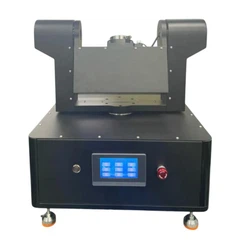
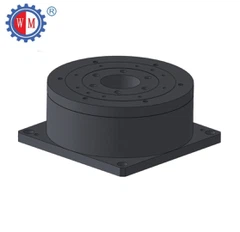
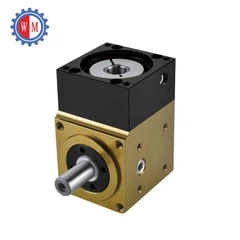
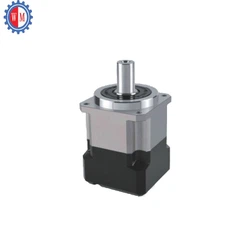
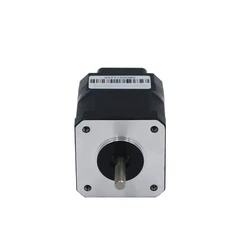


Hey there! As a supplier of hollow rotary tables, I often get asked about the different mounting options available. So, I thought I'd put together this blog post to give you the lowdown on all the ways you can mount a hollow rotary table.
First off, let's talk about why mounting options matter. A well - chosen mounting option can ensure the stability, accuracy, and efficiency of your hollow rotary table. It affects how the table performs in your specific application, whether it's in automation, robotics, or precision machining.
1. Flange Mounting
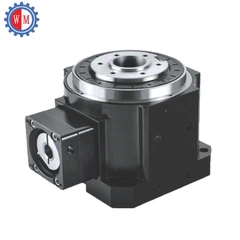
Flange mounting is one of the most common methods. It's pretty straightforward. The hollow rotary table comes with a flange on its base. You can use bolts to attach this flange to a flat surface, like a machine bed or a mounting plate. This method provides a solid and stable connection.
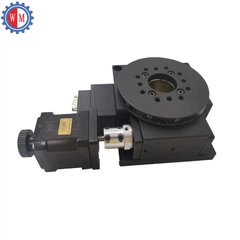
The advantage of flange mounting is that it distributes the load evenly across the surface. This is crucial when your hollow rotary table is handling heavy - duty tasks. For example, if you're using a Hollow Rotary Gearbox for Stepper Motor in a high - torque application, flange mounting can keep everything in place and prevent any wobbling.
However, you need to make sure the surface you're mounting on is flat and level. Any unevenness can lead to misalignment, which can affect the performance of the table. You'll also need to choose the right size and type of bolts to ensure a secure fit.
2. Shaft Mounting
Shaft mounting is another option. In this case, the hollow rotary table has a central shaft that can be inserted into a corresponding bore in the mounting structure. You can then use set screws or other locking mechanisms to secure the shaft in place.
This mounting method is great for applications where you need to transfer rotational motion directly. For instance, if you're using a High Speed Hollow Rotary Table, shaft mounting can provide a direct connection to the driving mechanism, allowing for smooth and efficient power transmission.
But there are some things to watch out for. The shaft and the bore need to have a precise fit. A loose fit can cause vibrations and reduce the accuracy of the table. Also, you need to ensure that the locking mechanism is tight enough to prevent the shaft from slipping during operation.
3. Clamp Mounting
Clamp mounting involves using clamps to hold the hollow rotary table in place. This method is flexible and can be used in situations where you need to make quick adjustments or re - position the table.
You can use different types of clamps, such as C - clamps or toggle clamps. The clamps are usually attached to a base or a frame, and they grip the sides of the hollow rotary table. This way, you can easily remove or re - attach the table as needed.
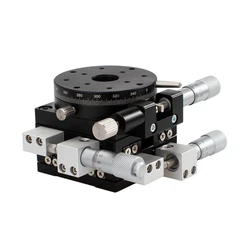
Clamp mounting is a good choice for prototyping or small - scale production. If you're still testing different setups with a Hollow Rotary Stage, you can quickly change the position or orientation of the table without having to drill holes or make permanent modifications.


However, the clamping force needs to be carefully adjusted. Too much force can damage the table, while too little force can result in the table moving during operation.
4. Bracket Mounting
Bracket mounting uses brackets to support and attach the hollow rotary table. Brackets can be custom - designed to fit the specific shape and size of your table and the mounting location.
This method is useful when you need to mount the table at an angle or in a confined space. You can use brackets to create a stable platform for the table, even if the mounting surface is not ideal. For example, if you're installing the table on a vertical wall or a sloped surface, brackets can help you achieve a proper and secure installation.
When using bracket mounting, you need to ensure that the brackets are strong enough to support the weight and the load of the table. You'll also need to pay attention to the alignment of the brackets to make sure the table is level and properly positioned.
5. Magnetic Mounting
Magnetic mounting is a relatively new option. It uses powerful magnets to hold the hollow rotary table in place. This method is quick and easy to install and remove.
You can use magnetic bases or magnetic plates to create a magnetic connection between the table and the mounting surface. This is especially useful in applications where you need to frequently change the position of the table or where you don't want to drill holes in the mounting surface.
However, magnetic mounting has its limitations. The magnetic force needs to be strong enough to hold the table in place, especially in high - vibration or high - speed applications. Also, magnetic fields can interfere with some electronic components, so you need to be careful when using this method in an environment with sensitive electronics.
Factors to Consider When Choosing a Mounting Option
- Application Requirements: Think about what your hollow rotary table will be used for. If it's for high - precision work, you'll need a mounting option that provides excellent stability and accuracy. For applications that require frequent re - positioning, a more flexible mounting method like clamp or magnetic mounting might be better.
- Space Constraints: The available space in your setup can also influence your choice of mounting option. If you have limited space, bracket mounting or shaft mounting might be more suitable as they can be designed to fit into tight areas.
- Load Capacity: Consider the weight and the load that the table will be carrying. A heavy - duty application will require a more robust mounting option, such as flange mounting, to ensure the table can handle the load without any issues.
- Cost: Different mounting options come with different costs. Flange mounting might require more materials and labor for installation, while magnetic mounting can be relatively inexpensive but might have limitations in some applications. You need to balance the cost with the performance and requirements of your setup.
In conclusion, there are several mounting options available for hollow rotary tables, each with its own advantages and disadvantages. As a supplier, I can help you choose the right mounting option based on your specific needs. Whether you're looking for a stable and permanent installation or a flexible and adjustable setup, we've got you covered.
If you're interested in purchasing a hollow rotary table or need more information about the mounting options, feel free to reach out. We're here to assist you with all your hollow rotary table needs and help you make the best decision for your application.
References
- Engineering textbooks on mechanical design and motion control
- Industry - specific handbooks on automation and robotics


