

In the world of precision engineering and microscopy, manual Z - Axis stages play a crucial role. These stages are designed to provide controlled movement along the Z - axis, which is typically the vertical direction in most setups. As a supplier of Manual Z - Axis Stages, I have witnessed firsthand the importance of understanding various aspects of these devices, including the concept of hysteresis.
Understanding Manual Z - Axis Stages
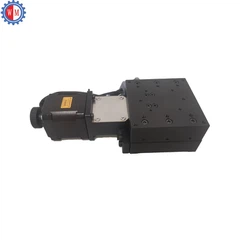
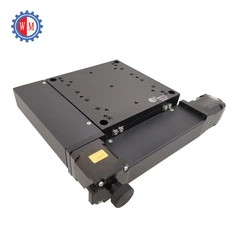
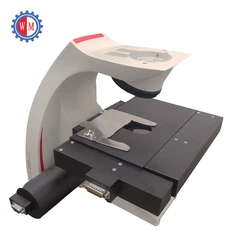
Before delving into hysteresis, it's essential to have a clear understanding of what manual Z - Axis stages are. Manual Z - Axis stages are mechanical devices that allow users to adjust the position of an object in the vertical direction with precision. They are commonly used in applications such as microscopy, semiconductor inspection, and optical alignment.
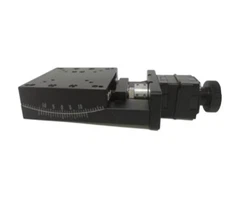
These stages are manually operated, meaning that the user physically turns a knob or uses a lever to move the stage up or down. This manual control provides a high level of precision and allows for fine adjustments that are often required in scientific and industrial applications. For example, in microscopy, a small change in the Z - axis position can bring a specimen into sharp focus, and manual Z - Axis stages enable users to make these delicate adjustments accurately.
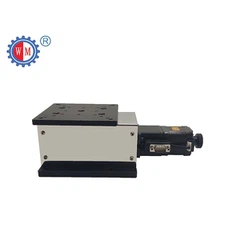
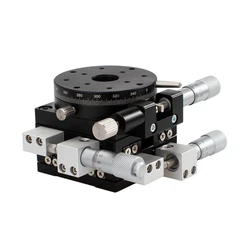
One of the popular types of manual Z - Axis stages is the Manual Vertical Stage. This type of stage is specifically designed for vertical movement and is known for its stability and precision. It is often used in setups where a reliable and accurate vertical adjustment is needed.
What is Hysteresis?
Hysteresis is a phenomenon that occurs in many mechanical and electrical systems. In the context of manual Z - Axis stages, hysteresis refers to the difference in the position of the stage when it is moved in one direction compared to when it is moved back in the opposite direction.
To understand this better, let's consider an example. Suppose you start with the stage at a certain position and then move it upwards by turning the adjustment knob. When you then turn the knob in the opposite direction to bring the stage back to its original position, you may find that the stage does not return exactly to where it started. This difference in position is due to hysteresis.
Hysteresis in manual Z - Axis stages can be caused by several factors. One of the main causes is friction within the mechanical components of the stage. As the stage moves, the friction between the moving parts can cause some energy to be lost. This energy loss results in a difference in the position of the stage when moving in different directions.
Another factor that can contribute to hysteresis is the elasticity of the materials used in the stage. When the stage is moved, the materials may deform slightly. This deformation can cause a delay in the return of the stage to its original position, leading to hysteresis.
Measuring Hysteresis
Measuring hysteresis in manual Z - Axis stages is an important step in evaluating the performance of these devices. There are several methods that can be used to measure hysteresis.
One common method is to use a displacement sensor. The displacement sensor is attached to the stage, and the stage is moved through a series of steps in one direction and then back in the opposite direction. The sensor records the position of the stage at each step, and the difference in position between the forward and backward movements is calculated. This difference is the hysteresis of the stage.
Another method is to use a microscope with a calibrated reticle. The stage is moved up and down, and the position of an object on the stage is observed through the microscope. The difference in the position of the object when the stage is moved in different directions is measured using the reticle. This method is often used in applications where high precision is required, such as in semiconductor inspection.

The Impact of Hysteresis on Applications
Hysteresis in manual Z - Axis stages can have a significant impact on the performance of applications that rely on these stages. In microscopy, for example, hysteresis can cause a loss of focus when the stage is moved up and down. This can make it difficult to obtain clear and sharp images of specimens.

In semiconductor inspection, hysteresis can lead to errors in the measurement of the height of semiconductor components. This can result in defective products being passed through the inspection process, leading to quality control issues.

In optical alignment applications, hysteresis can cause misalignment of optical components. This can affect the performance of optical systems, such as lasers and cameras, and can lead to a decrease in the overall efficiency of the system.
Minimizing Hysteresis in Manual Z - Axis Stages
As a supplier of manual Z - Axis stages, we are constantly working to minimize hysteresis in our products. There are several ways to reduce hysteresis in these stages.
One approach is to use high - quality materials with low friction coefficients. By using materials such as stainless steel and precision - ground bearings, we can reduce the amount of friction within the stage. This, in turn, reduces the energy loss and minimizes hysteresis.
Another method is to optimize the design of the stage. We use advanced engineering techniques to ensure that the mechanical components of the stage are properly aligned and that there is minimal play between the moving parts. This helps to reduce the deformation of the materials and improves the overall accuracy of the stage.
Regular maintenance of the stage is also important in minimizing hysteresis. By keeping the stage clean and lubricated, we can ensure that the moving parts operate smoothly and that there is minimal friction.
Conclusion
In conclusion, hysteresis is an important concept to understand when it comes to manual Z - Axis stages. It can have a significant impact on the performance of applications that rely on these stages, and it is crucial to measure and minimize hysteresis to ensure accurate and reliable operation.
As a supplier of manual Z - Axis stages, we are committed to providing high - quality products with minimal hysteresis. Our Manual Vertical Stage is designed with the latest technology and high - quality materials to ensure precise and stable vertical movement.

If you are in the market for manual Z - Axis stages and are looking for a reliable supplier, we invite you to contact us for a detailed discussion about your requirements. We can provide you with the information and support you need to make an informed decision about your purchase. Our team of experts is ready to assist you in finding the right manual Z - Axis stage for your application.
References
- "Precision Engineering: Theory and Practice" by Donald R. Smith
- "Mechanical Design of Microelectromechanical Systems" by Mehrdad N. Ghodssi and Reza Ghodssi
- Journal articles on precision mechanical stages and hysteresis in mechanical systems


