
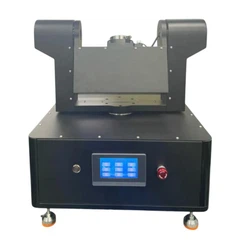
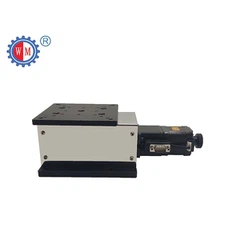
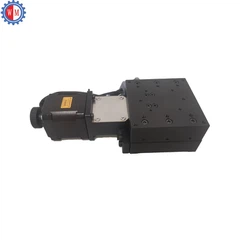
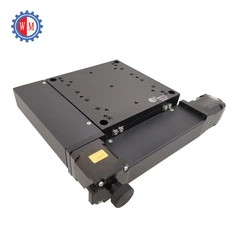
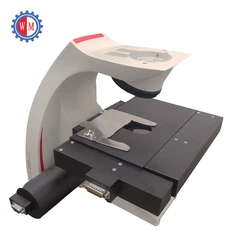
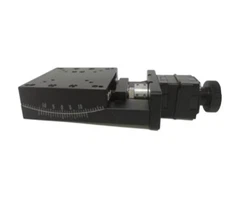
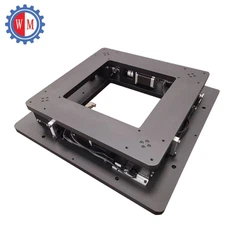


As a supplier of Manual XY - Axis Stages, I often get asked about the materials used in the manufacturing of these precision instruments. Understanding the materials is crucial as they directly impact the performance, durability, and overall quality of the stages. In this blog, I'll delve into the common materials used for Manual XY - Axis Stages and explain how they contribute to the functionality of these devices.
Aluminum
Aluminum is one of the most widely used materials in the construction of Manual XY - Axis Stages. It is favored for several reasons. Firstly, aluminum is lightweight, which makes the stages easier to handle and install. This is particularly important in applications where the stage needs to be moved frequently or where weight is a critical factor, such as in aerospace or portable equipment.
Secondly, aluminum has good corrosion resistance. It forms a thin oxide layer on its surface when exposed to air, which protects it from further oxidation and corrosion. This makes the stages suitable for use in a variety of environments, including those with high humidity or mild chemical exposure.
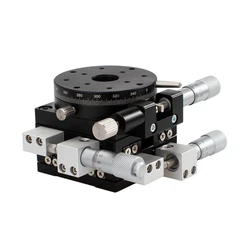
Aluminum also has excellent machinability. It can be easily shaped, drilled, and milled to create the complex geometries required for Manual XY - Axis Stages. This allows for precise manufacturing and tight tolerances, which are essential for the accurate movement and positioning of the stages. For example, at our company, we use high - quality aluminum alloys to manufacture the base and the moving parts of our XY Translation Stage. The aluminum parts are carefully machined to ensure smooth and accurate motion along the X and Y axes.
Stainless Steel
Stainless steel is another important material used in Manual XY - Axis Stages. It is known for its high strength and excellent corrosion resistance, especially in harsh environments. Stainless steel contains chromium, which forms a passive oxide layer on the surface, protecting it from rust and corrosion.

In Manual XY - Axis Stages, stainless steel is often used for components that require high strength and durability, such as the lead screws, nuts, and some structural parts. Lead screws made of stainless steel can withstand high loads and provide smooth and precise linear motion. They are less likely to wear out over time compared to other materials, ensuring long - term reliability of the stage.
For instance, our Manual XY Motion Stage features stainless steel lead screws and nuts. The use of stainless steel in these critical components enhances the overall performance and lifespan of the stage, making it suitable for demanding applications in industries such as semiconductor manufacturing and precision machining.
Brass
Brass is a copper - zinc alloy that is commonly used in Manual XY - Axis Stages. It has several properties that make it a good choice for certain components. Brass has excellent machinability, similar to aluminum, which allows for the production of complex parts with high precision.
One of the key advantages of brass is its low friction coefficient. This makes it ideal for use in bearings and sliding surfaces within the stage. When used as a bearing material, brass reduces the amount of friction between moving parts, resulting in smoother motion and less wear. It also helps to minimize the amount of force required to move the stage, improving the overall user experience.
In our Manual Linear Positioning Slide, brass is used in some of the bearing components. The use of brass in these parts ensures smooth and effortless movement along the linear axis, allowing for precise positioning of the stage.

Plastic
Plastic materials are also used in Manual XY - Axis Stages, although to a lesser extent compared to metals. Plastics offer several benefits, such as low cost, light weight, and electrical insulation.
Acrylic and polycarbonate are two types of plastics that are sometimes used in the construction of stage covers or protective enclosures. These plastics are transparent, which allows users to visually monitor the movement of the stage while protecting it from dust, debris, and minor impacts.
Some plastic polymers, such as Delrin (acetal resin), are used for bushings and other non - load - bearing components. Delrin has good dimensional stability, low friction, and wear resistance, making it suitable for applications where smooth motion and long - term performance are required.
Composite Materials
Composite materials are becoming increasingly popular in the manufacturing of Manual XY - Axis Stages. Composites are made by combining two or more different materials to create a material with enhanced properties.
One type of composite material used in stages is carbon fiber reinforced polymer (CFRP). CFRP has a high strength - to - weight ratio, which means it is very strong while being relatively lightweight. This makes it ideal for applications where high stiffness and low weight are required, such as in high - speed positioning systems.
CFRP also has good thermal stability, which helps to minimize thermal expansion and contraction. This is important in precision applications where temperature changes can affect the accuracy of the stage. By using CFRP in certain components, we can improve the overall performance and accuracy of our Manual XY - Axis Stages.
Material Selection Considerations
When selecting materials for Manual XY - Axis Stages, several factors need to be considered. The application requirements are the most important factor. For example, if the stage will be used in a cleanroom environment, materials with low outgassing properties, such as certain grades of stainless steel and plastics, should be chosen.
Cost is another consideration. Aluminum and plastics are generally more cost - effective compared to stainless steel and composite materials. However, the long - term performance and durability of the stage should also be taken into account. Sometimes, investing in higher - cost materials can result in lower maintenance costs and longer service life.
The level of precision required for the application also influences material selection. For high - precision applications, materials with high stiffness and low thermal expansion, such as granite or some composite materials, may be preferred.
Conclusion
In conclusion, Manual XY - Axis Stages are made from a variety of materials, each with its own unique properties and advantages. Aluminum, stainless steel, brass, plastic, and composite materials all play important roles in the construction of these precision instruments. By carefully selecting the appropriate materials based on the application requirements, we can ensure that our Manual XY - Axis Stages offer high performance, durability, and precision.
If you are in the market for Manual XY - Axis Stages and have specific requirements regarding materials or other features, I encourage you to contact us for a detailed discussion. Our team of experts is ready to assist you in finding the best solution for your application. Whether you need a standard XY Translation Stage, a Manual XY Motion Stage, or a Manual Linear Positioning Slide, we have the expertise and products to meet your needs. Let's start a conversation about your project and how we can help you achieve your goals.
References
- ASM Handbook Committee. (2001). ASM Handbook: Properties and Selection: Nonferrous Alloys and Special - Purpose Materials. ASM International.
- Callister, W. D., & Rethwisch, D. G. (2010). Materials Science and Engineering: An Introduction. Wiley.
- Schmid, F. (2009). Precision Engineering: Fundamentals and Applications. Springer.


