
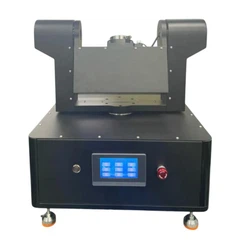
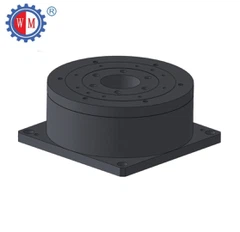
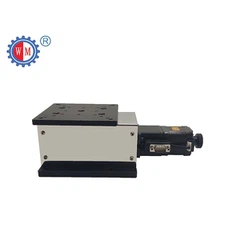
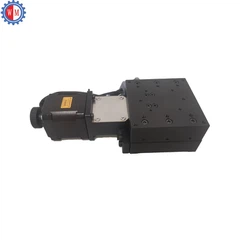
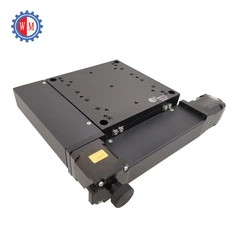
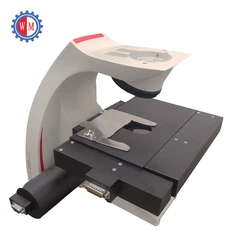
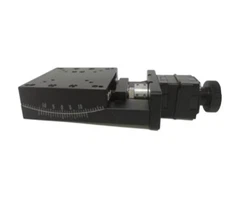
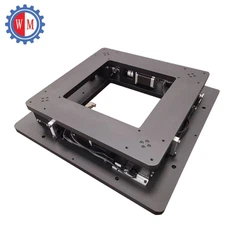


Hey there! As a supplier of Manual Goniometer Tables, I often get asked about the accuracy of these nifty devices. So, I thought I'd take a deep dive into what accuracy really means when it comes to Manual Goniometer Tables and how it impacts their use.
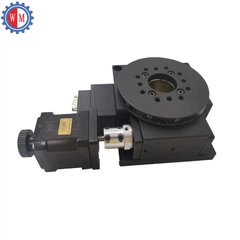
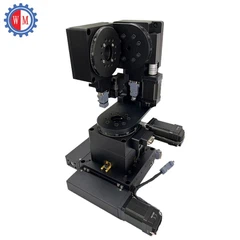
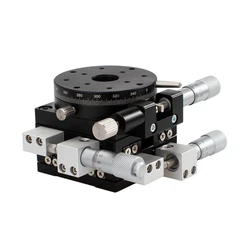
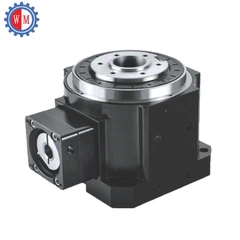
First off, let's talk about what a Manual Goniometer Table is. In simple terms, it's a tool that allows you to measure and adjust angles precisely. These tables are super handy in a bunch of different fields, like engineering, research, and manufacturing. They come in various types, including the Manual Goniometer Stage and the Pitch Yaw Roll Manual Tilt Stage, each designed for specific tasks.
Now, onto the big question: What is the accuracy of a Manual Goniometer Table? Accuracy refers to how close the measured or adjusted angle is to the actual or true angle. It's a crucial factor because in many applications, even a tiny error in angle measurement can lead to significant problems.
There are a few things that can affect the accuracy of a Manual Goniometer Table. One of the main factors is the quality of the manufacturing process. A well - made table with high - precision components is likely to be more accurate. For example, if the gears or bearings used in the table are of poor quality, they can introduce errors in the angle adjustment.
Another factor is the calibration of the table. Just like any measuring instrument, a Manual Goniometer Table needs to be calibrated regularly to ensure its accuracy. Calibration involves comparing the measurements of the table against a known standard. If the table isn't calibrated correctly, the angles it measures or adjusts may be off.
The environment in which the table is used also plays a role. Temperature, humidity, and vibration can all have an impact on the accuracy of the table. For instance, changes in temperature can cause the materials in the table to expand or contract, which can lead to changes in the angle measurements.
Let's take a closer look at how accuracy is measured for Manual Goniometer Tables. Usually, accuracy is specified in terms of angular error, which is the difference between the measured angle and the true angle. This error is often expressed in degrees, arc - minutes (1/60 of a degree), or arc - seconds (1/3600 of a degree).
For example, a Manual Goniometer Table with an accuracy of ± 1 arc - minute means that the measured angle can be off by up to 1 arc - minute from the true angle. In some high - precision applications, even smaller errors are required, and tables with accuracies in the arc - second range are used.
When it comes to choosing a Manual Goniometer Table, the required accuracy depends on the specific application. In some general - purpose applications, a table with a relatively low accuracy may be sufficient. However, in applications such as optical alignment or precision machining, a high - accuracy table is a must.
Let's say you're working on an optical experiment where you need to align a laser beam with extreme precision. In this case, you'll need a Manual Goniometer Table with a very high accuracy, perhaps in the arc - second range. On the other hand, if you're just doing some basic angle measurements for a DIY project, a table with a lower accuracy may be perfectly fine.
As a supplier, I understand that customers have different accuracy requirements. That's why we offer a range of Manual Goniometer Tables with varying levels of accuracy. Whether you need a high - end, ultra - accurate table for a research project or a more budget - friendly option for general use, we've got you covered.
To ensure the best accuracy from our Manual Goniometer Tables, we follow strict quality control measures during the manufacturing process. Our tables are made from high - quality materials and are carefully calibrated before they leave the factory. We also provide detailed instructions on how to use and maintain the tables to keep them accurate over time.
If you're still not sure which Manual Goniometer Table is right for your needs, our team of experts is here to help. We can answer any questions you have about accuracy, calibration, or any other aspect of our products.
In conclusion, the accuracy of a Manual Goniometer Table is a critical factor that depends on manufacturing quality, calibration, and the environment. By understanding these factors and choosing the right table for your application, you can ensure that you get accurate angle measurements and adjustments.


If you're in the market for a Manual Goniometer Table, don't hesitate to reach out to us. We're always happy to discuss your requirements and help you find the perfect table for your project. Whether you need a Manual Goniometer Stage or a Pitch Yaw Roll Manual Tilt Stage, we're here to assist you in making the right choice.
References
- Handbook of Precision Engineering: Measuring Systems
- Principles of Angular Measurement and Calibration in Metrology


