
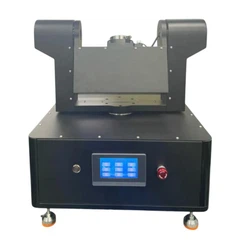
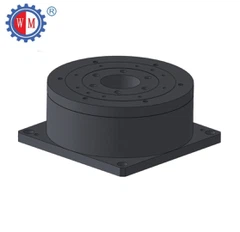
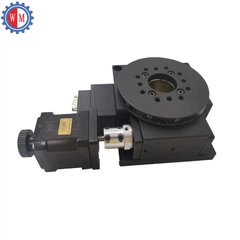
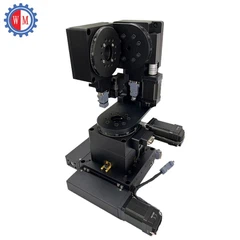
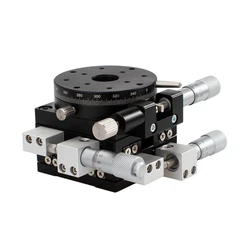
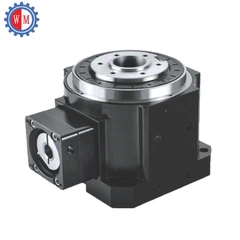


Hey there! As a supplier of Hollow Rotary Tables, I've been in the industry long enough to know that understanding the industry standards is crucial. Whether you're a newbie looking to get into the game or a seasoned pro wanting to stay updated, this blog is for you. Let's dive right into what the industry standards for a hollow rotary table are.
Accuracy and Precision
One of the most important factors when it comes to hollow rotary tables is accuracy. In industrial applications, even the slightest deviation can lead to significant problems. The industry standard for angular accuracy typically ranges from ±5 arc - seconds to ±30 arc - seconds, depending on the specific application and the quality of the table.
For high - precision applications like semiconductor manufacturing or precision machining, a table with an accuracy of ±5 arc - seconds is often required. These tables are designed with high - quality bearings and gears to minimize any errors. On the other hand, for less critical applications such as general automation or simple positioning tasks, a table with an accuracy of ±30 arc - seconds might be sufficient.
Precision also plays a vital role. The repeatability of the table, which refers to its ability to return to the same position repeatedly, is another key metric. Industry standards for repeatability usually fall within ±1 arc - second to ±5 arc - seconds. A table with high repeatability ensures consistent performance over time, which is essential for mass production processes.
Torque and Load Capacity
The torque and load capacity of a hollow rotary table are determined by its intended use. Different applications require different levels of torque to rotate the load effectively. For light - duty applications like small robotic arms or laboratory equipment, a table with a lower torque capacity might be suitable. However, for heavy - duty applications such as large machining centers or material handling systems, a table with a high torque capacity is necessary.
Industry standards for torque capacity can vary widely, from a few Nm (Newton - meters) for small tables to several thousand Nm for large, industrial - grade tables. When it comes to load capacity, it's not just about the weight of the load but also the distribution of the load. A well - designed table should be able to handle both static and dynamic loads without any significant deflection.
Speed and Acceleration
The speed and acceleration capabilities of a hollow rotary table are important for applications that require fast positioning. In high - speed automation processes, a table with a high rotational speed and rapid acceleration can significantly improve productivity.
The industry standard for maximum rotational speed can range from a few RPM (Revolutions Per Minute) for heavy - duty tables to several thousand RPM for high - speed tables. For example, a High Speed Hollow Rotary Table is designed to achieve speeds of up to 3000 RPM or more, making it ideal for applications like high - speed pick - and - place operations.
Acceleration is also a critical factor. A table with a high acceleration rate can quickly reach its desired speed, reducing the overall cycle time. Industry standards for acceleration typically range from a few degrees per second squared to several hundred degrees per second squared, depending on the table's size and application.
Backlash and Rigidity
Backlash, which is the amount of play or clearance between the gears in the table, can affect the accuracy and performance of the table. In general, the industry standard for backlash in a high - quality hollow rotary table is less than 1 arc - minute. A low - backlash table ensures that there is minimal lost motion when changing the direction of rotation, which is crucial for precise positioning.
Rigidity is another important aspect. A rigid table can withstand external forces without significant deformation, ensuring stable operation. Industry standards for rigidity are often measured in terms of the table's ability to resist deflection under a given load. A table with high rigidity is less likely to vibrate during operation, which can improve the surface finish of machined parts and the overall accuracy of the system.
Mounting and Compatibility
Hollow rotary tables need to be easily mountable and compatible with other components in the system. Most tables come with standard mounting interfaces, such as flange mounts or bolt - on options, to ensure easy integration into existing equipment.
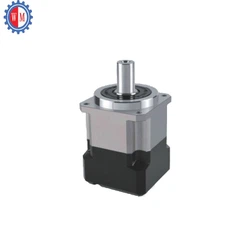
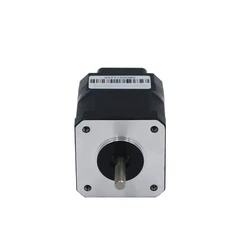
Compatibility also extends to the motor and controller. The table should be able to work seamlessly with different types of motors, such as stepper motors or servo motors. For example, a Hollow Rotary Gearbox for Stepper Motor is designed specifically to be compatible with stepper motors, providing a cost - effective solution for many applications.
Environmental Considerations
In some industrial environments, the hollow rotary table may be exposed to harsh conditions such as dust, moisture, or high temperatures. Industry standards for environmental protection require the table to be designed with appropriate seals and coatings to prevent damage from these elements.
For example, in a dusty environment, a table with an IP (Ingress Protection) rating of IP65 or higher is recommended. This rating indicates that the table is dust - tight and protected against low - pressure water jets. In high - temperature environments, the table should be able to operate within a specified temperature range without any significant degradation in performance.
Quality Control and Testing
To meet industry standards, manufacturers of hollow rotary tables need to implement strict quality control and testing procedures. Every table should be thoroughly tested for accuracy, precision, torque, speed, and other key parameters before it leaves the factory.
Quality control measures may include using precision measuring instruments such as laser interferometers to measure angular accuracy and repeatability. Torque and load tests are also conducted to ensure that the table can handle the specified loads and torques. By adhering to these quality control procedures, manufacturers can guarantee that their tables meet or exceed industry standards.


Why Choose Our Hollow Rotary Tables
As a supplier, we understand the importance of meeting and exceeding these industry standards. Our hollow rotary tables are designed and manufactured with the highest level of precision and quality. We use only the best materials and components to ensure long - term reliability and performance.
Whether you need a Hollow Rotary Stage for a high - precision application or a high - speed table for fast - paced automation, we have the right solution for you. Our team of experts is always available to provide technical support and advice to help you choose the most suitable table for your specific needs.
If you're in the market for a hollow rotary table and want to discuss your requirements, we'd love to hear from you. Contact us to start a conversation about your project and how our products can meet your needs. We're committed to providing you with the best products and services in the industry.
References
- "Motion Control Handbook" by Peter Nachtwey
- Industry reports from leading manufacturers of hollow rotary tables


