

The precision of a motorized lab jack's movement is a crucial factor that significantly impacts its performance and suitability for various laboratory applications. As a leading supplier of motorized lab jacks, we understand the importance of precision in these devices and are committed to providing high - quality products that meet the diverse needs of our customers.
Understanding Precision in Motorized Lab Jacks
Precision in a motorized lab jack refers to the ability of the device to move to a specific position accurately and repeatably. This is typically measured in terms of linear displacement, which is the distance the jack moves along its vertical axis. The precision of a motorized lab jack is influenced by several factors, including the quality of its components, the design of its motion control system, and the calibration of the device.
Components
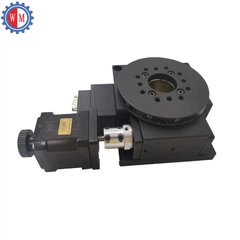
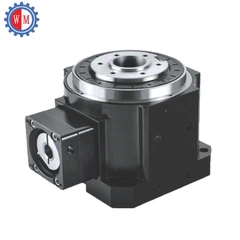
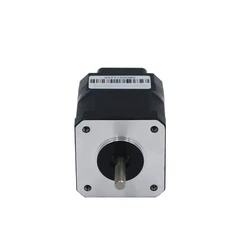
The quality of the components used in a motorized lab jack plays a vital role in determining its precision. High - quality motors, lead screws, and bearings are essential for smooth and accurate movement. For example, a stepper motor provides precise control over the movement of the jack by rotating in discrete steps. The resolution of the stepper motor, which is the smallest angle it can rotate, directly affects the precision of the jack's movement. A motor with a higher resolution can move the jack in smaller increments, resulting in greater precision.
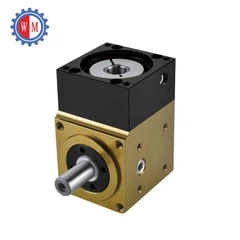
Similarly, the lead screw, which converts the rotational motion of the motor into linear motion, must be of high quality. A well - machined lead screw with a fine pitch can provide more precise linear displacement. Bearings also contribute to the precision of the jack by reducing friction and ensuring smooth movement. Low - friction bearings help to minimize backlash, which is the play or clearance between the moving parts of the jack. Backlash can cause inaccuracies in the position of the jack, so minimizing it is crucial for high - precision applications.
Motion Control System
The motion control system of a motorized lab jack is responsible for controlling the movement of the motor and ensuring that the jack moves to the desired position accurately. This system typically consists of a controller, a driver, and feedback sensors. The controller sends commands to the driver, which in turn powers the motor. Feedback sensors, such as encoders, provide information about the position of the jack to the controller, allowing it to make adjustments and ensure accurate movement.
Closed - loop control systems, which use feedback sensors, are generally more precise than open - loop systems. In a closed - loop system, the controller continuously monitors the position of the jack and makes corrections as needed to ensure that it reaches the desired position. This helps to compensate for any errors or variations in the movement of the jack, resulting in higher precision.
Calibration
Calibration is another important factor in determining the precision of a motorized lab jack. Calibration involves adjusting the device to ensure that its movement corresponds accurately to the commands sent to it. This typically involves measuring the actual displacement of the jack and comparing it to the expected displacement. Any discrepancies are then corrected by adjusting the settings of the motion control system or the mechanical components of the jack.
Regular calibration is necessary to maintain the precision of the jack over time. Factors such as wear and tear, temperature changes, and mechanical stress can affect the performance of the jack and cause it to lose its accuracy. By calibrating the jack periodically, these issues can be detected and corrected, ensuring that the jack continues to provide precise movement.
Importance of Precision in Laboratory Applications
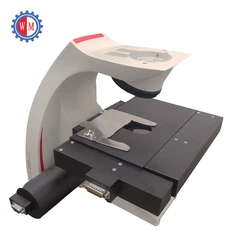
Precision is of utmost importance in laboratory applications, where accurate positioning and movement are often required. For example, in microscopy, a motorized lab jack is used to adjust the height of the specimen stage. Precise movement is essential to ensure that the specimen is in focus and that accurate images can be obtained. A small error in the positioning of the stage can result in blurry or distorted images, making it difficult to analyze the specimen.
In chemical analysis, motorized lab jacks are used to position reaction vessels and other equipment accurately. Precise movement is necessary to ensure that the reagents are added at the correct location and that the reactions proceed as expected. Any inaccuracies in the positioning of the equipment can lead to inconsistent results and affect the reliability of the analysis.
Our Product Offerings
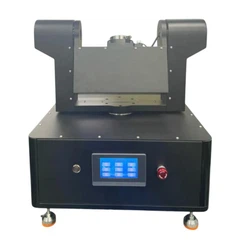
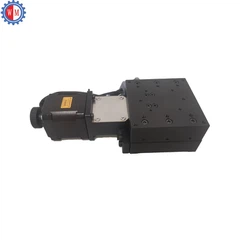
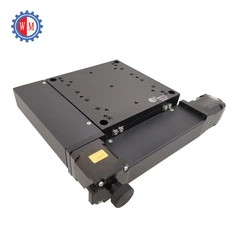
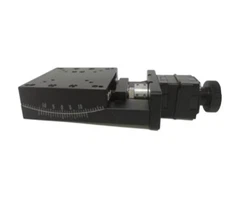
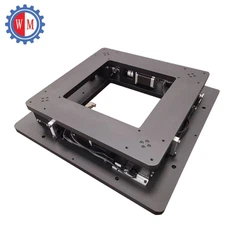
As a supplier of motorized lab jacks, we offer a wide range of products with different levels of precision to meet the diverse needs of our customers. Our Heavy Load Lab Scissor Jack is designed for applications that require the lifting of heavy loads. Despite its high load - capacity, this jack still provides precise movement, thanks to its high - quality components and advanced motion control system.
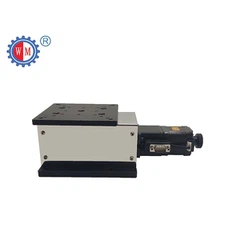
The Motorized Lift Stage is another popular product in our lineup. This stage is suitable for a variety of laboratory applications, including microscopy and material testing. It offers precise linear displacement and can be easily integrated into existing laboratory setups.
For applications that require the highest level of precision, we recommend our High Precision Motorized Z Axis Stage. This stage is equipped with a high - resolution stepper motor and a closed - loop motion control system, ensuring accurate and repeatable movement. It is ideal for applications such as nanotechnology research and semiconductor manufacturing, where sub - micron precision is required.
Contact Us for Procurement
If you are in the market for a motorized lab jack and are looking for a product with high precision, we invite you to contact us. Our team of experts can help you select the right product for your specific application and provide you with detailed information about our products and services. We are committed to providing our customers with the highest level of satisfaction and look forward to working with you.


References
- "Motion Control Handbook", edited by Peter Nachtwey.
- "Precision Machine Design", by Anthony Bryan.


