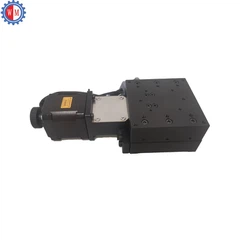
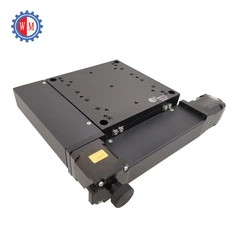
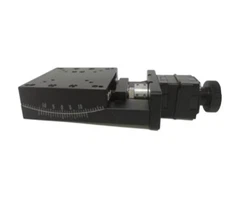
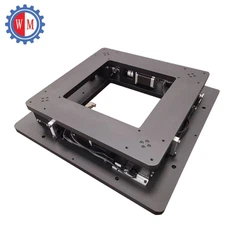
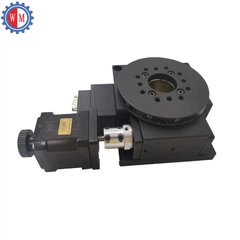
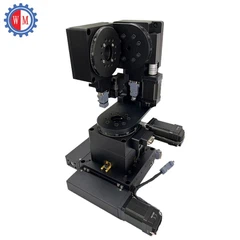
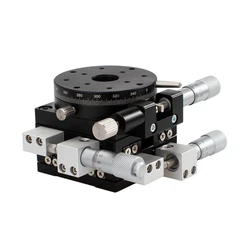


Hey there! I'm a supplier of Manual Z - Axis Stages, and today I wanna chat about a super common question: Are manual Z - Axis stages compatible with different control systems?
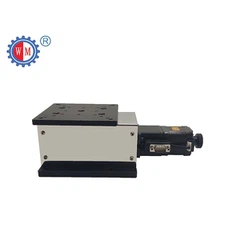
First off, let's get a quick understanding of what manual Z - Axis stages are. Manual Z - Axis stages, like our Manual Vertical Stage, are devices that allow for precise movement along the Z - axis (the vertical direction, in simple terms). They're used in a whole bunch of industries, from microscopy to semiconductor manufacturing.
Now, when it comes to compatibility with different control systems, the answer isn't a straightforward yes or no. It depends on several factors.
1. Interface Types
One of the key things that determine compatibility is the interface of the control system and the manual Z - Axis stage. Most modern control systems come with a variety of interfaces such as USB, Ethernet, and serial ports. Manual Z - Axis stages, on the other hand, are, well, manual. They usually don't have built - in electronic interfaces for direct connection to a control system.
But that doesn't mean they can't work with control systems. There are ways to make them play nice. For example, some manual stages can be retrofitted with encoders. These encoders can convert the manual movement into digital signals that can be read by a control system. So, if you have a control system that can accept encoder signals, you can potentially integrate a manual Z - Axis stage with it.
2. Control System Requirements
Different control systems have different requirements. Some are designed to control high - precision, high - speed movements, while others are more focused on simple, basic positioning. Manual Z - Axis stages are generally designed for relatively slow and precise manual adjustments.
If a control system requires a high - speed response or continuous feedback for real - time control, a manual stage might not be the best fit. However, if the control system is mainly used for setting up an initial position or for occasional adjustments, a manual Z - Axis stage can work just fine.
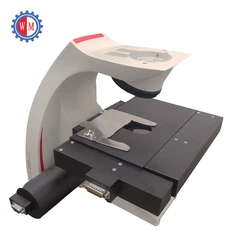
Let's say you're using a control system in a research lab for a microscopy setup. You might only need to adjust the Z - axis position occasionally to focus on different layers of a sample. In this case, a manual Z - Axis stage can be easily incorporated into the system. You can use the control system for other functions like image capture or data analysis, while using the manual stage for the Z - axis positioning.
3. Software Compatibility
Another aspect to consider is software compatibility. Control systems often come with their own software for programming and operation. This software needs to be able to communicate with the hardware components, including the Z - Axis stage.
Since manual Z - Axis stages don't have built - in software interfaces, the control system software needs to be able to handle the signals from any added components (like encoders). Some control system software might have pre - configured settings for working with encoders, while others might require some custom programming.


If you're using a popular control system, there's a good chance that there are third - party solutions or community - developed code that can help with integrating a manual Z - Axis stage. But if you're using a very specialized or proprietary control system, you might face more challenges.
4. Mechanical Compatibility
Beyond the electronics and software, mechanical compatibility is also crucial. The physical dimensions and mounting options of the manual Z - Axis stage need to match the requirements of the control system and the overall setup.
For example, if the control system is part of a large industrial machine, the manual Z - Axis stage needs to be able to fit into the available space and be easily mounted. Some control systems might require specific mounting patterns or alignment features. Our Manual Vertical Stage is designed with a variety of mounting options to increase its compatibility with different setups.
Advantages of Compatibility
If you can make a manual Z - Axis stage compatible with a control system, there are some great advantages.
Cost - effectiveness
Manual Z - Axis stages are generally more affordable than their motorized counterparts. By integrating a manual stage with an existing control system, you can save a significant amount of money. You don't have to invest in a fully motorized Z - Axis stage, especially if you only need manual adjustments most of the time.
Flexibility
You get the best of both worlds. You can use the control system for its advanced features like automation of other processes, while still having the option to make manual adjustments on the Z - axis. This gives you more flexibility in your operations.
Ease of Use
Manual Z - Axis stages are simple to operate. Even if you're using a complex control system, the manual stage provides a straightforward way to make quick adjustments. This can be especially useful for operators who are not highly trained in using the control system software.
Challenges and Limitations
Of course, there are also some challenges and limitations to consider when trying to make manual Z - Axis stages compatible with control systems.
Limited Automation
Since manual Z - Axis stages require human intervention for movement, you can't achieve full automation of the Z - axis movement. If your application requires continuous, automated Z - axis adjustments, a manual stage might not be sufficient.
Precision and Repeatability
While manual Z - Axis stages can provide high precision, the repeatability might be an issue. Every time a human operator makes an adjustment, there can be slight variations. If your control system requires extremely high repeatability, you might need to consider a motorized stage.
Conclusion
So, are manual Z - Axis stages compatible with different control systems? The answer is that it's possible in many cases, but it depends on a variety of factors such as interface types, control system requirements, software compatibility, and mechanical compatibility.
If you're looking to integrate a manual Z - Axis stage with your control system, it's important to carefully evaluate your specific needs. Our Manual Vertical Stage is a great option with its flexible design and high - quality construction.
If you're interested in learning more about how our manual Z - Axis stages can work with your control system, or if you have any questions about compatibility, don't hesitate to reach out. We're here to help you find the best solution for your application. Whether you're in a research lab, a manufacturing plant, or any other industry, we can assist you in making the right choice. Let's start a conversation and see how we can make your setup even better!
References
- "Motion Control Handbook" - A comprehensive guide on motion control systems and components.
- Industry research papers on the integration of manual and automated components in control systems.


