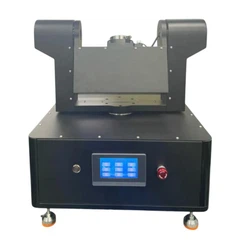
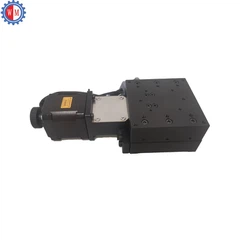
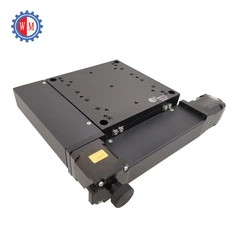
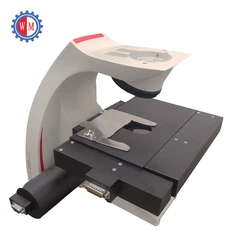
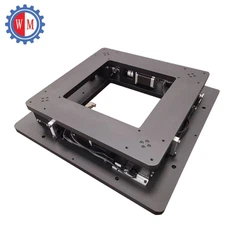
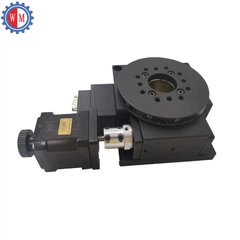
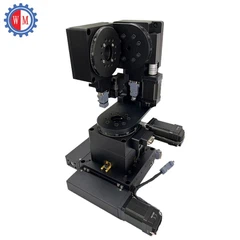
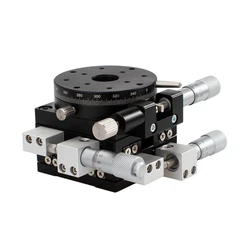
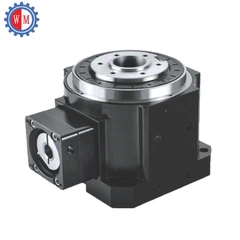
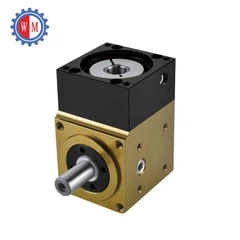


Is a motorized gimbal stage portable? That's a question I get asked a lot as a supplier of motorized gimbal stages. In this blog post, I'm gonna break down the factors that determine portability and share my thoughts on whether these stages can be considered truly portable.
First off, let's talk about what a motorized gimbal stage is. It's a device that allows for precise movement and positioning in multiple axes, usually controlled by motors. These stages are commonly used in various industries, like microscopy, photonics, and automation, where accurate positioning is crucial.
When we're talking about portability, there are a few key aspects to consider: size, weight, and ease of transport.


Size
The size of a motorized gimbal stage can vary widely. Some are relatively compact, designed for benchtop use in a lab or a small workspace. These smaller stages can be easily moved around on a table or between different workstations. On the other hand, there are larger, more industrial - grade motorized gimbal stages that are built for heavy - duty applications. These can be quite large and may not be as easy to relocate.
For example, if you're working in a research lab where you need to move your equipment between different rooms for different experiments, a smaller motorized gimbal stage would be much more convenient. But if you're in a manufacturing plant where the stage is installed as part of a fixed production line, size may not be as much of a concern for portability.
Weight
Weight is another important factor. A light - weight motorized gimbal stage is obviously easier to carry around. Many of the portable - friendly models are made with lightweight materials like aluminum alloys to reduce their overall mass. However, if the stage is built to handle heavy loads or has a lot of built - in components for high - precision control, it can end up being quite heavy.
Imagine trying to move a heavy motorized gimbal stage up a flight of stairs or into a vehicle for transport. It can be a real challenge. So, if portability is a priority, you'll want to look for a stage with a reasonable weight.
Ease of Transport
This includes how easy it is to disassemble, pack, and set up the motorized gimbal stage. Some stages are designed with quick - release mechanisms and modular components, making them easy to take apart and put back together. This is great for those who need to transport their equipment frequently, like field researchers or technicians who work on - site.
On the contrary, some stages are more integrated and may require more time and effort to disassemble and reassemble. This can be a major drawback if you need to move your equipment on a regular basis.
Now, let's talk about the advantages of having a portable motorized gimbal stage.
Flexibility
A portable stage gives you the flexibility to use it in different locations. You can take it to a client's site for demonstrations, or move it between different projects in your own workspace. This is especially useful for businesses that offer on - site services or for researchers who collaborate with different institutions.
Cost - Efficiency
Rather than having multiple fixed - location stages, a single portable stage can be used in different places. This can save you money in the long run, as you don't have to invest in multiple pieces of equipment.
Adaptability
In a rapidly changing work environment, a portable motorized gimbal stage allows you to adapt quickly. You can move it to where it's most needed at any given time, whether it's for a new experiment, a different production process, or a special project.
However, there are also some limitations to the portability of motorized gimbal stages.
Precision and Stability
When you move a stage around, there's always a risk of affecting its precision and stability. The vibrations and jolts during transport can potentially misalign the components, which may require recalibration before use. This can be time - consuming and may affect the accuracy of your work.
Power Requirements
Portable motorized gimbal stages need a power source. If you're moving it to different locations, you need to make sure there's a suitable power supply available. Some stages may require a specific voltage or power output, which can be a challenge in some environments.
Durability
The more you move a stage, the more wear and tear it's likely to experience. This can reduce its lifespan and may lead to more frequent maintenance and repair requirements.
In my experience as a supplier, there are definitely motorized gimbal stages that can be considered portable. For those looking for a more basic, entry - level option, Manual XY Positioning Stage can be a good starting point. It offers some degree of positioning flexibility and is generally more compact and easier to handle.
If you need more complex multi - axis movement, the Manual Linear XYZ Translation Stage provides a wider range of motion. And for those who want to power their motorized gimbal stage with a reliable driver, the Modbus RS485 Stepper Driver for Nema 23 is a great choice.
So, if you're in the market for a motorized gimbal stage and portability is a key factor for you, I'd be more than happy to help you find the right solution. Whether you're a researcher, an engineer, or a business owner, we have a range of products to suit your needs. Reach out to us to start a conversation about your requirements, and let's see how we can make your work more efficient with the right motorized gimbal stage.
References
- General knowledge in the field of motion control and stage technology.
- Industry reports on the use and requirements of motorized gimbal stages.


