

Hey there! As a supplier of Visual Alignment Stages, I often get asked about how these nifty devices handle different image resolutions. It's a super important topic because in today's diverse technological landscape, images come in all shapes and sizes, and our Visual Alignment Stages need to be up to the task.
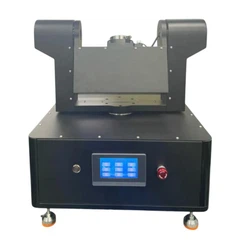
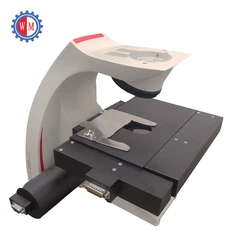
First off, let's quickly understand what a Visual Alignment Stage is. It's a key piece of equipment used in various industries, like semiconductor manufacturing, precision assembly, and microscopy. The main job of a Visual Alignment Stage is to precisely position objects based on visual feedback. It uses cameras and advanced algorithms to analyze images and make accurate adjustments.
Now, onto the big question: how does it handle different image resolutions? Well, one of the core features of our Visual Alignment Stages is their flexibility. They're designed to work with a wide range of image resolutions right out of the box. Whether you're dealing with high - resolution images that can show the tiniest details or lower - resolution ones that give a broader view, our stages can adapt.
Let's start with high - resolution images. These are great when you need extreme precision. For example, in semiconductor manufacturing, you might be looking at individual transistors on a microchip. High - resolution images can capture every little bump and line, allowing for extremely accurate alignment. Our Visual Alignment Stages have advanced image processing algorithms that can handle the large amount of data in high - resolution images. They can quickly analyze the fine details and calculate the exact adjustments needed for alignment. The stages are also equipped with high - speed processors that can crunch through the data in no time, so you don't have to wait ages for the alignment to happen.
On the other hand, lower - resolution images have their own advantages. They're faster to capture and process, which can be useful when you need to do quick alignments or when you're working with larger objects where extreme precision isn't always necessary. Our Visual Alignment Stages can still work effectively with lower - resolution images. The algorithms are designed to extract the essential information from these images, such as the general shape and position of the object. This allows the stage to make a good enough alignment in a shorter amount of time.


Another important aspect is the calibration process. Our Visual Alignment Stages come with a calibration feature that helps them work optimally with different image resolutions. When you first set up the stage, you can calibrate it for the specific image resolution you'll be using. This calibration adjusts the internal parameters of the stage, such as the sensitivity of the image analysis and the step size of the movement. By doing this, you can ensure that the stage will give you the most accurate alignment possible, no matter what the image resolution is.
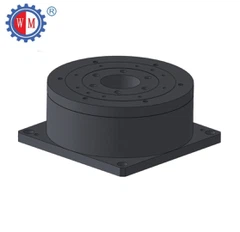
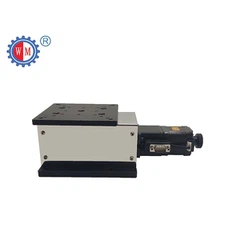
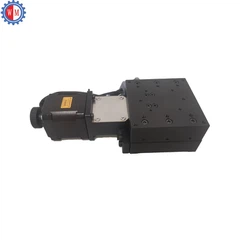
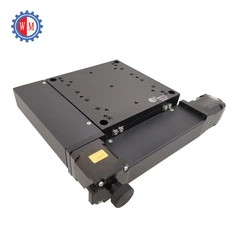
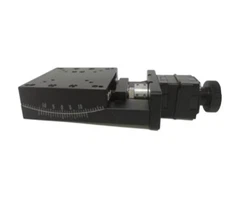
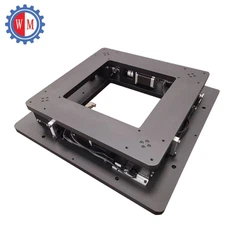
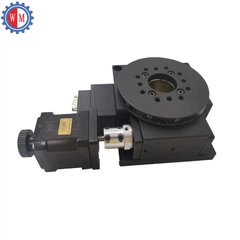
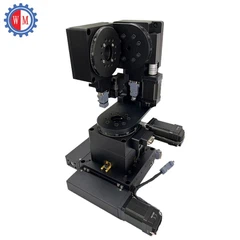
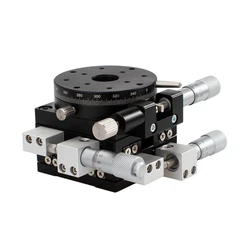
Let's talk about some of the specific models we offer. The XYY Alignment Stage is a great option for applications where you need precise alignment in multiple axes. It can handle a wide range of image resolutions and is suitable for both high - precision and general - purpose alignment tasks. The Motorized UVW Alignment Stage is another popular choice. It's motorized, which means it can make adjustments automatically based on the image analysis. This is especially useful when you're dealing with a large number of alignment tasks or when you need to do alignments quickly.
Now, you might be wondering how our Visual Alignment Stages compare to other products on the market. Well, one of the things that sets us apart is our focus on user - friendliness. Our stages are easy to set up and operate, even if you're not a technical expert. The software that comes with the stages has a simple and intuitive interface, so you can quickly get up and running. We also offer excellent customer support, so if you run into any problems or have any questions about how to use the stage with different image resolutions, our team is always ready to help.
In addition to the software and user - friendliness, our stages are built with high - quality components. This ensures that they're reliable and durable, so you can use them for a long time without having to worry about breakdowns. The materials used in the construction of the stages are carefully selected to provide maximum stability and precision, which is crucial when dealing with different image resolutions.
So, if you're in the market for a Visual Alignment Stage that can handle different image resolutions, look no further. Our products are designed to meet the needs of a wide range of industries and applications. Whether you're a small business looking for a cost - effective solution or a large corporation in need of high - end equipment, we have the right stage for you.
If you're interested in learning more about our Visual Alignment Stages or want to discuss your specific requirements, don't hesitate to get in touch. We'd love to have a chat with you and help you find the perfect stage for your needs. Contact us today to start the procurement process and take your alignment tasks to the next level.
References
- General knowledge of visual alignment stage technology
- Product specifications of XYY Alignment Stage, Motorized UVW Alignment Stage, and Visual Alignment Stage


