
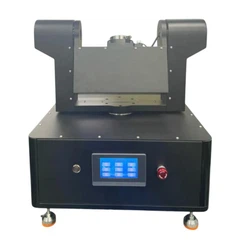
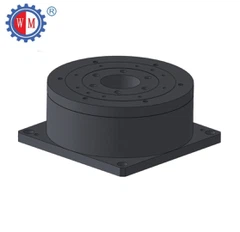
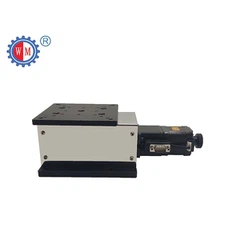
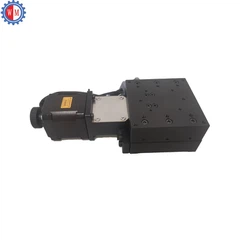
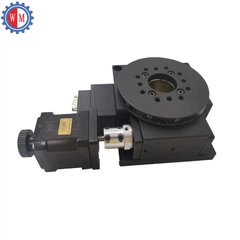
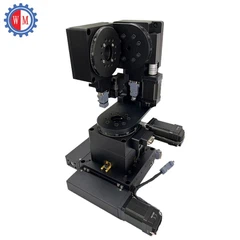
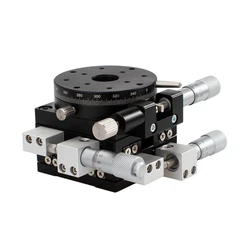
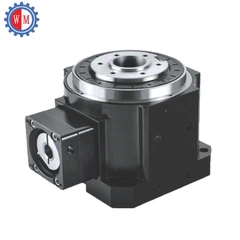



Hey there! As a supplier of Visual Alignment Stages, I've been in the thick of the industry for quite some time. One question that often pops up is, "What are the differences between global and local Visual Alignment Stage?" Let's dive right in and break it down.
Understanding Visual Alignment Stages
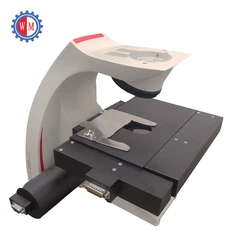
First off, let's get a quick grasp of what a Visual Alignment Stage is. In simple terms, it's a device used to precisely position objects in a specific orientation or location. These stages are crucial in various industries like semiconductor manufacturing, microscopy, and photonics. They help ensure that components are accurately aligned, which is vital for the proper functioning of the final product.
Global Visual Alignment Stage
The global Visual Alignment Stage is like the big - picture guy in the room. It's designed to handle large - scale alignment tasks. When you're dealing with a large area or multiple components spread out over a wide space, this is the stage you reach for.
One of the key features of a global Visual Alignment Stage is its wide field of view. It can capture a large area in a single shot, which is super useful when you need to align multiple objects at once. For example, in a semiconductor manufacturing plant, when you're assembling a large circuit board with numerous components, the global stage can quickly identify the positions of all the parts and align them accordingly.
Another advantage is its ability to work with low - resolution images. Since it's dealing with a large area, high - resolution isn't always necessary. This can save on processing time and resources. The global stage also often has a high - speed movement capability. It can quickly reposition itself to cover different areas of the workspace, making the alignment process more efficient.


However, the global stage does have its limitations. Because it's focused on the big picture, it may not be as precise when it comes to aligning individual components. The margin of error can be slightly higher compared to a local stage. Also, the large field of view can sometimes make it difficult to detect small details, which could be crucial in some applications.
Local Visual Alignment Stage
On the flip side, the local Visual Alignment Stage is all about the details. It's designed for tasks that require high - precision alignment of individual components or small areas.
The local stage has a narrow field of view, which allows it to capture high - resolution images of a small area. This is perfect for applications where you need to align tiny components with extreme accuracy, like in micro - electronics or nanotechnology. For instance, when you're aligning the microscopic wires in a microchip, the local stage can zoom in and ensure that each wire is perfectly positioned.
Precision is the name of the game for the local stage. It can achieve very high levels of accuracy, often with a margin of error that's a fraction of what a global stage can offer. This makes it ideal for applications where even the slightest misalignment can lead to product failure.
But the local stage also has its drawbacks. Since it has a narrow field of view, it can only cover a small area at a time. This means that if you have a large number of components to align, the process can be time - consuming. You may need to move the stage multiple times to cover all the necessary areas. Also, the high - resolution imaging requires more processing power and time, which can slow down the overall alignment process.
Comparing the Two
Let's take a closer look at how these two types of stages stack up against each other in different aspects:
Accuracy
As mentioned earlier, the local stage wins hands down when it comes to accuracy. Its ability to capture high - resolution images and focus on small areas allows for extremely precise alignment. The global stage, while still accurate enough for many applications, can't match the local stage's level of precision.
Field of View
The global stage has a wide field of view, which is great for large - scale alignment tasks. The local stage, with its narrow field of view, is better suited for small - scale, high - precision work.
Speed
In terms of speed, the global stage usually has the edge. Its high - speed movement and ability to work with low - resolution images allow it to complete alignment tasks more quickly, especially when dealing with large areas. The local stage, due to its need for high - resolution imaging and slow, precise movements, can be slower.
Processing Requirements
The local stage requires more processing power and time because of its high - resolution imaging. The global stage, on the other hand, can get by with less processing, thanks to its lower - resolution images and focus on the big picture.
Applications
The choice between a global and a local Visual Alignment Stage depends largely on the application.
For applications like large - scale circuit board assembly, solar panel manufacturing, and large - area printing, the global stage is the way to go. Its wide field of view and high - speed movement make it ideal for these tasks.
In contrast, applications such as micro - machining, optical fiber alignment, and biological sample imaging require the high - precision capabilities of the local stage. The ability to focus on small details and achieve extreme accuracy is essential in these fields.
Our Product Offerings
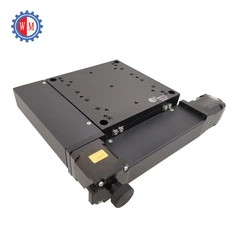
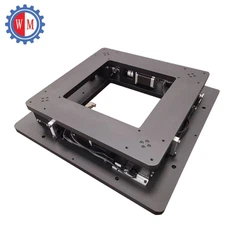
At our company, we offer a range of Visual Alignment Stages to meet different needs. Our Motorized UVW Alignment Stage is a great option for both global and local alignment tasks. It offers precise control and can be customized to suit specific requirements.
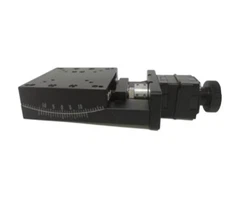
We also have the XYY Alignment Stage, which is designed for high - precision applications. It provides excellent stability and accuracy, making it perfect for local alignment tasks.
Contact Us for Your Alignment Needs
If you're in the market for a Visual Alignment Stage, whether it's a global or local one, we'd love to hear from you. Our team of experts can help you choose the right stage for your specific application and provide you with all the support you need. Don't hesitate to reach out to us to start a conversation about your alignment requirements. We're here to make sure you get the best solution for your business.
References
- "Visual Alignment Techniques in Precision Manufacturing" - Journal of Manufacturing Science
- "Comparative Study of Global and Local Alignment Methods" - International Journal of Precision Engineering
So, that's a wrap on the differences between global and local Visual Alignment Stages. I hope this blog has given you a better understanding of these two types of stages and how they can be used in different applications. If you have any questions or need more information, feel free to drop us a line.


