

Hey there! As a supplier of Manual XY - Axis Stages, I often get asked a pretty common question: "Do Manual XY - Axis Stages have any built - in sensors?" Well, let's dive right into this topic and break it down.
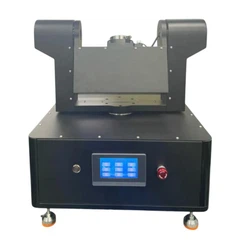
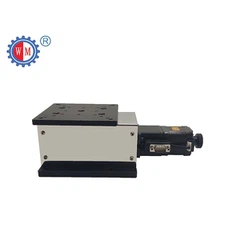
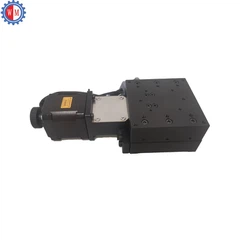
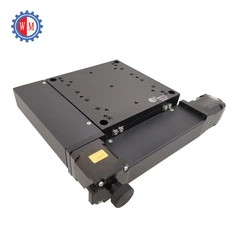
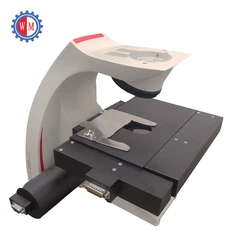
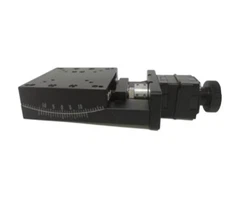
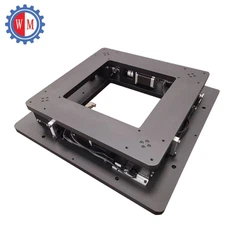
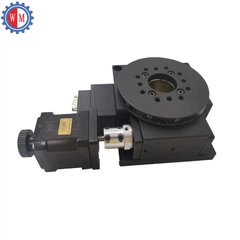
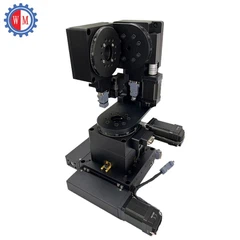
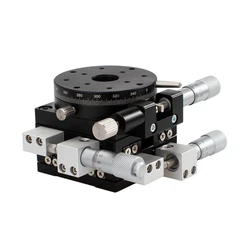
First off, let's understand what Manual XY - Axis Stages are. These are mechanical devices that allow users to move an object in two perpendicular directions (X and Y axes) manually. They're used in a whole bunch of applications, from microscopy and optical alignment to precision manufacturing. You can check out our Manual XY Axis Positioning Stage and Manual Optical Alignment Stage for more details on the types of products we offer.
Now, back to the question. Generally speaking, manual XY - Axis Stages don't come with built - in sensors. The key word here is "manual." These stages are designed to be adjusted by hand, using knobs or screws. The user physically turns these controls to move the stage along the X and Y axes. It's a straightforward, hands - on approach that gives the operator direct control over the movement.

Why don't they have sensors? Well, one of the main reasons is cost. Adding sensors to a stage would significantly increase its price. Manual stages are often chosen because they're an affordable option for applications where high - precision measurement isn't absolutely necessary. For example, in some basic microscopy setups, the user just needs to move the sample around a bit to get a good view. They don't need to know the exact position of the stage down to the micron.
Another reason is simplicity. Manual stages are easy to use. There's no need to deal with complex sensor calibration or data processing. You just turn the knobs and the stage moves. This simplicity makes them a popular choice for educational settings or small - scale projects where the user might not have a lot of technical expertise.
However, that doesn't mean that there's no place for sensors in the world of XY - Axis Stages. In fact, there are situations where having sensor data can be really useful. For example, in precision applications like semiconductor manufacturing or high - end optical research, knowing the exact position of the stage is crucial. That's where our Adjustable XY Stage For Precision Applications comes in. While it's still a manual stage, it can be paired with external sensors if needed.
External sensors can provide real - time feedback on the position of the stage. This can help the user make more precise adjustments and ensure that the stage is in the exact position required for the application. There are different types of sensors that can be used, such as linear encoders or capacitive sensors. These sensors work by measuring the displacement of the stage and sending the data to a controller or a display.
Let's take a closer look at how these external sensors work. Linear encoders, for example, use a scale and a readhead. The scale is attached to the moving part of the stage, and the readhead senses the position of the scale. As the stage moves, the readhead sends signals to a controller, which then calculates the position of the stage. Capacitive sensors, on the other hand, work by measuring changes in capacitance. They're very accurate and can detect even small movements.

Now, you might be wondering if it's possible to retrofit a manual XY - Axis Stage with sensors. The answer is yes, in most cases. Many of our manual stages are designed to be compatible with external sensors. This means that if you start with a basic manual stage and later find that you need more precise positioning, you can easily add sensors to it.
Retrofitting a stage with sensors does require some technical know - how. You'll need to make sure that the sensors are properly installed and calibrated. But don't worry, we're here to help. Our team of experts can provide you with all the support you need to integrate sensors with your manual stage.

In summary, while manual XY - Axis Stages typically don't have built - in sensors, there are plenty of options available for adding external sensors if you need more precise positioning. Whether you're working on a basic project or a high - precision application, we have the right solution for you.
If you're interested in learning more about our Manual XY - Axis Stages or have any questions about sensor integration, we'd love to hear from you. Just reach out to us, and we'll be happy to discuss your specific needs and help you find the perfect stage for your application.
References
- General knowledge on mechanical stages and sensor technology in precision engineering
That's all for now. I hope this blog has been helpful in answering your question about manual XY - Axis Stages and sensors. Until next time!


