
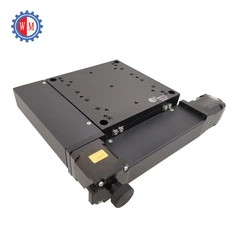
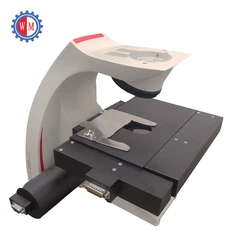
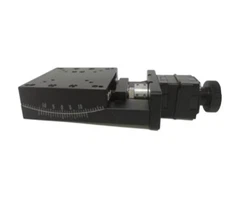
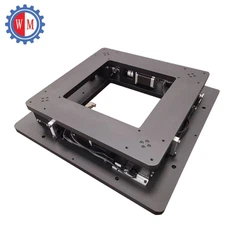


Hey there! As a supplier of Motorized 2 Axis Stages, I often get asked about the static accuracy of these nifty devices. So, let's dive right in and break it down.
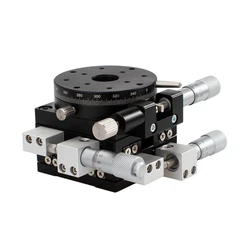
First off, what are motorized 2 axis stages? Well, they're basically precision positioning tools that can move in two directions, usually along the X and Y axes. You can find them in all sorts of industries, from semiconductor manufacturing to medical research. They're super useful for tasks that require precise movement and positioning, like aligning optical components or performing micro - manipulations.
Now, let's talk about static accuracy. Static accuracy refers to how accurately the stage can hold a specific position when it's not in motion. It's a crucial factor because if the stage can't hold its position precisely, any work you're doing on it is going to be off.
There are a few key elements that affect the static accuracy of motorized 2 axis stages. One of the main ones is the quality of the mechanical components. For example, the lead screws or ball screws that drive the stage's movement need to be well - made. If the screws have too much backlash (the amount of play or free movement), it can cause the stage to deviate from its intended position. A high - quality screw with minimal backlash will result in better static accuracy.
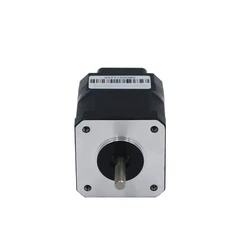
Another important factor is the motor. Stepper motors and servo motors are commonly used in motorized 2 axis stages. Stepper motors move in discrete steps, and their accuracy depends on the step resolution. Servo motors, on the other hand, can provide more continuous and precise movement. The control system that manages the motor also plays a big role. A well - tuned control system can compensate for any small errors in the mechanical components and the motor, helping the stage to hold its position more accurately.
The materials used in the construction of the stage also matter. For instance, if the stage is made of a material that expands or contracts significantly with temperature changes, it can affect the static accuracy. Materials with low thermal expansion coefficients, like some types of ceramics or special alloys, are often used to minimize these temperature - related effects.
Let's take a closer look at how static accuracy is measured. One common way is to use a laser interferometer. This device can measure the position of the stage with extremely high precision. By comparing the actual position of the stage with the commanded position, you can determine the error. The smaller the error, the higher the static accuracy.
In the real world, static accuracy can have a huge impact on the performance of your application. For example, in a semiconductor manufacturing process, even a tiny deviation in the position of a wafer can lead to defective chips. In medical imaging, inaccurate positioning of a sample can result in blurry or incorrect images.
If you're in the market for a motorized 2 axis stage, it's important to consider the static accuracy requirements of your specific application. Some applications might only need a relatively low level of accuracy, while others, like those in the high - tech industries, demand extremely high precision.

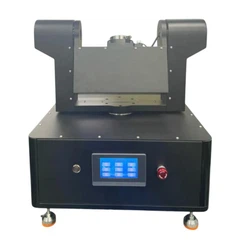
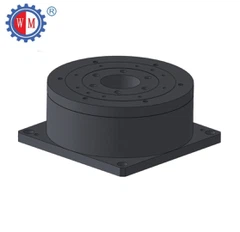
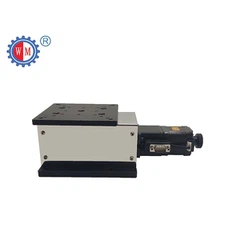
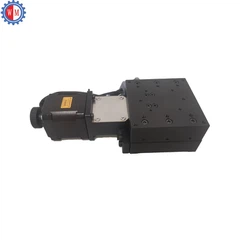
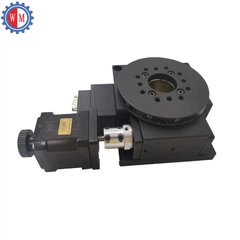
We offer a range of Motorized 2 Axis Stages to meet different needs. Our Motorized Xy Translation Stage is a great option for general - purpose applications. It provides a good balance between performance and cost, with a decent level of static accuracy.
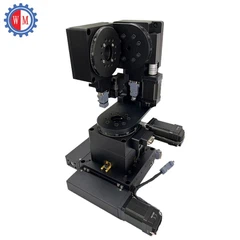
For those who need higher precision, our Precision Xy Positioning Table is the way to go. It's built with high - quality components and a sophisticated control system to ensure excellent static accuracy.
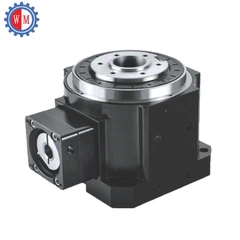
And if you're looking for a more integrated solution, our Motorized XY Tables Built - in Controllers are a great choice. These tables come with built - in controllers, which simplifies the setup and can help to optimize the static accuracy.

When choosing a motorized 2 axis stage, don't just focus on the static accuracy number. You also need to consider other factors like the load capacity, the speed of movement, and the overall reliability of the stage. A stage with high static accuracy but low load capacity might not be suitable for your application if you need to move heavy objects.
In addition, it's important to work with a supplier who can provide good technical support. We're always here to help you select the right stage for your needs, and to assist you with any installation, calibration, or troubleshooting issues.
If you're interested in learning more about our motorized 2 axis stages or have any questions about static accuracy, don't hesitate to reach out. We'd be more than happy to have a chat with you and discuss how our products can meet your requirements. Whether you're a small research lab or a large manufacturing facility, we have the right solution for you. So, why not get in touch and start exploring the possibilities?

References:
- "Precision Motion Control Handbook"
- Industry whitepapers on motorized stage technology


