


Automated testing has become an indispensable part of modern manufacturing and quality control processes. It ensures precision, consistency, and efficiency in evaluating products and components. In this context, the question arises: Can motorized 2 axis stages be used in automated testing? As a supplier of Motorized 2 Axis Stages, I'm well - positioned to explore this topic in detail.
Understanding Motorized 2 Axis Stages
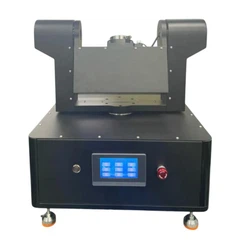
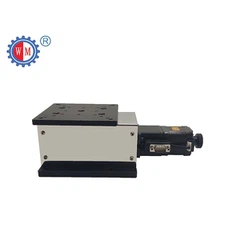
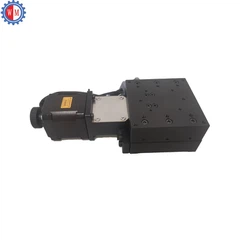
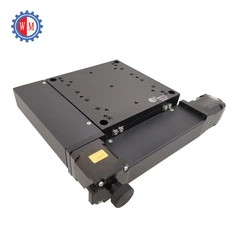
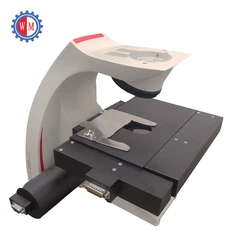
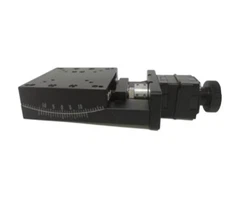
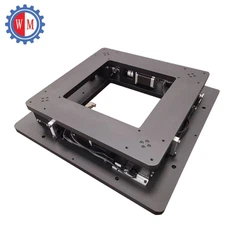
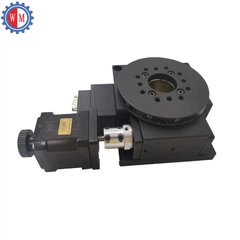
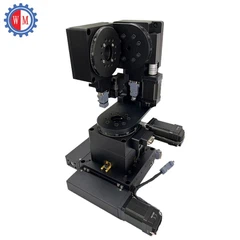
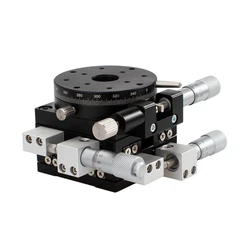
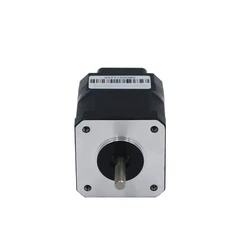
Motorized 2 axis stages, also known as Motorized Xy Linear Stage, are devices that provide controlled movement along two perpendicular axes, typically the X and Y axes. These stages are equipped with motors, which can be stepper motors, servo motors, or other types, to drive the movement. The motors are controlled by a controller, which can be programmed to move the stage to specific positions, at specific speeds, and with a high degree of accuracy.
The design of motorized 2 axis stages allows for precise positioning and movement. They often feature high - quality linear guides, which reduce friction and ensure smooth motion. Some stages also come with encoders, which provide feedback on the position of the stage, enabling closed - loop control and enhancing the accuracy of movement.
Advantages of Using Motorized 2 Axis Stages in Automated Testing
Precision and Repeatability
One of the primary advantages of using motorized 2 axis stages in automated testing is their ability to provide high precision and repeatability. In many automated testing applications, such as semiconductor testing, optical component testing, and PCB inspection, it is crucial to position the test equipment or the device under test accurately and repeatedly. Motorized 2 axis stages can achieve positioning accuracies in the micrometer or even nanometer range, depending on the specific model and configuration. This high level of precision ensures that the test results are reliable and consistent.
Flexibility
Motorized 2 axis stages offer great flexibility in automated testing. They can be easily integrated into different testing systems. For example, they can be combined with cameras, sensors, or other testing equipment to perform a variety of tests. The stages can be programmed to move in different patterns, such as raster scans, spiral scans, or point - to - point movements, depending on the requirements of the test. This flexibility allows for the adaptation of the testing process to different types of products and testing scenarios.


Efficiency
Automated testing with motorized 2 axis stages can significantly improve efficiency. Compared to manual testing, which is time - consuming and prone to human error, automated testing with motorized stages can perform tests much faster and more accurately. The stages can move quickly between different test positions, reducing the time required for each test cycle. Additionally, the ability to perform multiple tests in a single setup further enhances the overall efficiency of the testing process.
Applications of Motorized 2 Axis Stages in Automated Testing
Semiconductor Testing
In the semiconductor industry, motorized 2 axis stages are widely used in wafer testing and die sorting. During wafer testing, the stage is used to position the probe card over different die on the wafer. The high precision of the stage ensures that the probes make proper contact with the electrical pads on the die, enabling accurate electrical testing. In die sorting, the stage moves the die to different locations for sorting based on their test results.
Optical Component Testing
Optical components, such as lenses, filters, and fiber optics, require precise alignment and testing. Motorized 2 axis stages are used to position the optical components relative to the testing equipment, such as spectrometers or interferometers. The stages can move the components with high precision to measure their optical properties, such as transmittance, reflectance, and wavefront error.
PCB Inspection
Printed circuit boards (PCBs) need to be inspected for defects, such as short circuits, open circuits, and misaligned components. Motorized 2 axis stages are used to move the PCB under a camera or other inspection equipment. The stage can perform a raster scan of the PCB, allowing the inspection system to capture images of the entire board and detect any defects.
Considerations When Using Motorized 2 Axis Stages in Automated Testing
Load Capacity
The load capacity of the motorized 2 axis stage is an important consideration. The stage needs to be able to support the weight of the test equipment and the device under test without compromising its performance. If the load is too heavy, it can cause the stage to move more slowly, reduce its accuracy, or even damage the linear guides and motors.
Speed and Acceleration
The speed and acceleration requirements of the testing process should also be considered. Different tests may require different movement speeds and accelerations. For example, a high - speed test may require the stage to move quickly between test positions, while a high - precision test may require slower movement to ensure accurate positioning. The motorized 2 axis stage should be selected based on the specific speed and acceleration requirements of the application.
Compatibility with Testing Equipment
The motorized 2 axis stage needs to be compatible with the other testing equipment in the system. This includes the controller, sensors, cameras, and any other devices. The stage should be able to communicate with the other equipment effectively to ensure smooth operation of the automated testing system.
Our Offerings as a Motorized 2 Axis Stages Supplier
As a supplier of Motorized 2 Axis Stages, we offer a wide range of products to meet different customer needs. Our stages are designed with high - quality materials and advanced manufacturing techniques to ensure reliability and performance.
We have stages with different load capacities, from small - scale stages for light - weight testing equipment to heavy - duty stages for large - scale devices. Our stages also offer a variety of movement speeds and positioning accuracies, allowing customers to choose the most suitable stage for their specific testing applications.
In addition to our standard products, we also provide customization services. We can design and manufacture motorized 2 axis stages according to the specific requirements of our customers. This includes customizing the size, load capacity, speed, and other parameters of the stage.
Conclusion
In conclusion, motorized 2 axis stages can be effectively used in automated testing. Their precision, flexibility, and efficiency make them an ideal choice for a wide range of testing applications, including semiconductor testing, optical component testing, and PCB inspection. However, when using motorized 2 axis stages in automated testing, it is important to consider factors such as load capacity, speed, and compatibility with testing equipment.
As a supplier of motorized 2 axis stages, we are committed to providing high - quality products and excellent customer service. If you are interested in using motorized 2 axis stages for your automated testing needs, we invite you to contact us for more information and to discuss your specific requirements. We look forward to working with you to develop the best testing solutions for your business.
References
- Smith, J. (2018). Precision Motion Control in Automated Testing. Journal of Manufacturing Technology, 25(3), 123 - 135.
- Johnson, A. (2019). Applications of Motorized Stages in the Semiconductor Industry. Semiconductor Review, 32(2), 45 - 56.
- Brown, C. (2020). Optical Component Testing with Motorized Positioning Systems. Optical Engineering Journal, 40(4), 234 - 245.


