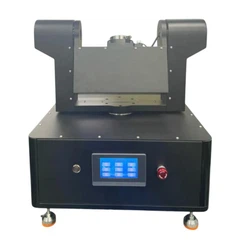
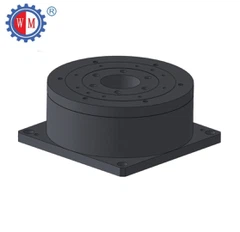
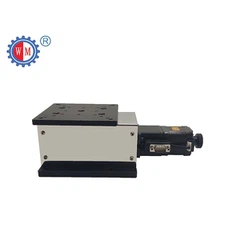
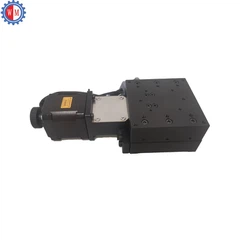
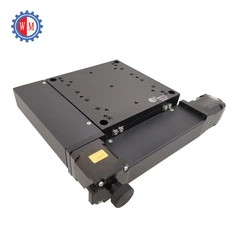
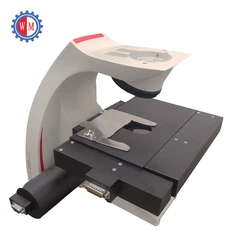
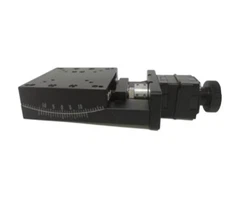
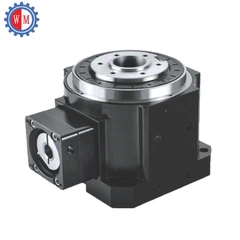


Hey there! As a supplier of Hollow Rotary Tables, I've seen a lot of questions from customers, and one that comes up quite often is how a hollow rotary table responds to sudden stops. So, I thought I'd take a few minutes to break it down for you.
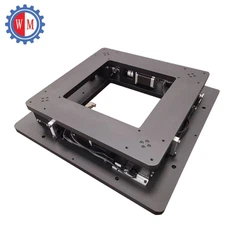
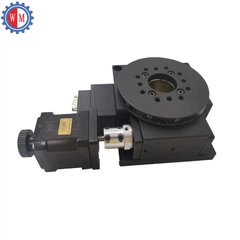
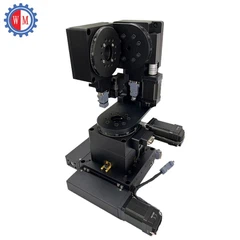
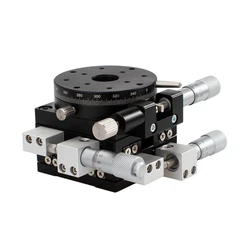
First off, let's talk about what a hollow rotary table is. It's a precision device used in various industrial applications, like automation, robotics, and CNC machining. The "hollow" part means there's a hole in the center, which allows things like cables, pipes, or shafts to pass through. This design feature makes it super versatile and useful in a bunch of different setups.
Now, when it comes to sudden stops, there are a few key aspects to consider. One of the most important things is the braking system. A good hollow rotary table is equipped with a reliable braking mechanism that can quickly and effectively halt the rotation when needed. There are different types of brakes used, such as electromagnetic brakes and mechanical brakes.
Electromagnetic brakes are pretty common. They work by using an electromagnetic field to generate a braking force. When the power is cut off or a stop signal is sent, the brake engages, and the table comes to a halt. These brakes are known for their fast response times and smooth operation. They can stop the rotation within a very short period, which is crucial in applications where precision and safety are top priorities.
Mechanical brakes, on the other hand, rely on physical components like friction pads or clutches to stop the rotation. They're often used in situations where a more robust and reliable braking force is required. Mechanical brakes can handle higher loads and are less likely to fail due to electrical issues. However, they may take a bit longer to engage compared to electromagnetic brakes.
Another factor that affects how a hollow rotary table responds to sudden stops is the inertia of the table and the load it's carrying. Inertia is basically the resistance of an object to changes in its motion. If the table has a large mass or is carrying a heavy load, it will have more inertia, and it will take more force to stop it quickly. This means that the braking system needs to be designed to handle the specific inertia of the application.
For example, if you're using a High Speed Hollow Rotary Table in a high-speed automation process, the table will have a relatively high inertia due to its fast rotation. In this case, a more powerful braking system will be needed to ensure a quick and safe stop. On the other hand, if you're using a smaller table with a lighter load, a less powerful brake may be sufficient.
The control system also plays a vital role in how the table responds to sudden stops. A modern hollow rotary table is usually controlled by a servo motor and a sophisticated control algorithm. The control system can monitor the speed, position, and torque of the table in real-time and adjust the braking force accordingly. This allows for precise control over the stopping process and helps to minimize the impact on the table and the load.
When a sudden stop occurs, the control system can detect the change in motion and immediately send a signal to the braking system. It can also adjust the braking force based on the current speed and position of the table to ensure a smooth and controlled stop. For instance, if the table is rotating at a high speed, the control system may apply a gradual braking force to prevent the table from jerking or overshooting its stop position.
In addition to the braking system and the control system, the quality of the bearings and other mechanical components also affects the response to sudden stops. High-quality bearings can reduce friction and ensure smooth rotation, which in turn makes it easier for the braking system to stop the table quickly. They also help to minimize wear and tear on the table, which can improve its overall lifespan and reliability.


Now, let's talk about some of the potential issues that can arise during sudden stops. One of the most common problems is overshooting. This happens when the table continues to rotate slightly after the brake has been applied. Overshooting can be caused by a variety of factors, such as a delay in the braking system, a high inertia load, or a malfunction in the control system.
To prevent overshooting, it's important to choose a braking system and a control system that are properly matched to the application. The control system should be able to accurately predict the stopping distance and adjust the braking force accordingly. Additionally, regular maintenance and calibration of the table and the control system can help to ensure that they're operating at their best.
Another issue that can occur is vibration and noise. When the table comes to a sudden stop, it can generate vibrations and noise, which can be a nuisance and may also affect the accuracy of the table. To reduce vibration and noise, it's important to use high-quality components and to properly install and align the table. Additionally, the control system can be programmed to apply the braking force in a smooth and gradual manner to minimize the impact.
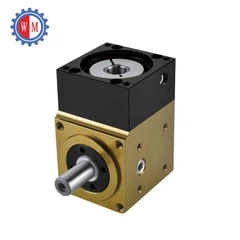
So, there you have it! That's a brief overview of how a hollow rotary table responds to sudden stops. As a supplier, we understand the importance of providing high-quality products that can handle sudden stops safely and effectively. We offer a wide range of Hollow Rotary Gearbox for Servo Motor and Hollow Rotary Stage options to meet the specific needs of our customers.
If you're in the market for a hollow rotary table or have any questions about how they work, don't hesitate to get in touch. We're here to help you find the right solution for your application and to ensure that you get the best performance and reliability from your equipment. Let's start a conversation and see how we can work together to take your project to the next level!
References
- Industrial Automation Handbook
- Servo Motor and Control Systems Manual


