

Hey there! As a supplier of Integrated Servo Motors, I often get asked about the difference between an Integrated Servo Motor and a regular servo motor. So, I thought I'd break it down in this blog post to help you understand which one might be the best fit for your needs.
What's a Regular Servo Motor?
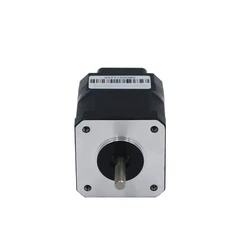
Let's start with the basics. A regular servo motor is a pretty common component in the world of automation and robotics. It's designed to control angular or linear position, velocity, and acceleration precisely. These motors usually come with a separate controller and encoder. The encoder is what helps the motor know where it is in its rotation or movement, and the controller sends signals to the motor to tell it what to do.
Regular servo motors have been around for a long time, and they've proven to be reliable workhorses in many applications. They're great for things like robotic arms, CNC machines, and even radio - controlled models. You can find them in a wide range of sizes and power ratings, so you can pick one that suits your specific requirements.
One of the key features of a regular servo motor is its modularity. You can mix and match different controllers, encoders, and motors from various manufacturers. This gives you a lot of flexibility when it comes to building a custom system. However, this also means that you have to spend time and effort on wiring, programming, and integrating all the components together.
What's an Integrated Servo Motor?
Now, let's talk about Integrated Servo Motors. An Integrated Servo Motor combines the motor, controller, and often the encoder into a single unit. This means that everything you need to control the motor's movement is built right into the motor itself. It's like having a one - stop - shop for your motion control needs.
The main advantage of an Integrated Servo Motor is its simplicity. Since all the components are integrated, there's less wiring to deal with. You don't have to worry about connecting the motor to a separate controller and making sure all the signals are properly transmitted. This not only saves you time during installation but also reduces the chances of wiring errors, which can lead to system failures.
Another benefit is the compact design. Integrated Servo Motors take up less space compared to a regular servo motor setup with separate components. This is especially important in applications where space is limited, like in small robots or compact machinery.
Integrated Servo Motors are also often easier to program. Many of them come with pre - configured settings and user - friendly interfaces, so you don't need to be a programming expert to get them up and running. You can quickly adjust the motor's speed, position, and torque using simple commands.
Performance Comparison
When it comes to performance, both types of motors have their strengths. Regular servo motors can offer high - end performance in terms of precision and speed. Since you can choose high - quality, specialized controllers and encoders, you can fine - tune the system to achieve very accurate motion control. They're also well - suited for applications that require high power and heavy loads.
On the other hand, Integrated Servo Motors may not always have the same level of high - end performance as a custom - built regular servo motor system. However, they're more than capable of handling most common applications. Their performance is usually sufficient for tasks like light - duty robotics, small - scale automation, and consumer electronics.
In terms of response time, regular servo motors can sometimes have a slight edge. The separate controller can be optimized for fast signal processing, which allows for quicker adjustments to the motor's movement. But again, Integrated Servo Motors have made great strides in this area, and their response times are often good enough for many applications.
Cost Considerations
Cost is always an important factor when choosing a motor. Regular servo motors can be more expensive upfront, especially if you're buying high - quality components from well - known manufacturers. You also have to factor in the cost of the controller, encoder, and the labor required for installation and integration.


Integrated Servo Motors, on the other hand, can be more cost - effective in some cases. Since they come as a single unit, the overall cost of the system may be lower. You save on the cost of buying separate components and the time spent on installation. However, if you need a very high - performance system with specialized components, a regular servo motor setup might still be the better choice, even though it's more expensive.
Applications
The choice between an Integrated Servo Motor and a regular servo motor also depends on the application. Regular servo motors are commonly used in industrial settings where high precision, high power, and heavy - duty performance are required. For example, in large manufacturing plants, they're used in conveyor systems, automated assembly lines, and heavy - duty robotic arms.
Integrated Servo Motors are well - suited for applications where simplicity, compactness, and cost - effectiveness are key. They're often used in consumer products like 3D printers, small - scale automation projects, and educational robots. If you're a hobbyist or a small - business owner looking for an easy - to - use motion control solution, an Integrated Servo Motor might be the way to go.
Our Integrated Servo Motor and Drive Kit
If you're interested in learning more about Integrated Servo Motors, check out our Integrated Servo Motor and Drive Kit. It's a great option for those who want a complete, ready - to - use solution for their motion control needs. The kit includes everything you need to get started, and it's designed to be easy to install and program.
Conclusion
So, in summary, the main difference between an Integrated Servo Motor and a regular servo motor lies in their design, installation complexity, performance, cost, and applications. Regular servo motors offer high - end performance and flexibility but require more effort to set up. Integrated Servo Motors are simpler, more compact, and often more cost - effective, making them a great choice for many common applications.
If you're still not sure which type of motor is right for your project, don't hesitate to reach out. We're here to help you make the best decision based on your specific requirements. Whether you're a large - scale manufacturer or a DIY enthusiast, we can provide you with the right solution. Contact us to start a conversation about your procurement needs, and let's work together to find the perfect motor for your application.
References
- Motion Control Handbook
- Servo Motor Technology Guides


