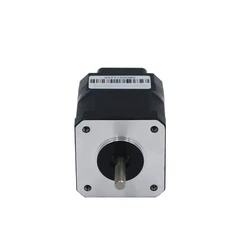


Stepper motors have long been a staple in various industries, offering precise control over angular position, velocity, and acceleration. An integrated stepper motor combines the motor, driver, and often additional control electronics into a single compact unit, simplifying installation and reducing wiring complexity. A common question that arises among engineers, hobbyists, and industry professionals is whether an integrated stepper motor can be used for continuous rotation. In this blog post, we'll delve into the technical aspects of stepper motors, explore their capabilities for continuous rotation, and discuss practical applications. As a leading supplier of integrated stepper motors, we'll also share insights based on our extensive experience in the field.
Understanding Stepper Motors
Stepper motors operate by converting electrical pulses into discrete mechanical movements. Each pulse causes the motor to rotate a fixed angle, known as a step. The most common step angles are 1.8° and 0.9°, corresponding to 200 and 400 steps per revolution, respectively. By controlling the sequence and frequency of these pulses, the motor's position, speed, and direction can be accurately regulated.
There are two main types of stepper motors: permanent magnet (PM) and hybrid. Permanent magnet stepper motors use a permanent magnet rotor and a stator with multiple windings. Hybrid stepper motors, on the other hand, combine the features of PM and variable reluctance (VR) stepper motors, offering higher torque and better performance.
Can an Integrated Stepper Motor Achieve Continuous Rotation?
The short answer is yes, an integrated stepper motor can be used for continuous rotation. However, there are several factors to consider when using a stepper motor in this mode.
Pulse Frequency
To achieve continuous rotation, the stepper motor must receive a continuous stream of pulses at a frequency high enough to keep the motor spinning. The maximum speed of a stepper motor is limited by its electrical and mechanical characteristics, such as the inductance of the windings, the inertia of the rotor, and the friction in the system. As the pulse frequency increases, the motor's torque output decreases, and at a certain point, the motor may lose synchronism and stall.
Torque Requirements
Continuous rotation often requires a higher torque output than intermittent or positioning applications. When selecting an integrated stepper motor for continuous rotation, it's important to ensure that the motor can provide sufficient torque at the desired speed. This may involve choosing a motor with a larger frame size, higher step angle, or more windings.
Heat Dissipation
Continuous operation generates heat, which can affect the performance and lifespan of the motor. Integrated stepper motors typically have built-in heat sinks or cooling fans to dissipate heat, but in high-speed or high-torque applications, additional cooling measures may be required.
Advantages of Using an Integrated Stepper Motor for Continuous Rotation
Despite the challenges, there are several advantages to using an integrated stepper motor for continuous rotation:
Precise Speed Control
Stepper motors offer precise control over speed, allowing for accurate and repeatable operation. This is particularly useful in applications where consistent speed is critical, such as conveyor belts, pumps, and robotics.
Compact Design
Integrated stepper motors combine the motor, driver, and control electronics into a single unit, saving space and reducing wiring complexity. This makes them ideal for applications where space is limited, such as in small appliances, medical devices, and automation equipment.
Easy Integration
Integrated stepper motors are designed to be easy to integrate into existing systems. They typically come with standard interfaces, such as CAN Bus Control Integrated Stepper Motor or Modbus RS485 Integrated Motor, allowing for seamless communication with other devices and controllers.
Applications of Integrated Stepper Motors in Continuous Rotation
Integrated stepper motors are used in a wide range of applications that require continuous rotation, including:
Conveyor Systems
Stepper motors are commonly used in conveyor systems to control the speed and movement of the conveyor belt. Their precise speed control and ability to start and stop quickly make them ideal for applications where accurate positioning and synchronization are required.
Pumps and Blowers
In pumps and blowers, stepper motors can be used to control the flow rate and pressure of the fluid or gas. Their ability to operate at a wide range of speeds and torques makes them suitable for a variety of pumping and blowing applications.
Robotics
Robotic arms and joints often use stepper motors for continuous rotation. The precise control and high torque output of stepper motors allow for accurate and smooth movement, making them essential for robotic applications.


Considerations for Selecting an Integrated Stepper Motor for Continuous Rotation
When selecting an integrated stepper motor for continuous rotation, the following factors should be considered:
Torque and Speed Requirements
Determine the required torque and speed for your application. Choose a motor that can provide sufficient torque at the desired speed, taking into account the load inertia, friction, and any other mechanical losses in the system.
Control Interface
Consider the control interface required for your application. Integrated stepper motors are available with a variety of interfaces, such as CAN Bus, Modbus RS485, and Ethernet. Choose an interface that is compatible with your existing control system or that offers the features and functionality you need.
Environmental Conditions
Consider the environmental conditions in which the motor will operate. Factors such as temperature, humidity, dust, and vibration can affect the performance and lifespan of the motor. Choose a motor that is designed to withstand the environmental conditions of your application.
Our Range of Integrated Stepper Motors
As a leading supplier of integrated stepper motors, we offer a wide range of products to meet the needs of various applications. Our CAN Bus Control Integrated Stepper Motor provides reliable and efficient communication, while our Modbus RS485 Integrated Motor offers compatibility with a wide range of industrial control systems. For applications that require high precision and performance, our Closed Loop Stepper Integrated Motor is an excellent choice.
Contact Us for Your Integrated Stepper Motor Needs
If you're considering using an integrated stepper motor for continuous rotation or have any questions about our products, we'd love to hear from you. Our team of experts can provide you with detailed information, technical support, and help you select the right motor for your application. Contact us today to start the conversation and explore how our integrated stepper motors can meet your needs.
References
- "Stepper Motor Handbook" by Peter C. Senft
- "Motion Control Basics" by Dana R. Quinn
- "Industrial Automation Handbook" by Thomas H. Lee


