
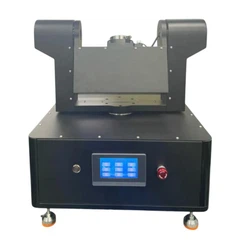
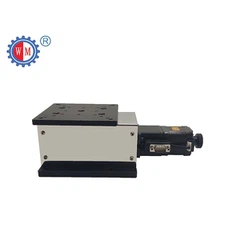
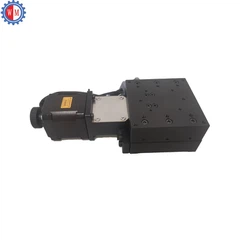
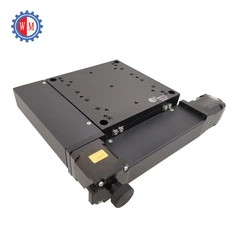
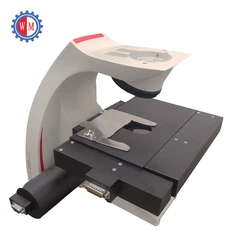
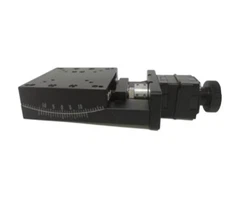
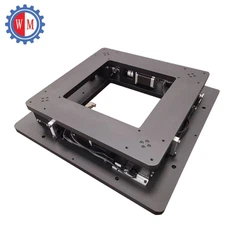


The thermal stability of manual X-axis stages is a crucial factor that significantly impacts their performance and reliability in various precision applications. As a trusted supplier of manual X-axis stages, we understand the importance of this characteristic and are committed to providing high-quality products with excellent thermal stability.
Understanding Thermal Stability
Thermal stability refers to the ability of a manual X-axis stage to maintain its accuracy and performance under varying temperature conditions. When the temperature changes, materials expand or contract, which can lead to dimensional changes in the stage components. These dimensional changes can cause errors in positioning, affect the smoothness of movement, and ultimately degrade the overall performance of the stage.
In precision applications such as microscopy, semiconductor manufacturing, and optical testing, even the slightest thermal-induced changes can have a significant impact on the quality of the results. Therefore, ensuring the thermal stability of manual X-axis stages is essential to meet the strict requirements of these applications.
Factors Affecting Thermal Stability
Several factors can affect the thermal stability of manual X-axis stages. One of the primary factors is the material used in the construction of the stage. Different materials have different coefficients of thermal expansion (CTE), which determine how much they expand or contract with temperature changes. Materials with low CTEs are preferred for manual X-axis stages as they exhibit less dimensional change with temperature variations.
For example, some high-quality manual X-axis stages are made from materials such as stainless steel or aluminum alloys with carefully selected CTEs. These materials offer a good balance between mechanical properties and thermal stability, ensuring that the stage maintains its accuracy even in environments with moderate temperature fluctuations.
Another factor that affects thermal stability is the design of the stage. A well-designed stage should minimize the thermal gradients within the structure to reduce the potential for thermal-induced distortion. This can be achieved through features such as proper heat dissipation channels, symmetrical design, and the use of thermal insulation materials.
The manufacturing process also plays a crucial role in determining the thermal stability of manual X-axis stages. Precision machining techniques are used to ensure tight tolerances and accurate alignment of the stage components. This helps to minimize the internal stresses within the structure, which can be exacerbated by temperature changes and lead to dimensional instability.
Importance of Thermal Stability in Different Applications
Microscopy
In microscopy, manual X-axis stages are used to precisely position the specimen for observation. Thermal stability is critical in this application as any thermal-induced movement or distortion can cause the specimen to move out of focus or change its position relative to the optical axis. This can result in blurry images and inaccurate measurements.
For example, in fluorescence microscopy, where high-resolution imaging is required, even the slightest thermal drift can affect the accuracy of the fluorescence intensity measurements. By using a manual X-axis stage with excellent thermal stability, researchers can ensure that the specimen remains in focus and in the correct position throughout the imaging process, leading to more reliable and accurate results.
Semiconductor Manufacturing
In semiconductor manufacturing, manual X-axis stages are used for various processes such as wafer inspection, lithography, and die bonding. These processes require extremely high precision and accuracy, and thermal stability is essential to maintain the alignment and positioning of the wafers and other components.
Temperature variations during the manufacturing process can cause the stage to expand or contract, leading to misalignment of the masks and patterns on the wafers. This can result in defects in the semiconductor devices, reducing the yield and increasing the production costs. By using manual X-axis stages with high thermal stability, semiconductor manufacturers can improve the quality and reliability of their products.
Optical Testing
In optical testing applications, manual X-axis stages are used to position optical components such as lenses, mirrors, and filters for testing and calibration. Thermal stability is crucial in this application as any thermal-induced movement or distortion can affect the optical performance of the components.
For example, in interferometry, where high-precision measurements of optical surfaces are made, thermal stability is essential to ensure the accuracy of the interference patterns. By using a manual X-axis stage with excellent thermal stability, optical engineers can obtain more accurate and reliable test results, leading to better-designed optical systems.
Our Manual X-Axis Stages and Thermal Stability
As a leading supplier of manual X-axis stages, we offer a wide range of products designed to meet the diverse needs of our customers. Our stages are engineered with a focus on thermal stability to ensure optimal performance in various applications.


We use high-quality materials with low coefficients of thermal expansion in the construction of our manual X-axis stages. This helps to minimize the dimensional changes with temperature variations, ensuring that the stage maintains its accuracy and precision.
Our stage designs incorporate features such as proper heat dissipation channels and symmetrical structures to reduce thermal gradients and minimize the potential for thermal-induced distortion. We also use advanced manufacturing processes to ensure tight tolerances and accurate alignment of the stage components, further enhancing the thermal stability of our products.
Some of our popular manual X-axis stages include the Manual Micro X Axis Stage, the X Axis Manual Linear Translation Stage, and the Miniature Micrometer Linear Stage. These stages are designed to provide excellent thermal stability, high precision, and smooth operation, making them ideal for a wide range of precision applications.
Contact Us for Your Manual X-Axis Stage Needs
If you are looking for high-quality manual X-axis stages with excellent thermal stability, we are here to help. Our team of experts can provide you with detailed information about our products, assist you in selecting the right stage for your application, and answer any questions you may have.
We understand that every application is unique, and we are committed to providing customized solutions to meet your specific requirements. Whether you need a stage for a research laboratory, a manufacturing facility, or an optical testing setup, we have the expertise and the products to meet your needs.
Contact us today to start a discussion about your manual X-axis stage requirements. We look forward to working with you to provide the best solutions for your precision positioning needs.
References
- Smith, J. D. (2018). Precision Motion Control: Design and Applications. CRC Press.
- Jones, R. A. (2019). Handbook of Optical Systems, Volume 1: Basics and Fundamentals. Wiley-VCH.
- Brown, S. T. (2020). Semiconductor Manufacturing Technology. McGraw-Hill Education.


