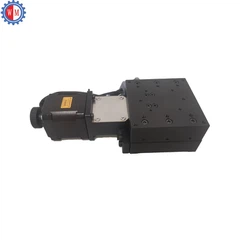
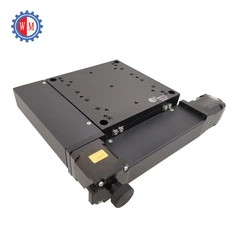
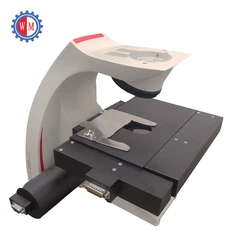
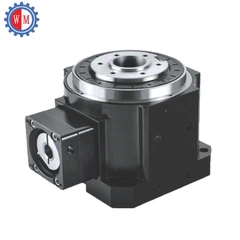
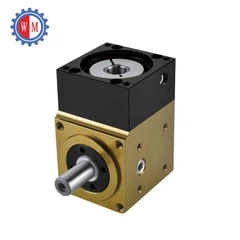
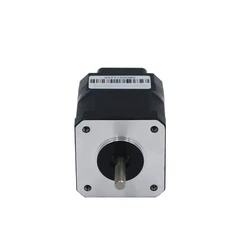


As a supplier of Integrated Servo Motors, I've had the privilege of witnessing the remarkable advancements in motor control technology over the years. These intelligent devices combine a servo motor and its drive into a single compact unit, offering numerous benefits such as simplified wiring, reduced footprint, and enhanced performance. In this blog, I'll explore the various control methods available for Integrated Servo Motors, shedding light on their features, applications, and advantages.
Open - Loop Control
Open - loop control is the most basic control method for Integrated Servo Motors. In an open - loop system, the controller sends a command to the motor without receiving any feedback about the motor's actual position, speed, or torque. The motor simply follows the input command based on its pre - determined characteristics.
One of the main advantages of open - loop control is its simplicity. It requires less complex hardware and software, making it a cost - effective solution for applications where high precision is not critical. For example, in some simple conveyor systems where the motor is used to move objects at a constant speed, open - loop control can be sufficient.
However, open - loop control also has significant limitations. Since there is no feedback, the motor's performance can be affected by external factors such as load variations, friction, and voltage fluctuations. This can lead to inaccuracies in position and speed control. As a result, open - loop control is generally not suitable for applications that demand high precision, such as industrial automation where parts need to be positioned with micrometer - level accuracy.
Closed - Loop Control
To overcome the limitations of open - loop control, closed - loop control systems are widely used in Integrated Servo Motors. Closed - loop control relies on feedback sensors to monitor the motor's actual position, speed, or torque and compares this information with the desired setpoint. Based on the difference (error) between the actual and desired values, the controller adjusts the motor's input to minimize the error.


Position Control
Position control is one of the most common closed - loop control methods for Integrated Servo Motors. In position control, the controller uses a feedback device such as an encoder to measure the motor's actual position. The controller continuously compares the measured position with the desired position and generates an appropriate control signal to drive the motor to the target position.
Position control is extensively used in applications such as CNC machining, robot arms, and pick - and - place systems. In CNC machining, for instance, the servo motor needs to precisely position the cutting tool to create complex shapes with high accuracy. The ability to achieve and maintain a specific position is crucial for the quality of the machined parts. With our Integrated Servo Motor and Drive Kit, our customers can enjoy precise position control capabilities, ensuring that their manufacturing processes are highly efficient and accurate.
Speed Control
Speed control is another important closed - loop control method. In speed control, the feedback sensor measures the motor's rotational speed, and the controller adjusts the motor's input to maintain a constant speed. This is essential in applications where a consistent speed is required, such as in printing presses and textile machinery.
In a printing press, for example, the paper feed motor needs to run at a constant speed to ensure that the printing is accurate and uniform. Any variation in speed can result in blurred images or misaligned text. Our Integrated Servo Motors, when configured for speed control, can maintain a stable speed even under varying load conditions, thanks to the advanced control algorithms implemented in our drive units.
Torque Control
Torque control allows the controller to regulate the motor's torque output. A feedback sensor is used to measure the actual torque, and the controller adjusts the motor current to meet the desired torque level. Torque control is commonly used in applications such as winding machines and tension control systems.
In a winding machine, the servo motor needs to apply a specific amount of torque to wind the material evenly. If the torque is too high, the material may break; if it is too low, the winding may be loose. Our Integrated Servo Motors with torque control capabilities can precisely adjust the torque output, ensuring optimal performance in these types of applications.
Advanced Control Algorithms
In addition to the basic control methods mentioned above, modern Integrated Servo Motors often incorporate advanced control algorithms to improve performance.
PID Control
Proportional - Integral - Derivative (PID) control is one of the most widely used control algorithms. It calculates the control output based on the proportional, integral, and derivative of the error between the desired and actual values. The proportional term provides an immediate response to the error, the integral term eliminates the steady - state error, and the derivative term anticipates future error changes and helps to dampen oscillations.
PID control is highly tuneable, allowing engineers to adjust the controller parameters to suit different applications. Our Integrated Servo Motors are equipped with advanced PID controllers that can be easily configured to achieve optimal performance in a wide range of operating conditions.
Fuzzy Logic Control
Fuzzy logic control is a more intelligent control approach that can handle complex and uncertain systems. It uses fuzzy sets and linguistic rules to make decisions, rather than relying on precise mathematical models. Fuzzy logic control is particularly useful in applications where the system dynamics are difficult to model accurately, such as in some robotic applications where the environment is unpredictable.
By using fuzzy logic control, our Integrated Servo Motors can adapt to changing conditions and provide more stable and efficient operation. This is especially beneficial in applications where the motor needs to interact with a dynamic environment, such as in collaborative robots.
Adaptive Control
Adaptive control algorithms can adjust the controller parameters in real - time based on changes in the system's characteristics or operating conditions. This is particularly useful in applications where the load or other parameters may vary significantly over time.
For example, in a machine tool that processes different types of materials, the cutting force can vary depending on the material's hardness and other properties. Adaptive control in our Integrated Servo Motors can continuously adjust the control parameters to maintain optimal performance regardless of these variations.
Choosing the Right Control Method
Selecting the appropriate control method for an Integrated Servo Motor depends on several factors, including the specific application requirements, the level of precision needed, and the cost - effectiveness.
For applications with low precision requirements and a limited budget, open - loop control may be sufficient. However, for most industrial and high - end applications, closed - loop control, along with advanced control algorithms, is typically required.
When considering speed control, factors such as the required speed range, speed accuracy, and the ability to respond to load changes need to be taken into account. For position control, the resolution of the feedback sensor, the maximum positioning error, and the dynamic response time are crucial. In torque control applications, the accuracy of torque regulation and the ability to handle varying loads are important considerations.
Conclusion
As a supplier of Integrated Servo Motors, we understand the importance of providing our customers with a wide range of control options to meet their diverse needs. Whether it's the basic open - loop control for simple applications or the advanced closed - loop control with sophisticated algorithms for high - precision tasks, our products are designed to deliver optimal performance.
If you are in the market for an Integrated Servo Motor and are looking for a reliable supplier, we invite you to contact us for a detailed discussion about your specific requirements. Our team of experts is ready to assist you in choosing the right motor and control method for your application, ensuring that you get the most out of your investment.
References
- Dorf, R. C., & Bishop, R. H. (2016). Modern Control Systems. Pearson.
- Franklin, G. F., Powell, J. D., & Emami - Naeini, A. (2014). Feedback Control of Dynamic Systems. Pearson.


