
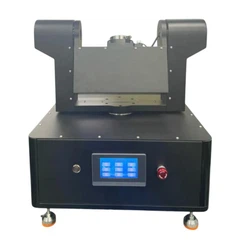


Hey there! As a supplier of Integrated Stepper Motors, I often get asked about the voltage rating of these motors. It's a super important topic, so I thought I'd dive into it and share everything you need to know.
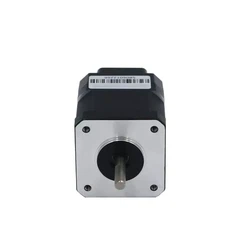
First off, let's talk about what an Integrated Stepper Motor is. It's a compact unit that combines a stepper motor with a driver and sometimes other control features. This integration makes it easier to use and more efficient compared to separate motor and driver setups. These motors are used in a wide range of applications, from 3D printers and CNC machines to robotics and automation systems.
Now, onto the voltage rating. The voltage rating of an Integrated Stepper Motor refers to the electrical potential difference at which the motor is designed to operate optimally. It's a crucial specification because using the wrong voltage can lead to all sorts of problems, like poor performance, overheating, and even damage to the motor.
There are a few factors that determine the appropriate voltage rating for an Integrated Stepper Motor. One of the main factors is the motor's torque requirements. Torque is the rotational force that the motor can produce, and it's directly related to the power input. Generally, higher torque applications require higher voltage motors. For example, if you're using the motor in a heavy-duty CNC machine that needs to move large loads, you'll likely need a motor with a higher voltage rating to generate enough torque.
Another factor is the speed at which the motor needs to operate. Higher voltages can allow the motor to reach higher speeds more quickly. If your application requires rapid acceleration and high-speed operation, a motor with a higher voltage rating might be a better choice. However, it's important to note that increasing the voltage also increases the power consumption, so you need to balance the speed requirements with the energy efficiency of the system.
The type of driver used with the motor also plays a role in determining the voltage rating. Different drivers have different voltage requirements and capabilities. Some drivers are designed to work with a specific range of voltages, so you need to make sure that the motor's voltage rating is compatible with the driver.
Let's take a look at some common voltage ratings for Integrated Stepper Motors. You'll often find motors with ratings like 12V, 24V, 48V, and even higher in some industrial applications. The 12V motors are typically used in low-power applications where space and power consumption are limited, such as small 3D printers or hobbyist projects. The 24V motors are a popular choice for a wide range of applications because they offer a good balance between torque, speed, and power consumption. They're commonly used in medium-sized CNC machines, robotics, and automation systems. The 48V motors are used in more demanding applications that require high torque and high-speed operation, such as large industrial robots and heavy-duty CNC machines.
When choosing the voltage rating for your Integrated Stepper Motor, it's important to consider your specific application requirements. You need to think about the torque, speed, and power consumption needs of your system. It's also a good idea to consult with the motor manufacturer or a technical expert to get their advice on the best voltage rating for your application.
At our company, we offer a wide range of Integrated Stepper Motors with different voltage ratings to meet the needs of various applications. For example, we have the CAN Bus Control Integrated Stepper Motor, which is designed for applications that require high-speed communication and precise control. It's available in different voltage ratings to suit your specific requirements.
We also have the Closed Loop Stepper Integrated Motor, which provides better performance and accuracy compared to traditional open-loop stepper motors. This motor is suitable for applications that require high precision and reliability, and it comes in a variety of voltage ratings.
Another option is the Modbus RS485 Integrated Motor, which is designed for easy integration with Modbus-compatible systems. It offers a cost-effective solution for applications that require communication and control over a long distance, and it's available in different voltage ratings as well.
If you're still not sure which voltage rating is right for your application, or if you have any other questions about our Integrated Stepper Motors, don't hesitate to reach out to us. We have a team of experienced technical experts who can help you choose the best motor for your needs. Whether you're a small business owner looking for a motor for your 3D printer or a large industrial manufacturer in need of a high-performance motor for your automation system, we can provide you with the right solution.


In conclusion, the voltage rating of an Integrated Stepper Motor is a critical specification that can have a big impact on the performance and reliability of your system. By understanding the factors that determine the appropriate voltage rating and choosing the right motor for your application, you can ensure that your system operates efficiently and effectively. So, if you're in the market for an Integrated Stepper Motor, give us a call or send us an email, and let's start a conversation about how we can help you with your project.
References
- Stepper Motor Handbook, various editions
- Technical documentation from leading stepper motor manufacturers


