


Hey there! As a supplier of Integrated BLDC Motors, I get asked a lot about the position control accuracy of these motors. So, I thought I'd take some time to break it down for you in this blog post.
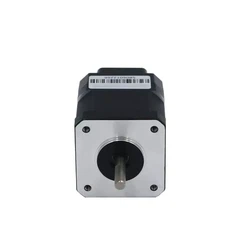
First off, let's talk about what an Integrated BLDC Motor is. An Integrated BLDC Motor, or Integrated Brushless DC Motor, combines the motor and its drive electronics into a single unit. This integration offers several advantages, like reduced wiring complexity, smaller footprint, and often better overall performance. You can check out more about Integrated Brushless Motor on our website. And for those interested in Brushless Dc Motor with Integrated Drive, we've got detailed info there as well.
Now, let's dig into position control accuracy. In simple terms, position control accuracy refers to how closely the motor can reach and maintain a specific position. It's a crucial factor in many applications, especially those that require high precision.
One of the key elements that affect the position control accuracy of an Integrated BLDC Motor is the feedback system. Most of these motors use either encoders or Hall sensors to provide feedback about the motor's position. Encoders are more accurate and can provide high-resolution position information. They come in two main types: absolute and incremental. Absolute encoders can tell you the exact position of the motor shaft at any given time, without the need for a reference point. Incremental encoders, on the other hand, measure changes in position relative to a starting point.
Hall sensors are simpler and less expensive than encoders. They detect the position of the rotor based on the magnetic field. While they're not as accurate as encoders, they're still good enough for many applications where a lower level of precision is acceptable.
Another factor that influences position control accuracy is the control algorithm used in the motor's drive electronics. These algorithms are designed to process the feedback from the sensors and adjust the motor's input to achieve the desired position. There are several types of control algorithms, such as PID (Proportional - Integral - Derivative) control. PID controllers are widely used because they're relatively simple and can provide good performance in a variety of situations.
The quality of the motor itself also plays a role. Factors like the motor's torque ripple, cogging torque, and mechanical resonance can all affect position control accuracy. Torque ripple is the variation in torque output as the motor rotates. Cogging torque is the torque that causes the motor to "cog" or stop at certain positions. Both of these can lead to inaccuracies in position control, especially at low speeds.
In applications where high position control accuracy is required, like robotics, CNC machines, and medical devices, the choice of an Integrated BLDC Motor is critical. For example, in a robotic arm, the motor needs to move the arm precisely to a specific position to perform a task. A small error in position control can lead to the arm missing its target or performing the task incorrectly.
In CNC machines, accurate position control is essential for cutting and shaping materials with high precision. The motor needs to move the cutting tool to the exact location specified by the design. Any deviation from the desired position can result in a defective part.
Medical devices, such as surgical robots and diagnostic equipment, also rely on high - accuracy position control. In a surgical robot, the motor needs to move the surgical instrument with extreme precision to minimize damage to the patient's tissue.
So, how do we measure the position control accuracy of an Integrated BLDC Motor? One common way is to use the term "position error." Position error is the difference between the desired position and the actual position of the motor shaft. It's usually measured in degrees or radians for rotary motors and in millimeters or inches for linear motors.
We can also look at the repeatability of the motor's position control. Repeatability refers to the motor's ability to return to the same position multiple times. A motor with high repeatability will have a small variation in position each time it returns to a specific point.
As a supplier, we understand the importance of position control accuracy in different applications. That's why we offer a range of Integrated BLDC Motors with different levels of accuracy to meet the diverse needs of our customers. Whether you're working on a high - precision project or a more cost - effective application, we've got the right motor for you.
If you're in the market for an Integrated BLDC Motor and want to learn more about our products' position control accuracy, or if you have specific requirements for your application, don't hesitate to reach out. We're here to help you find the best solution for your project. Let's start a conversation about how our motors can fit your needs and take your application to the next level.


References:
- "Brushless DC Motors: Theory, Design, and Applications" by Craig R. Woods
- "Motion Control Handbook" by Brian H. Kuo


