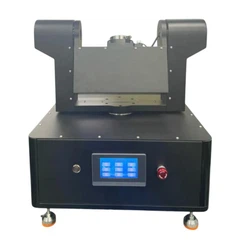
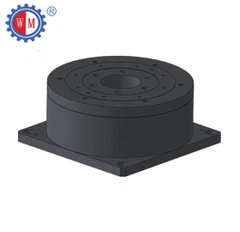
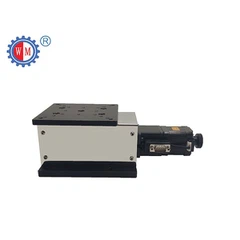
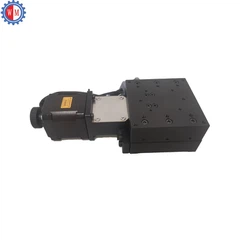
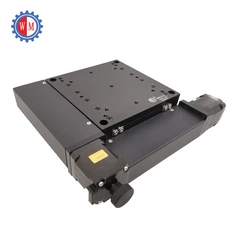
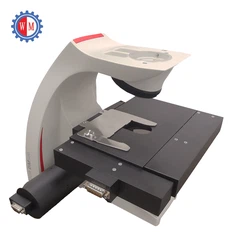
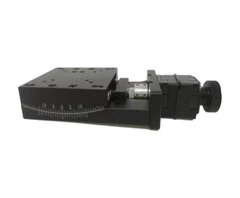


Hey there! As a supplier of Motorized Vertical Stages, I'm super stoked to chat about the control modes of these awesome gadgets. Motorized vertical stages are like the workhorses in lots of industries, from precision manufacturing to cleanroom tech. They help move stuff up and down with crazy precision, and the control mode you pick can really make or break how well they work.
Let's start by talking about the different types of control modes commonly used with motorized vertical stages.
Open - Loop Control
The first one on our list is open - loop control. It's like the basic, entry - level control mode. In an open - loop system, the controller sends out a signal to the motor, telling it how much to move. It doesn't really care about what the motor actually does after that signal is sent.
Think of it like sending a text to a friend asking them to walk 10 steps forward. You sent the message, but you don't check if they really walked those 10 steps. In the case of a motorized vertical stage, the controller commands the motor to move a certain distance. There's no feedback loop to tell if the stage actually reached the intended position.
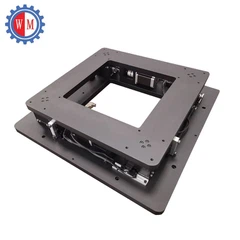
This mode is pretty simple and cost - effective. You don't need a bunch of extra sensors and complicated feedback systems. It's great for applications where you don't need super - precise positioning and the load is pretty stable. For example, if you're using a Motorized Lift Stage to lift a light - weight, evenly - distributed object in a basic assembly line, open - loop control might be just fine.


But there are some downsides. External factors like friction, changes in load, or motor wear can cause the stage to not move exactly as commanded. So, over time, the positioning error can add up.
Closed - Loop Control
Now, let's move on to closed - loop control. This is like the smart cousin of open - loop control. In a closed - loop system, there's a feedback mechanism in place. Sensors are installed on the motorized vertical stage to measure its actual position. The controller then compares this actual position with the desired position. If there's a difference, the controller adjusts the motor's output to correct it.
It's like having a GPS on your friend who's walking. You can constantly check if they're on the right track and tell them to adjust their steps if they're off. With closed - loop control, the motorized vertical stage can achieve much higher levels of precision. Even if there are changes in load or other external factors, the system can adapt and keep the stage in the correct position.
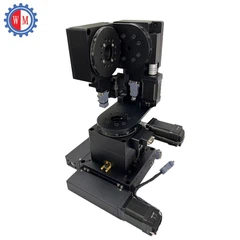
The Motor Z Translation Stage often uses closed - loop control when it's used in applications like microscopy or semiconductor manufacturing. In these cases, the tiniest mistake in positioning can lead to big problems. But the trade - off is that closed - loop systems are more complex and expensive. You need to invest in high - quality sensors and a more sophisticated controller.
Stepper Motor Control
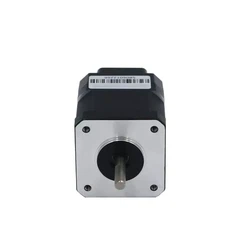
Another common control mode is stepper motor control. Stepper motors are great for motorized vertical stages because they move in discrete steps. The controller sends a series of pulses to the motor, and each pulse makes the motor move a set amount.
It's kind of like a music box where each note makes a little piece of the box move. The main advantage of stepper motor control is its simplicity. You can control the position of the stage just by counting the number of pulses. It's also relatively inexpensive and can provide good precision for many applications.
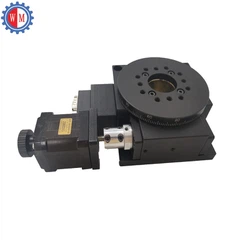
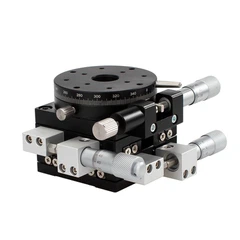
Stepper motors are often used in Short Travel Motorized Vertical Positioning Stage where the movement range is relatively small. However, stepper motors can lose steps if they're overloaded or if the speed is too high. And they can also generate a fair amount of heat, which might be a problem in some environments.
Servo Motor Control
Last but not least, we have servo motor control. Servo motors are high - performance motors that can provide very precise and smooth motion. In a servo motor control system, the controller continuously monitors the motor's position and adjusts the power to the motor to maintain the desired position.
It's like having a race car driver who constantly adjusts the speed and steering based on the track conditions. Servo motors can handle higher loads and faster speeds compared to stepper motors. They're ideal for applications where high - speed and high - precision movement is required, such as in robotic arms or automated inspection systems.
But just like closed - loop control systems, servo motor control setups are also more expensive. You need a high - quality servo motor, a powerful controller, and often some additional sensors.
Picking the Right Control Mode
So, how do you decide which control mode to use? Well, it all depends on your specific application. If you're on a tight budget and don't need super - precise positioning, open - loop or stepper motor control might be the way to go. But if you're dealing with high - precision tasks, like in the medical or aerospace industries, closed - loop or servo motor control is probably what you need.
You also need to think about things like load capacity, speed requirements, and the environment where the motorized vertical stage will be used. Is it a dusty environment? Do you need the stage to be explosion - proof? All these factors play a role in choosing the right control mode.
As a supplier, I've helped many customers make these decisions. We can always offer advice based on our experience and the specific requirements of your project. If you're not sure which motorized vertical stage and control mode are right for you, don't hesitate to reach out. We're here to help you every step of the way, from choosing the product to installation and after - sales support.
If you're interested in learning more about our Motorized Vertical Stages or if you're ready to start the procurement process, just get in touch. We're eager to have a chat with you about your needs and see how we can help you achieve your goals. Whether it's for a small - scale research project or a large - scale industrial application, we've got the right solution for you.
References
- General knowledge about motorized vertical stage control modes from years of industry experience
- Technical manuals of various motorized vertical stage products


