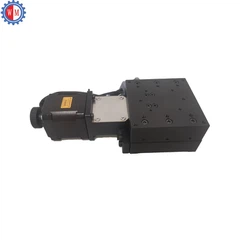
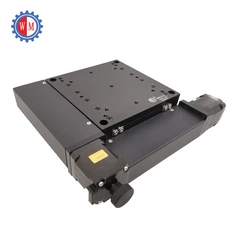
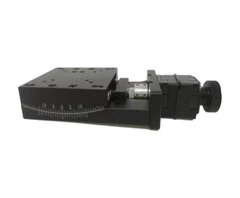
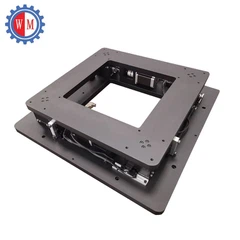
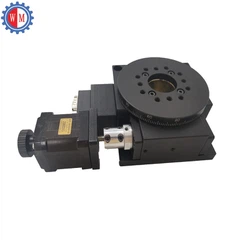
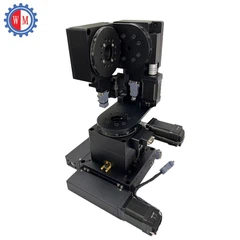
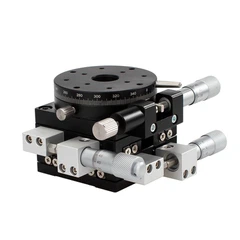


Hey there! As a supplier of Manual X - axis Stages, I often get asked if these manual X - axis stages can be integrated with other equipment. Well, the short answer is yes, and in this blog, I'll dive deep into how that works and why it's a great idea.
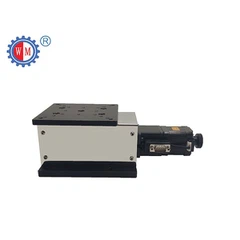
First off, let's talk about what manual X - axis stages are. They're simple yet super useful tools. These stages allow for precise movement along the X - axis. You can adjust the position manually, which gives you a high level of control. Whether you're working in a lab, a manufacturing setting, or any other environment where precise positioning is crucial, manual X - axis stages are a go - to solution.
Now, onto the big question: can they be integrated with other equipment? The answer is a resounding yes, and there are several reasons why you'd want to do this.
Integration with Optical Equipment
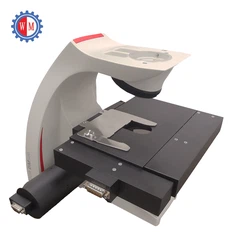
One of the most common integrations is with optical equipment. For example, in microscopy, you might want to precisely position a sample. By integrating a Manual Micro X Axis Stage with a microscope, you can move the sample horizontally with great accuracy. This is essential for examining different parts of the sample under the microscope. You can easily adjust the position of the sample to get the best view, which is crucial for research and analysis.
In laser - based optical systems, manual X - axis stages can also play a vital role. You might need to position a lens or a mirror precisely to direct the laser beam. A manual X - axis stage allows you to make those small, precise adjustments to ensure the laser beam hits the right spot. This is important in applications like laser cutting, where even a small misalignment can lead to inaccurate cuts.
Integration with Testing and Measuring Equipment
Manual X - axis stages can also be integrated with testing and measuring equipment. For instance, in a material testing setup, you might want to move a specimen along the X - axis while measuring its properties. By using a Manual Adjustable Table, you can precisely position the specimen for different tests. This ensures that the measurements are accurate and consistent.
In electronic testing, you might need to position a probe over a specific part of a circuit board. A manual X - axis stage can help you do this with ease. You can move the probe horizontally to the exact location you need to test, which is crucial for diagnosing faults and ensuring the proper functioning of electronic components.
Integration with Manufacturing Equipment
In manufacturing, manual X - axis stages can be integrated with various types of equipment. For example, in a CNC (Computer Numerical Control) machine, you might use a Manual X Translation Stage to make small adjustments to the position of a tool or a workpiece. This can be useful for fine - tuning the manufacturing process and ensuring high - quality products.
In a 3D printing setup, you could integrate a manual X - axis stage to adjust the position of the print head or the build platform. This allows for more precise printing, especially when you need to make small corrections during the printing process.
How to Integrate Manual X - axis Stages
Integrating manual X - axis stages with other equipment is usually a straightforward process. Most manual X - axis stages come with mounting holes or other attachment mechanisms that make it easy to connect them to other devices. You'll need to ensure that the stage is compatible with the equipment you want to integrate it with in terms of size, weight, and the type of movement required.
Before integration, it's a good idea to plan out the setup. Consider factors like the available space, the range of movement needed, and the level of precision required. You might also need to make some adjustments to the equipment or the stage itself to ensure a proper fit.
Benefits of Integration
There are several benefits to integrating manual X - axis stages with other equipment. Firstly, it enhances precision. By having precise control over the movement along the X - axis, you can improve the accuracy of your experiments, tests, or manufacturing processes.
Secondly, it increases flexibility. You can use the manual X - axis stage to adapt your equipment to different tasks. For example, in a lab, you can quickly reconfigure your setup by moving the stage to a different position or integrating it with a different piece of equipment.
Finally, it can save time and money. Instead of investing in a completely new piece of equipment, you can simply integrate a manual X - axis stage with your existing setup to achieve the desired functionality.
Conclusion
So, to sum it up, manual X - axis stages can definitely be integrated with other equipment, and there are many good reasons to do so. Whether you're in the field of optics, testing, or manufacturing, integrating a manual X - axis stage can enhance the performance of your equipment and improve the quality of your work.
If you're interested in learning more about our manual X - axis stages or want to discuss how they can be integrated with your specific equipment, don't hesitate to reach out. We're here to help you find the best solutions for your needs.


References
- General knowledge in the field of precision positioning equipment
- Industry experience as a Manual X - axis Stages supplier


