
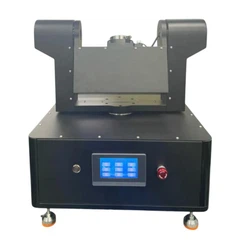
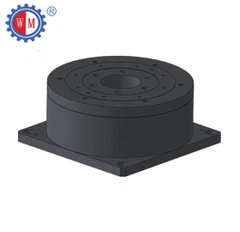
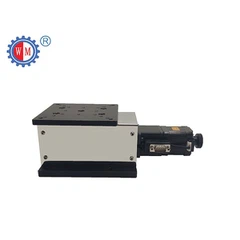
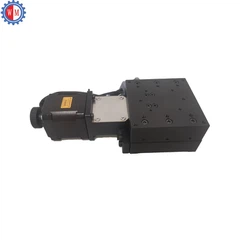
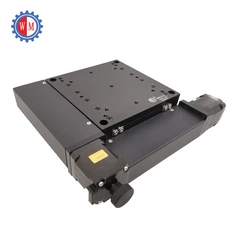
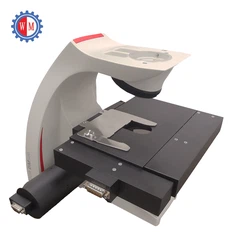
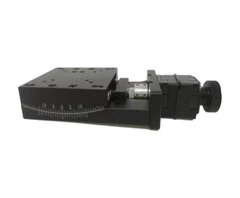
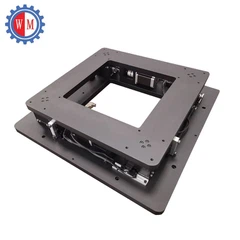
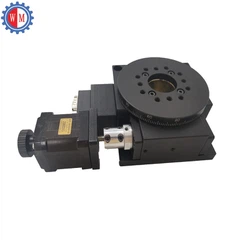
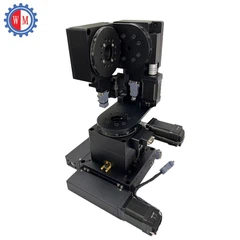
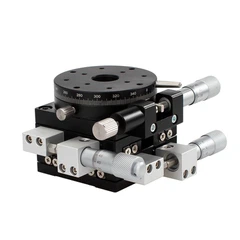
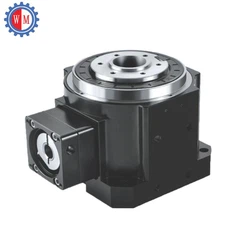
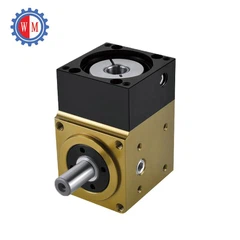
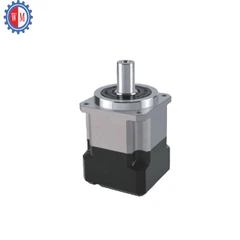


In the realm of precision motion control, the Hollow Rotary Table stands as a crucial component, finding applications in various industries such as robotics, automation, and manufacturing. One of the key challenges in its operation is dealing with vibration, which can significantly impact performance, accuracy, and the overall lifespan of the device. As a leading supplier of Hollow Rotary Tables, we've delved deep into understanding how these remarkable devices handle vibration.
Understanding the Sources of Vibration in Hollow Rotary Tables
Before we explore how a Hollow Rotary Table manages vibration, it's essential to identify the sources. Vibration in these tables can stem from multiple factors. Firstly, mechanical imbalances within the rotating components are a common culprit. When the mass distribution around the rotational axis is uneven, it creates an unbalanced force that causes vibration as the table spins. This can be due to manufacturing tolerances, wear and tear over time, or improper assembly.
Secondly, the interaction between the motor and the table can generate vibrations. If the motor has torque fluctuations or if the coupling between the motor and the table is not properly aligned, it can transmit unwanted vibrations to the table. Additionally, external factors such as the installation environment can also contribute to vibration. For example, if the table is mounted on an unstable surface or if there are other vibrating machinery nearby, it can induce vibrations in the Hollow Rotary Table.
Design Features for Vibration Handling
At our company, we take a comprehensive approach to designing Hollow Rotary Tables that can effectively handle vibration. One of the primary design features is the use of high - quality materials. We select materials with excellent damping properties, which means they can absorb and dissipate vibration energy. For instance, some of our tables incorporate specialized alloys that are known for their high strength and superior damping characteristics. This helps to reduce the amplitude of vibrations and prevent them from spreading throughout the table.
In addition to material selection, the mechanical design of the table plays a crucial role. We employ precision manufacturing techniques to ensure that all components are machined to extremely tight tolerances. This reduces the likelihood of mechanical imbalances that could lead to vibration. The gears and bearings used in our Hollow Rotary Tables are carefully selected and engineered to provide smooth and stable operation. For example, our Hollow Rotary Gearbox for Servo Motor is designed with precision - cut gears that mesh smoothly, minimizing the generation of vibration during rotation.
Another important aspect of our design is the use of advanced structural geometries. We optimize the shape and layout of the table to enhance its stiffness and resistance to vibration. By increasing the stiffness, we can reduce the natural frequency of the table and make it less susceptible to resonance, which is a condition where the vibration frequency matches the natural frequency of the structure, leading to amplified vibrations.
Control Systems for Vibration Mitigation
Apart from the mechanical design, the control system of the Hollow Rotary Table also plays a vital role in handling vibration. Our tables are equipped with sophisticated control algorithms that can detect and compensate for vibrations in real - time. These algorithms use sensors to monitor the vibration levels and adjust the motor speed and torque accordingly.
For example, we offer a Closed Loop Control Hollow Rotary Actuator that features feedback control mechanisms. The sensors continuously measure the position, speed, and acceleration of the table, and the control system compares these values with the desired setpoints. If there are any deviations due to vibration, the system can quickly make adjustments to correct them. This ensures that the table maintains a stable and accurate rotation, even in the presence of external disturbances.
In addition, our control systems can also implement vibration suppression techniques such as active damping. Active damping involves using additional actuators or control forces to counteract the vibrations. By applying these forces at the appropriate times and amplitudes, we can effectively reduce the vibration levels and improve the performance of the table.
Testing and Quality Assurance
To ensure that our Hollow Rotary Tables can effectively handle vibration, we conduct rigorous testing and quality assurance procedures. Each table undergoes a series of vibration tests during the manufacturing process. We use specialized vibration testing equipment to simulate different operating conditions and measure the vibration levels of the table.
During these tests, we evaluate the performance of the table under various loads, speeds, and environmental conditions. We also check for any signs of resonance or other vibration - related issues. If any problems are detected, we make the necessary adjustments to the design or manufacturing process to improve the vibration handling capabilities of the table.
Our quality control team carefully inspects each table to ensure that it meets our strict standards for vibration performance. We also provide detailed test reports to our customers, demonstrating the vibration characteristics of the table and its compliance with industry - accepted standards.


Applications and Benefits of Low - Vibration Hollow Rotary Tables
The ability of our Hollow Rotary Tables to handle vibration effectively offers numerous benefits in various applications. In robotics, for example, low - vibration tables are essential for precise pick - and - place operations. By reducing vibration, the robot can accurately position the objects, improving the overall efficiency and quality of the manufacturing process.
In the field of automation, our High Speed Hollow Rotary Table with excellent vibration handling capabilities can operate at high speeds without sacrificing accuracy. This is particularly important in applications where fast cycle times are required, such as in packaging and assembly lines.
In the medical and optical industries, where precision is of utmost importance, low - vibration Hollow Rotary Tables are used in equipment such as microscopes and laser processing machines. The reduced vibration ensures that the imaging and processing operations are carried out with high accuracy, leading to better diagnostic results and higher - quality products.
Conclusion and Call to Action
In conclusion, handling vibration is a critical aspect of the design and operation of Hollow Rotary Tables. Through careful material selection, advanced mechanical design, sophisticated control systems, and rigorous testing, our company has developed Hollow Rotary Tables that can effectively manage vibration and provide high - performance and reliable operation.
If you're looking for a high - quality Hollow Rotary Table that can handle vibration effectively, we invite you to contact us for a detailed discussion. Our team of experts is ready to assist you in selecting the right product for your specific application and provide you with the technical support you need. Together, we can enhance the efficiency and precision of your operations with our top - notch Hollow Rotary Tables.
References
- "Precision Motion Control Handbook", John Wiley & Sons
- "Vibration Analysis and Control in Mechanical Systems", CRC Press


