

Hey there! I'm a supplier of Manual Multi - Axis Stages, and today I'm gonna chat with you about the speed range of these nifty devices.
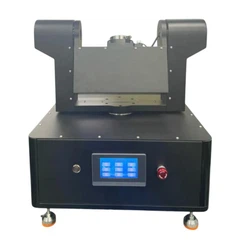
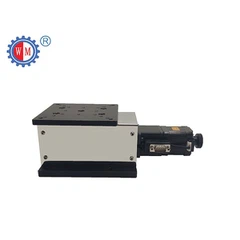
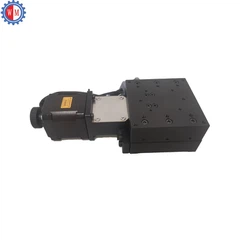
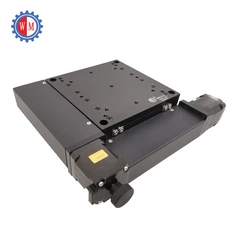
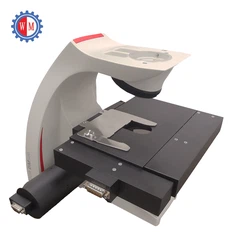
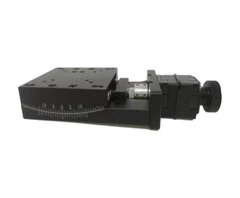
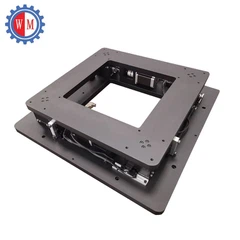
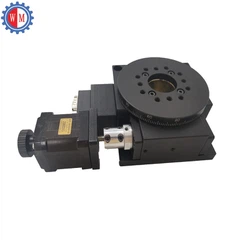
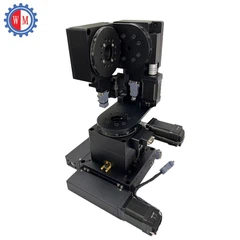
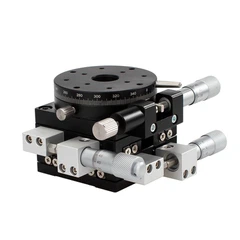
First off, what are Manual Multi - Axis Stages? Well, they're essential tools in a bunch of industries like microscopy, photonics, and precision manufacturing. They let you adjust the position of an object in multiple directions with high precision. We've got different types, like the Manual Linear XYZ Translation Stage, Manual XZ Translation Stage, and Manual Xyr Stage. Each of these has its own unique features and applications, but the basic idea is to provide controlled movement.
Now, let's get into the speed range. Unlike motorized stages that can move at a consistent speed set by a control system, manual stages rely on human operation. So, the speed range is pretty much determined by how fast a person can turn the adjustment knobs.
The slowest end of the speed range is all about precision. When you're making fine adjustments, you're usually turning the knobs very slowly. For example, in a microscopy setup, if you're trying to focus on a tiny cell or adjust the position of a specimen to get the perfect image, you don't want to move the stage too quickly. You might be turning the knob at a rate of just a degree or two per second. This slow speed allows you to make incremental changes, often on the scale of micrometers or even nanometers, depending on the resolution of the stage.
On the other hand, the upper end of the speed range comes into play when you need to make larger, less precise movements. Say you're setting up a new experiment and you need to quickly move the stage to a general area before making those fine - tuned adjustments. In this case, you can turn the knobs quite a bit faster. A rough estimate could be turning the knob at around 30 to 60 degrees per second. This can move the stage by a few millimeters relatively quickly.
But there are some factors that can affect this speed range. The quality of the stage's construction is a big one. A well - built stage with smooth - operating knobs and accurate lead screws will allow for a more consistent and potentially faster speed range. Cheaper or poorly constructed stages might have more friction in the moving parts, which can slow down the maximum speed and make it harder to achieve those slow, precise movements.
The type of knob also matters. Some stages come with large, easy - to - grip knobs that offer more leverage. These can be turned faster, especially when you need to move the stage quickly. Smaller knobs, on the other hand, are great for precision but might limit how fast you can turn them.
Another factor is the user's skill and experience. An experienced operator who has used these stages for a long time can probably move the stage within the speed range more effectively than a beginner. They know how to judge the right amount of force to apply to the knobs for different types of movements.
Let's talk a bit more about the different types of stages and their speed ranges. The Manual Linear XYZ Translation Stage is designed for movement in three linear directions: X, Y, and Z. In the X and Y directions, which are often used for lateral positioning, you can usually achieve a relatively wide speed range. You can quickly move the stage across a large area and then slow down for precise positioning. In the Z direction, which is often used for focusing, the speed range might be a bit more limited because the focus adjustments usually require more precision.


The Manual XZ Translation Stage is mainly for movement in the X and Z directions. Similar to the XYZ stage, the X direction allows for a wider speed range for larger movements, while the Z direction is more about precision. This type of stage is commonly used in setups where you need to position an object vertically and horizontally, like in some laser - based systems.
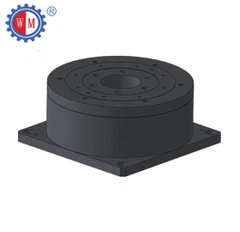
The Manual Xyr Stage offers movement in the X direction, rotation (r), and sometimes a bit of Y - like movement. The rotation part can have a unique speed range. You can rotate the stage at different speeds depending on how much rotation you need. For small, precise angular adjustments, you'll turn the rotation knob very slowly. But for larger rotations, you can increase the speed. The X movement on this stage follows a similar pattern to the other linear - movement stages, with a wide speed range for different types of positioning.
So, why does the speed range matter? Well, in industries where time is money, being able to quickly move the stage to a general position can save a lot of time. But at the same time, the ability to make those slow, precise adjustments is crucial for getting accurate results. For example, in a semiconductor manufacturing process, precise positioning of the stage is necessary to ensure the quality of the chips being made. And in a research lab, accurate positioning can mean the difference between a successful experiment and a failed one.
If you're in the market for Manual Multi - Axis Stages, understanding the speed range is just one part of the equation. You also need to consider factors like the stage's load capacity, resolution, and overall durability. But knowing the speed range can help you choose the right stage for your specific application.
We've got a wide range of Manual Multi - Axis Stages that offer excellent speed ranges and other great features. If you're interested in learning more about our products or have any questions regarding the speed range or other aspects of these stages, I'd love to have a chat with you. Whether you're a research institution looking for a high - precision stage or a manufacturing company needing a reliable positioning solution, we can help. Reach out to us to start a conversation about your requirements and see how we can meet your needs.
References
- Precision Motion Control Handbook
- Instrumentation and Automation Engineering Textbooks


