
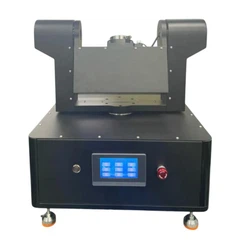
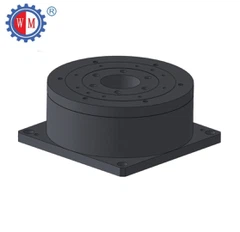
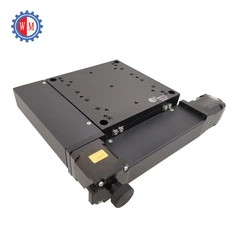
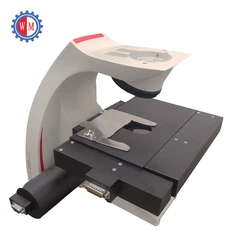
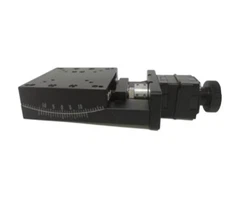
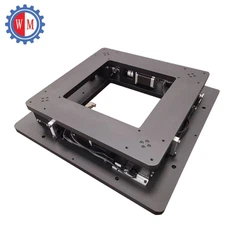
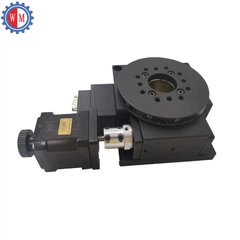
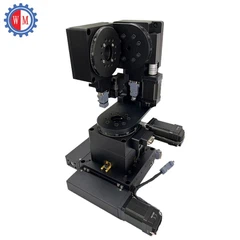
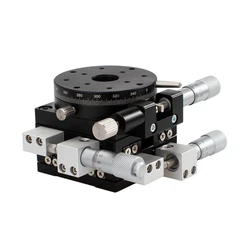
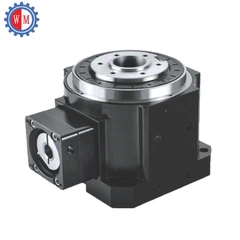


In the world of precision engineering and experimental setups, the manual rotary stage stands as a crucial component, enabling precise angular positioning for a wide range of applications. As a trusted supplier of Manual Rotating Stage, I've had the privilege of witnessing firsthand the significance of torsional stiffness in these devices. In this blog post, we'll delve into the concept of torsional stiffness, its importance in manual rotary stages, and how it impacts the performance of your experiments and projects.
Understanding Torsional Stiffness
Torsional stiffness is a fundamental property that describes a structure's resistance to twisting or angular deformation when subjected to a torque. In the context of a manual rotary stage, torsional stiffness refers to the stage's ability to maintain its angular position accurately under the influence of external forces or loads. It is a measure of how well the stage can resist deflection and ensure stable, precise rotation.
Mathematically, torsional stiffness (K) is defined as the ratio of the applied torque (T) to the resulting angular displacement (θ):
[ K = \frac{T}{\theta} ]
where K is the torsional stiffness in Nm/rad, T is the applied torque in Nm, and θ is the angular displacement in radians. A higher torsional stiffness value indicates that the stage can withstand larger torques with minimal angular deflection, resulting in more accurate and stable positioning.
Importance of Torsional Stiffness in Manual Rotary Stages
The torsional stiffness of a manual rotary stage plays a crucial role in determining its overall performance and suitability for various applications. Here are some key reasons why torsional stiffness is important:
1. Precision Positioning
In applications where precise angular positioning is required, such as microscopy, optical alignment, and semiconductor manufacturing, torsional stiffness is essential. A stage with high torsional stiffness can maintain its position accurately, even when subjected to small external forces or vibrations. This ensures that your samples or components are positioned precisely, leading to more accurate measurements and better experimental results.
2. Load Capacity
Manual rotary stages are often used to support heavy loads, such as cameras, lenses, or other optical components. A stage with high torsional stiffness can withstand these loads without significant deflection, ensuring that the angular position remains stable. This is particularly important in applications where the load is unevenly distributed or where there are dynamic forces acting on the stage.
3. Repeatability
Repeatability is a critical factor in many applications, especially those involving multiple measurements or alignments. A stage with high torsional stiffness can provide consistent and repeatable angular positioning, even after multiple rotations or when the load changes. This ensures that your experiments or processes can be replicated accurately, leading to more reliable results.
4. Vibration Resistance
In environments where there are vibrations or mechanical disturbances, such as in industrial settings or on moving platforms, torsional stiffness can help to reduce the effects of these vibrations on the stage's performance. A stage with high torsional stiffness can resist the vibrations and maintain its position, ensuring that your experiments or processes are not affected by external disturbances.
Factors Affecting Torsional Stiffness
The torsional stiffness of a manual rotary stage is influenced by several factors, including the design, materials, and manufacturing processes used. Here are some key factors that can affect torsional stiffness:
1. Design
The design of the manual rotary stage plays a significant role in determining its torsional stiffness. A well-designed stage will have a rigid structure that can resist twisting and deflection. This may include features such as a thick base plate, a robust bearing system, and a high-quality gear or worm drive mechanism.
2. Materials
The materials used in the construction of the manual rotary stage can also affect its torsional stiffness. High-strength materials, such as aluminum alloys or stainless steel, are often used to ensure that the stage is rigid and can withstand the applied loads. The choice of materials can also affect the weight of the stage, which can impact its performance in some applications.
3. Manufacturing Processes
The manufacturing processes used to produce the manual rotary stage can also have an impact on its torsional stiffness. Precision machining techniques, such as CNC milling and grinding, can ensure that the components of the stage are manufactured to high tolerances, resulting in a more rigid and accurate stage. Additionally, proper assembly and alignment of the components can also help to improve the torsional stiffness of the stage.
Measuring Torsional Stiffness
Measuring the torsional stiffness of a manual rotary stage can be a challenging task, as it requires specialized equipment and techniques. However, there are several methods that can be used to estimate the torsional stiffness of a stage, including:
1. Static Torque Testing
Static torque testing involves applying a known torque to the stage and measuring the resulting angular displacement. By measuring the torque and angular displacement, the torsional stiffness of the stage can be calculated using the formula mentioned earlier. This method is relatively simple and can provide a good estimate of the torsional stiffness of the stage.
2. Dynamic Testing
Dynamic testing involves applying a dynamic torque to the stage and measuring the resulting angular response. This method can provide more detailed information about the torsional stiffness of the stage, including its natural frequency and damping characteristics. Dynamic testing requires more specialized equipment and techniques, but it can provide a more accurate and comprehensive understanding of the stage's performance.
Choosing the Right Manual Rotary Stage Based on Torsional Stiffness
When choosing a manual rotary stage, it's important to consider the torsional stiffness of the stage, as it can have a significant impact on its performance in your application. Here are some factors to consider when choosing a stage based on torsional stiffness:


1. Application Requirements
The first step in choosing a manual rotary stage is to understand the requirements of your application. Consider the load capacity, precision requirements, and environmental conditions of your application to determine the appropriate torsional stiffness for your stage.
2. Stage Design and Construction
As mentioned earlier, the design and construction of the manual rotary stage can have a significant impact on its torsional stiffness. Look for a stage that has a rigid structure, high-quality materials, and precision machining to ensure that it has the necessary torsional stiffness for your application.
3. Manufacturer Reputation
When choosing a manual rotary stage, it's important to choose a reputable manufacturer that has a proven track record of producing high-quality stages. A reputable manufacturer will use the latest design and manufacturing techniques to ensure that their stages have the necessary torsional stiffness and performance characteristics.
Conclusion
In conclusion, torsional stiffness is a critical property that plays a crucial role in the performance of manual rotary stages. A stage with high torsional stiffness can provide precise positioning, high load capacity, repeatability, and vibration resistance, making it suitable for a wide range of applications. When choosing a manual rotary stage, it's important to consider the torsional stiffness of the stage, as well as other factors such as the design, materials, and manufacturer reputation.
If you're in the market for a manual rotary stage and need help choosing the right one for your application, please don't hesitate to contact us. Our team of experts can provide you with the information and support you need to make an informed decision. We offer a wide range of manual rotary stages with different torsional stiffness values to meet the needs of various applications. Contact us today to discuss your requirements and explore our product offerings.
References
- "Precision Positioning: The Next Generation" by Peter R. N. Childs
- "Mechanical Design Handbook" by Myer Kutz
- "Optical Engineering" by Joseph M. Geary


