


What materials are Manual X - Axis Stages usually made of?
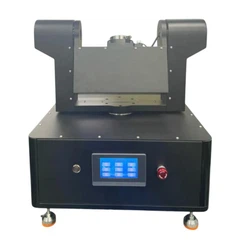
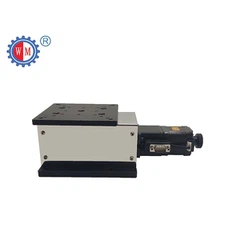
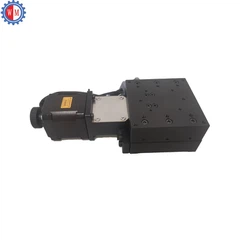
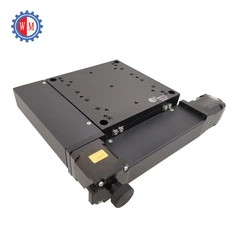
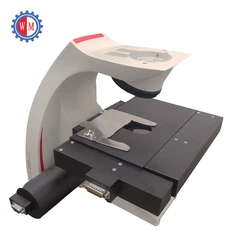
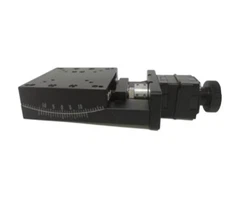
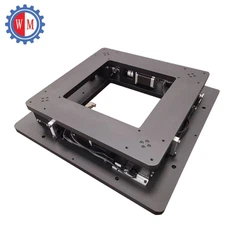
Hey there! As a supplier of Manual X - Axis Stages, I'm super excited to share with you all about the materials these nifty devices are usually made of. Manual X - Axis Stages, like the ones you can check out at Manual Linear Positioning Stage, Adjustable Manual Translation Platform, and Manual Adjustable Table, play a crucial role in various industries. So, let's dig into the materials that make them tick.


Aluminum
Aluminum is one of the most commonly used materials for Manual X - Axis Stages. Why? Well, it's got a bunch of great properties. First off, it's lightweight. This is a huge advantage, especially when you need to move the stage around a lot or if you're using it in a setup where weight is a concern. For example, in some precision optical setups, a lighter stage means less stress on the supporting structure and better overall stability.
Another awesome thing about aluminum is its corrosion resistance. It can withstand different environmental conditions without rusting or deteriorating quickly. This makes it suitable for use in both indoor and outdoor applications. Plus, aluminum is relatively easy to machine. Manufacturers can shape it into the complex designs required for Manual X - Axis Stages with relative ease. You can create smooth surfaces and precise features, which are essential for the accurate movement of the stage.
However, aluminum does have its limitations. It's not as strong as some other materials. In applications where the stage needs to support heavy loads, you might run into issues. But for most general - purpose and light - to medium - load applications, aluminum is a top - notch choice.
Stainless Steel
Stainless steel is another material that's often used in Manual X - Axis Stages. The main advantage of stainless steel is its strength. It can handle much heavier loads compared to aluminum. So, if you're working with large and heavy components in your setup, a stainless - steel stage is the way to go.
It also has excellent corrosion resistance, even better than aluminum in some cases. This makes it ideal for use in harsh environments, such as in chemical laboratories or industrial settings where there are corrosive substances present. Stainless steel can stand up to chemicals, moisture, and other elements without getting damaged easily.
On the downside, stainless steel is heavier than aluminum. This can be a drawback if you need a lightweight stage. Also, it's more expensive to machine. The manufacturing process for stainless - steel stages can be more complex and time - consuming, which drives up the cost. But if you need the strength and durability that stainless steel offers, the extra cost might be worth it.
Cast Iron
Cast iron is a traditional material that has been used in the manufacturing of precision equipment for a long time, and Manual X - Axis Stages are no exception. One of the key benefits of cast iron is its high damping capacity. This means it can absorb vibrations very well. In applications where vibration can affect the accuracy of the stage, like in some high - precision machining operations, cast iron is a great choice.
It also has good dimensional stability. Once a cast - iron stage is manufactured, its shape and size remain relatively constant over time, even under different temperature and humidity conditions. This is crucial for maintaining the accuracy of the stage's movement.
But cast iron is quite heavy. Moving a cast - iron stage around can be a real challenge. And like stainless steel, it can be expensive to machine. The rough surface finish of cast iron also needs to be carefully treated to ensure smooth movement of the stage components.
Plastic
Plastic might seem like an unlikely material for a Manual X - Axis Stage, but it actually has its uses. There are some high - performance plastics that are used in certain applications. One of the main advantages of plastic is its low cost. If you're on a tight budget and need a basic Manual X - Axis Stage for a simple project, a plastic stage can be a great option.
Plastic is also lightweight and can be easily molded into different shapes. This allows for quick and cost - effective production. Some plastics also have good electrical insulation properties, which can be useful in applications where electrical interference needs to be minimized.
However, plastic is not as strong or durable as metals. It can wear out more quickly, especially if it's subjected to a lot of friction or mechanical stress. So, it's typically used in light - duty and short - term applications.
Composite Materials
Composite materials are becoming more and more popular in the manufacturing of Manual X - Axis Stages. These materials are made by combining two or more different materials to get the best of both worlds. For example, a composite might combine the light weight of a plastic with the strength of a fiber material.
The advantage of composite materials is that they can be tailored to have specific properties. You can design a composite material to be lightweight, strong, and have good damping characteristics all at the same time. This makes them suitable for a wide range of applications.
But composite materials can be expensive to develop and manufacture. The process of creating a high - quality composite is often complex and requires specialized equipment and expertise.
So, when choosing a Manual X - Axis Stage, it's important to consider the material based on your specific application. Think about the load it needs to support, the environmental conditions it will be exposed to, and your budget.
If you're in the market for a Manual X - Axis Stage and want to learn more about the best material for your needs, or if you're ready to make a purchase, don't hesitate to reach out. We're here to help you find the perfect stage for your project.
References
- "Materials Science and Engineering: An Introduction" by William D. Callister Jr. and David G. Rethwisch
- Industry reports on precision motion control equipment materials


