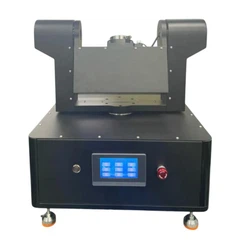
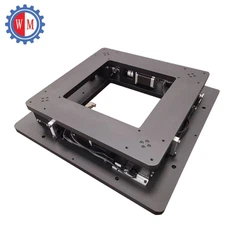
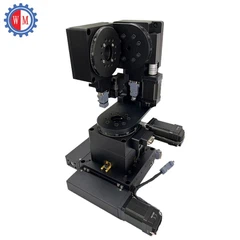
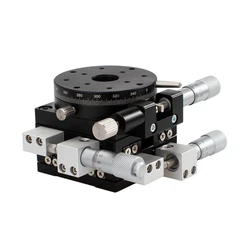
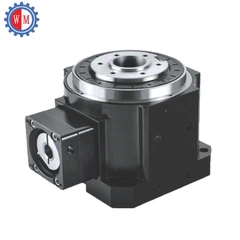
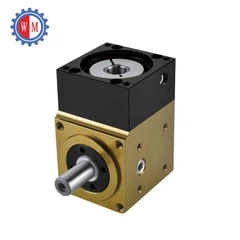
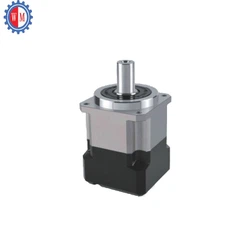


Hey there! As a supplier of Motorized Rotary Tables, I often get asked about the torsional rigidity of these nifty devices. So, let's dive right in and break it down in a way that's easy to understand.
First off, what exactly is torsional rigidity? Well, in simple terms, it's a measure of how much a structure resists twisting when a torque is applied to it. For a motorized rotary table, this is super important because it directly affects the table's performance and accuracy.
Think about it. When you're using a motorized rotary table, you're likely trying to position something with a high degree of precision. Whether it's in a manufacturing setting for machining parts or in a research lab for experimental setups, you need the table to rotate smoothly and hold its position accurately. If the torsional rigidity is low, the table might twist under the load, leading to inaccuracies in the positioning.
Let's take a closer look at why torsional rigidity matters so much. When a motor drives the rotary table, it applies a torque to make it rotate. This torque can cause the table to twist slightly, especially if the table is made of materials that aren't very rigid or if the design isn't optimized for torsional strength. Even a small amount of twisting can result in significant errors in the final position of the workpiece or the experimental apparatus.
For example, let's say you're using a Motorized Rotary Table to machine a complex part. You've programmed the table to rotate to a specific angle with a high level of precision. But if the table has low torsional rigidity, the twisting caused by the motor's torque might make the actual rotation angle different from the programmed one. This can lead to parts that don't fit together properly or don't meet the required specifications.
So, how do we measure torsional rigidity? There are a few different ways, but one common method is to apply a known torque to the table and measure the resulting angle of twist. The ratio of the applied torque to the angle of twist is called the torsional stiffness. A higher torsional stiffness means the table is more resistant to twisting and has better torsional rigidity.
Another factor that affects torsional rigidity is the design of the table. A well-designed motorized rotary table will have a structure that distributes the load evenly and minimizes the amount of twisting. This might involve using materials with high stiffness, such as steel or aluminum alloys, and optimizing the shape and thickness of the table components.
For instance, some motorized rotary tables have a solid, one-piece construction, which can provide better torsional rigidity compared to tables made up of multiple parts. Others might use reinforcement ribs or other structural features to increase the stiffness of the table.
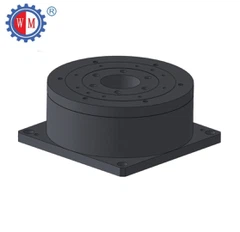
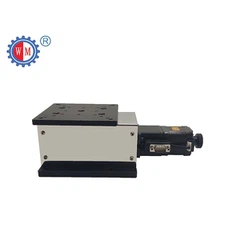
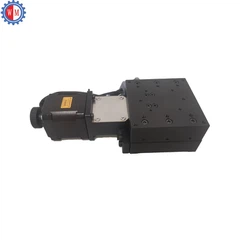
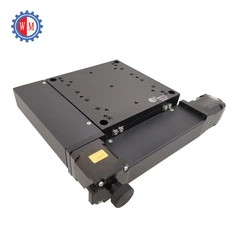
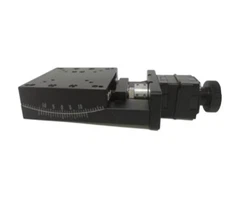
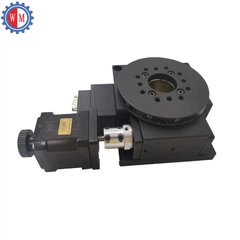
Now, let's talk about the different types of motorized rotary tables and how their torsional rigidity can vary. We have Motorized Rotation Stage with Stepper Motor and Servo Motor Rotary Stage.
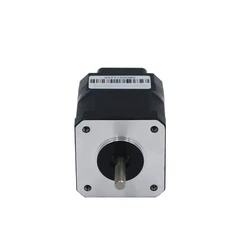
Stepper motor rotary stages are often used in applications where cost-effectiveness and simplicity are important. They work by moving in discrete steps, which can be controlled precisely. However, the torsional rigidity of a stepper motor rotary stage can be affected by the step size and the way the motor is controlled. If the step size is too large, it can cause the table to jerk and twist more, reducing the overall torsional rigidity.
On the other hand, servo motor rotary stages are known for their high precision and smooth operation. They use a feedback control system to continuously adjust the motor's position based on the actual position of the table. This can help to minimize the amount of twisting and improve the torsional rigidity. However, servo motor rotary stages are usually more expensive than stepper motor rotary stages.
As a supplier of motorized rotary tables, we understand the importance of torsional rigidity in our products. That's why we use high-quality materials and advanced manufacturing techniques to ensure that our tables have excellent torsional rigidity. We also offer a range of options to meet the specific needs of our customers, whether they're looking for a cost-effective stepper motor rotary stage or a high-precision servo motor rotary stage.
If you're in the market for a motorized rotary table and want to learn more about torsional rigidity or any other aspect of our products, don't hesitate to reach out to us. We're here to help you find the right solution for your application and ensure that you get the best performance and accuracy from your motorized rotary table.
In conclusion, torsional rigidity is a crucial factor to consider when choosing a motorized rotary table. It directly affects the table's performance and accuracy, and can have a significant impact on the quality of your work. By understanding the concept of torsional rigidity and how it's affected by factors such as materials, design, and motor type, you can make an informed decision when selecting a motorized rotary table for your needs.
So, if you're ready to take your precision positioning to the next level, get in touch with us today and let's start the conversation about finding the perfect motorized rotary table for you.
References:


- Mechanical Engineering textbooks on materials science and machine design
- Industry standards and guidelines for motorized rotary tables


