


As a supplier of Manual Goniometer Tables, I often encounter inquiries from customers regarding the minimum angle increment these devices can measure. This parameter is crucial for various applications, especially in fields that demand high - precision angular measurements. In this blog, we'll delve deep into understanding the minimum angle increment of Manual Goniometer Tables.
Understanding the Manual Goniometer Table
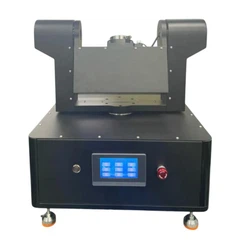
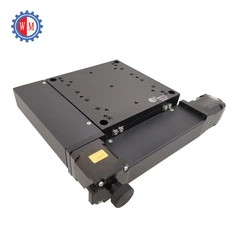
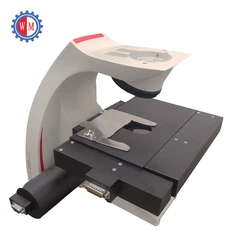
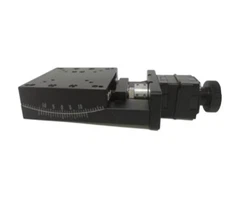
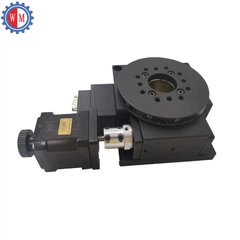
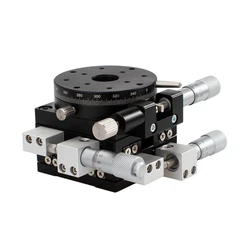
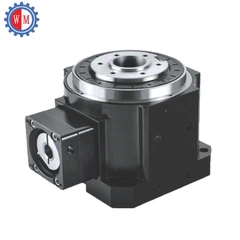
A Manual Goniometer Table is a precision instrument used to measure and set angles accurately. It finds extensive use in optical experiments, mechanical testing, and alignment procedures. The table usually consists of a rotating platform and a scale that indicates the angle of rotation.
The Manual Goniometer Stage is designed to provide users with a reliable means of making angular adjustments. Its manual operation allows for fine - tuning and immediate feedback, which is particularly useful in research and development settings where hands - on control is preferred.
Factors Affecting the Minimum Angle Increment
Scale Resolution
The scale on a Manual Goniometer Table is the most obvious factor influencing the minimum angle increment. The scale can be marked in degrees, minutes, and sometimes even seconds. A table with a scale marked in degrees may have a minimum increment of 1 degree, while a more precise table with markings in minutes (1 degree = 60 minutes) can measure down to 1 minute or even less.
For example, if a goniometer table has a scale with markings every 0.1 degrees, the minimum angle increment it can measure is 0.1 degrees. This resolution directly affects the accuracy of angle measurements and the level of precision that can be achieved in applications.
Mechanical Design
The mechanical design of the goniometer table also plays a significant role. The quality of the bearings, the smoothness of the rotation mechanism, and the stability of the platform all impact the minimum measurable angle increment.
A well - designed goniometer table with high - quality bearings will have less friction and backlash. Backlash is the amount of play or movement in the opposite direction when the direction of rotation is reversed. A table with low backlash can provide more accurate and consistent angle measurements, allowing for smaller minimum angle increments.
User Skill and Technique
The skill and technique of the user operating the Manual Goniometer Table can also affect the minimum angle increment that can be effectively measured. A skilled user who can precisely read the scale and make small adjustments to the table can achieve more accurate results.
For instance, a user who is experienced in using a goniometer table can estimate the position between scale markings more accurately, effectively reducing the practical minimum angle increment. However, this still depends on the inherent limitations of the table's scale and mechanical design.
Typical Minimum Angle Increments
In general, the minimum angle increment of Manual Goniometer Tables can vary widely depending on the model and its intended application.
Entry - level Manual Goniometer Tables may have a minimum angle increment of 1 degree. These tables are suitable for applications where a relatively low level of precision is required, such as basic educational experiments or rough alignment tasks.
Mid - range Manual Goniometer Tables often offer a minimum angle increment of 0.1 degrees or 6 minutes. These tables are commonly used in industrial quality control, where a moderate level of precision is needed for checking the angles of components.
High - precision Manual Goniometer Tables can achieve a minimum angle increment of 0.01 degrees (or 0.6 minutes) or even less. These tables are used in advanced research, such as in optical laboratories for aligning lasers or in semiconductor manufacturing for precise wafer alignment.
The Pitch Yaw Roll Manual Tilt Stage and Angle Increment
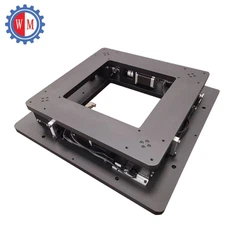
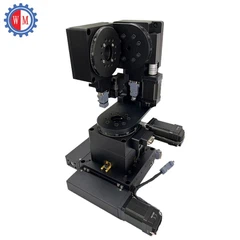
The Pitch Yaw Roll Manual Tilt Stage is a specialized type of Manual Goniometer Table that allows for adjustments in multiple axes (pitch, yaw, and roll). The minimum angle increment in each of these axes is crucial for applications that require precise orientation control.
In a Pitch Yaw Roll Manual Tilt Stage, the minimum angle increment can vary between axes. For example, the pitch and yaw axes may have a minimum increment of 0.05 degrees, while the roll axis, due to its different mechanical design and usage requirements, may have a slightly larger or smaller increment.
This stage is often used in applications such as camera alignment, where precise control of the orientation of the camera in multiple directions is necessary to capture high - quality images.


Importance of Minimum Angle Increment in Applications
Optical Applications
In optical applications, such as in the alignment of optical components like lenses and mirrors, the minimum angle increment of a goniometer table is of utmost importance. Even a small misalignment can cause significant losses in light transmission or distortion of the optical beam.
For example, in a laser system, a misalignment of just a fraction of a degree can result in the laser beam missing its target or causing interference patterns. Therefore, a Manual Goniometer Table with a small minimum angle increment is essential for achieving accurate alignment and optimal performance of the optical system.
Mechanical Testing
In mechanical testing, goniometer tables are used to measure the angles of mechanical components under stress or load. A precise minimum angle increment is required to accurately determine the deformation and strain of the components.
For instance, in the testing of aerospace components, even a small change in the angle of a part can indicate potential structural weaknesses. A Manual Goniometer Table with a high - precision minimum angle increment can help detect these small changes and ensure the safety and reliability of the components.
Selecting the Right Manual Goniometer Table Based on Minimum Angle Increment
When selecting a Manual Goniometer Table, it is crucial to consider the minimum angle increment required for your specific application.
If you are working on a basic educational project or a task that only requires a rough estimate of angles, an entry - level table with a 1 - degree minimum increment may be sufficient. However, if you are involved in high - precision research or industrial applications, you should opt for a table with a much smaller minimum angle increment, such as 0.01 degrees or less.
It is also important to consider other factors such as the size of the table, the range of angles it can cover, and the overall build quality. A well - built table with a suitable minimum angle increment will provide more accurate and reliable results over time.
Conclusion
The minimum angle increment that a Manual Goniometer Table can measure is a critical parameter that depends on various factors, including scale resolution, mechanical design, and user skill. Different applications require different levels of precision, and selecting the right goniometer table based on the minimum angle increment is essential for achieving accurate results.
As a supplier of Manual Goniometer Tables, we offer a wide range of products with different minimum angle increments to meet the diverse needs of our customers. Whether you are conducting basic experiments or advanced research, we have the right solution for you. If you are interested in learning more about our Manual Goniometer Tables or have specific requirements for your project, please contact us for procurement and further discussions.
References
- Optics Handbook: A comprehensive guide to optical components and their alignment, which provides insights into the importance of angle measurement precision in optical applications.
- Mechanical Testing Standards: Documents that outline the requirements for angle measurement in mechanical testing procedures.
- Goniometer Table Manufacturer's Manuals: These manuals provide detailed information about the specifications and performance of different goniometer table models.


