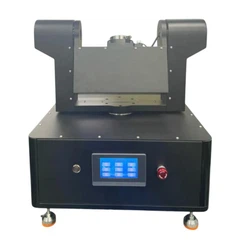
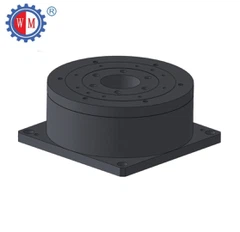
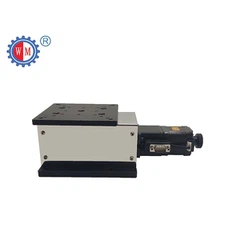
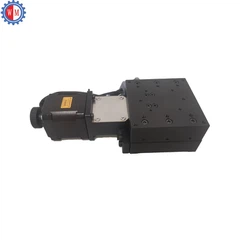
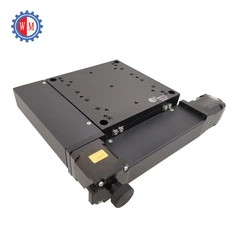
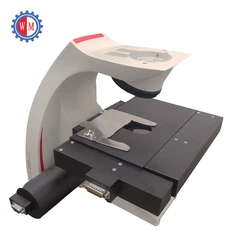
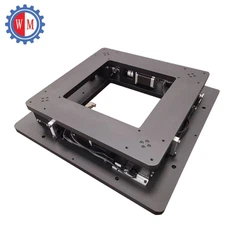
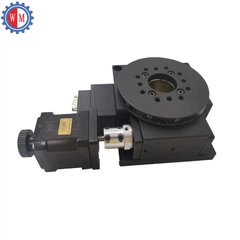
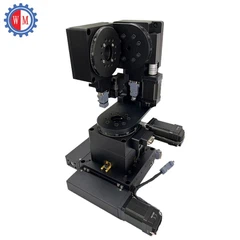
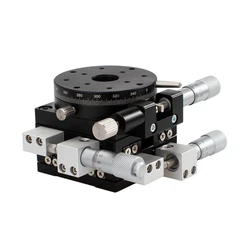
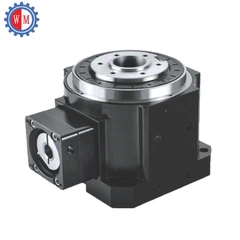
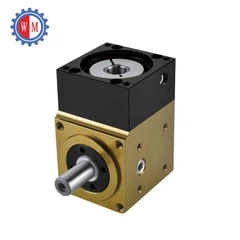
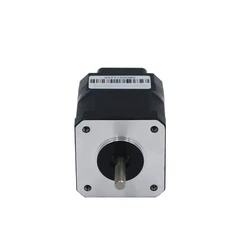


Integrated Motor Drives (IMDs) have emerged as a revolutionary technology in the field of industrial automation and motor control. As a leading supplier of Integrated Motor Drives, I've witnessed firsthand the diverse range of industries that benefit from this advanced technology. In this blog post, I'll explore the industries that commonly use Integrated Motor Drives and highlight some of our key products, such as the Modbus RS485 Stepper Driver for Nema 23 and Programmable Modbus RS485 Motor Drive.
Manufacturing Industry
The manufacturing industry is one of the primary users of Integrated Motor Drives. In manufacturing plants, precision and efficiency are crucial for mass - producing high - quality products. IMDs offer a compact and integrated solution that combines the motor and drive into a single unit, reducing the overall footprint of the equipment.
In conveyor systems, for example, Integrated Motor Drives can provide precise speed control, ensuring that products move smoothly along the production line. This helps to prevent bottlenecks and improve the overall throughput of the manufacturing process. The ability to easily program the drive also allows for quick adjustments to the conveyor speed based on the production requirements.
In robotic arms used in assembly operations, IMDs offer high - torque performance and accurate positioning. The integrated design reduces the wiring complexity and improves the reliability of the robotic system. Our Programmable Modbus RS485 Motor Drive can be programmed to control the movement of the robotic arm with high precision, enabling it to perform delicate assembly tasks.
Packaging Industry
The packaging industry demands high - speed and accurate operation to meet the market's needs. Integrated Motor Drives play a vital role in this industry by providing the necessary control and performance.
In filling machines, IMDs can precisely control the flow rate and the amount of product being filled into containers. This ensures consistent filling levels and reduces product waste. The integrated design also allows for easy integration with other components of the filling machine, such as sensors and valves.
Labeling machines also benefit from Integrated Motor Drives. They can control the movement of the labeling heads with high accuracy, ensuring that labels are applied correctly and neatly on the products. Our Modbus RS485 Stepper Driver for Nema 23 is well - suited for these applications, providing precise step control for the motor driving the labeling mechanism.
Printing Industry
In the printing industry, high - quality prints require precise control of the printing equipment. Integrated Motor Drives are used in various printing machines, including offset printers, digital printers, and flexographic printers.
In offset printers, IMDs control the movement of the printing plates, paper feeders, and inking systems. Precise speed and position control are essential to ensure accurate registration of colors and sharp images. The integrated design of the drives reduces the risk of mechanical failures and improves the overall reliability of the printing process.
Digital printers, which are becoming increasingly popular, also rely on Integrated Motor Drives for accurate movement of the print heads and paper handling. The ability to quickly adjust the speed and position of the print heads allows for high - speed printing without sacrificing quality.
Food and Beverage Industry
The food and beverage industry has strict requirements for hygiene, safety, and efficiency. Integrated Motor Drives are well - suited for this industry due to their compact design and ease of cleaning.
In food processing equipment, such as mixers and grinders, IMDs can provide variable speed control to achieve the desired consistency of the food products. The integrated design also reduces the risk of contamination, as there are fewer exposed wires and components.
In beverage filling and bottling lines, IMDs ensure accurate filling levels and smooth operation of the conveyor systems. They can be programmed to handle different bottle sizes and filling volumes, providing flexibility for the production process.
Automotive Industry
The automotive industry is at the forefront of technological innovation, and Integrated Motor Drives are widely used in various applications.
In automotive manufacturing plants, IMDs are used in robotic welding systems, paint spraying robots, and assembly lines. The high - torque and precise control capabilities of the drives are essential for performing complex tasks with high accuracy.
In electric vehicles (EVs), Integrated Motor Drives are used to control the traction motors. They play a crucial role in optimizing the power consumption and performance of the EVs. The compact design of the IMDs also helps to save space in the vehicle, which is a critical factor in EV design.
Medical Industry
The medical industry has very high standards for precision, reliability, and safety. Integrated Motor Drives are used in a variety of medical equipment, such as diagnostic imaging machines, surgical robots, and infusion pumps.
In diagnostic imaging machines, such as CT scanners and MRI machines, IMDs provide precise movement control of the patient table and the imaging components. This ensures accurate image acquisition and reduces the risk of patient discomfort.


Surgical robots rely on Integrated Motor Drives for precise movement and positioning of the surgical instruments. The high - precision control capabilities of the drives allow surgeons to perform minimally invasive surgeries with greater accuracy.
Infusion pumps use IMDs to control the flow rate of medications and fluids. The ability to precisely control the flow rate is crucial for patient safety and effective treatment.
Agriculture Industry
The agriculture industry is increasingly adopting advanced technologies to improve productivity and efficiency. Integrated Motor Drives are used in agricultural machinery, such as irrigation systems, harvesting equipment, and greenhouse climate control systems.
In irrigation systems, IMDs can control the water flow rate and pressure, ensuring that crops receive the right amount of water. This helps to conserve water and improve crop yields. The ability to program the drives based on the specific irrigation requirements of different crops and soil conditions is a significant advantage.
In harvesting equipment, such as combine harvesters, IMDs provide precise control of the cutting and threshing mechanisms. This improves the efficiency of the harvesting process and reduces grain losses.
Conclusion
Integrated Motor Drives have become an essential component in a wide range of industries. Their compact design, high - performance capabilities, and ease of programming make them a popular choice for various applications. As a supplier of Integrated Motor Drives, we are committed to providing high - quality products, such as the Modbus RS485 Stepper Driver for Nema 23 and Programmable Modbus RS485 Motor Drive, to meet the diverse needs of our customers.
If you are looking for reliable and high - performance Integrated Motor Drives for your industry, we invite you to contact us for a detailed discussion about your requirements. Our team of experts will be happy to assist you in finding the best solution for your specific application.
References
- ASME (American Society of Mechanical Engineers). "Automation and Control in Industrial Applications."
- IEEE (Institute of Electrical and Electronics Engineers). "Motor Control Technologies for Modern Industries."
- Packaging Machinery Manufacturers Institute (PMMI). "Advances in Packaging Equipment Technology."


