
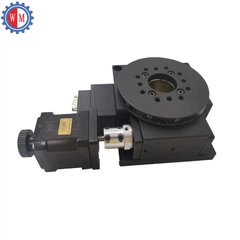
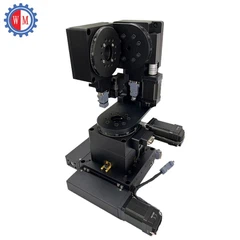
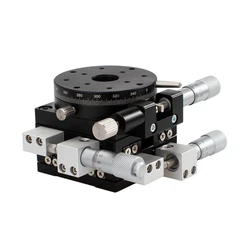
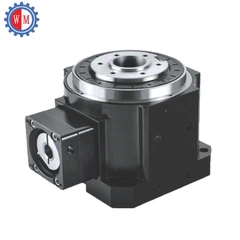
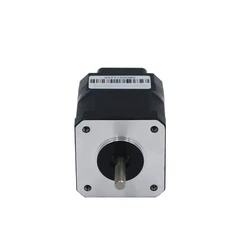


As a supplier of Integrated Stepper Motors, I'm often asked about the stringent requirements these motors must meet for aerospace applications. The aerospace industry is one of the most demanding sectors, where precision, reliability, and performance are non-negotiable. In this blog, I'll delve into the strict requirements for an Integrated Stepper Motor in aerospace applications, highlighting why these motors are crucial and what makes them suitable for such high - stakes environments.
Precision and Accuracy
In aerospace applications, precision is of the utmost importance. Integrated Stepper Motors are used in various systems, such as flight control surfaces, antenna positioning, and robotic arms in spacecraft. These motors must provide extremely accurate and repeatable motion. A small error in positioning can lead to significant problems, such as misaligned antennas resulting in poor communication or inaccurate flight control leading to flight instability.
For example, in a satellite's antenna positioning system, the motor needs to position the antenna with sub - degree accuracy. This level of precision requires the motor to have a high step resolution. Our Modbus RS485 Integrated Motor is designed to offer high step resolutions, which can be further enhanced through micro - stepping techniques. Micro - stepping divides each full step into smaller sub - steps, allowing for smoother and more precise motion control.
High Torque - to - Inertia Ratio
Aerospace systems often require motors to move heavy or large - inertia loads quickly and efficiently. The Integrated Stepper Motor must have a high torque - to - inertia ratio. A high torque - to - inertia ratio means that the motor can accelerate and decelerate the load rapidly, which is essential for applications like retracting and extending landing gear or adjusting the position of large solar panels on a spacecraft.
Our motors are engineered to optimize this ratio. By using advanced magnetic materials and innovative motor designs, we can increase the torque output while keeping the motor's inertia low. This enables the motor to respond quickly to control signals and move the load with minimal delay.
Reliability and Durability
Reliability is perhaps the most critical requirement for aerospace applications. Once a spacecraft is launched or an aircraft is in flight, it's often not possible to perform maintenance or replace faulty components easily. Therefore, Integrated Stepper Motors must be highly reliable and durable.
These motors need to withstand extreme temperatures, radiation, and vibration. In space, temperatures can range from extremely cold in the shadow of a planet to very hot when exposed to direct sunlight. Radiation from the sun and cosmic rays can damage electronic components, while vibration during launch and orbiting can cause mechanical failures.
Our CAN Bus Control Integrated Stepper Motor is built with high - quality materials and advanced manufacturing processes to ensure long - term reliability. The electronic components are shielded against radiation, and the mechanical structure is designed to withstand high - frequency vibrations. Additionally, the motor's electrical insulation is optimized to prevent breakdowns under extreme temperature conditions.
Low Power Consumption
In aerospace, power is a precious resource. Spacecraft and aircraft have limited power generation capabilities, so every component, including the Integrated Stepper Motor, must consume as little power as possible. Low - power operation not only extends the battery life or reduces the demand on the power generation system but also helps to minimize heat dissipation, which is crucial in the confined and sensitive environment of aerospace systems.
Our motors are designed with energy - efficient algorithms and power management techniques. For instance, the motor can automatically adjust its power consumption based on the load and the required speed. When the load is light or the motor is idle, it can enter a low - power mode, significantly reducing the overall power consumption.
Closed - Loop Control Capability
Closed - loop control is becoming increasingly important in aerospace applications. A closed - loop system uses feedback sensors to monitor the motor's actual position and speed and compares it with the desired values. If there is a deviation, the control system can adjust the motor's input to correct the error.
Our Closed Loop Stepper Integrated Motor features a closed - loop control system that provides enhanced accuracy and stability. This is particularly useful in applications where external factors, such as changes in load or temperature, can affect the motor's performance. The closed - loop control ensures that the motor maintains the desired position and speed, even under challenging conditions.
Compact Size and Lightweight
Space and weight are at a premium in aerospace vehicles. Integrated Stepper Motors must be compact and lightweight without sacrificing performance. A smaller and lighter motor takes up less space, which can be used for other critical components, and reduces the overall weight of the vehicle, improving fuel efficiency and flight performance.


Our design team focuses on optimizing the motor's size and weight while maintaining its functionality. We use lightweight materials and advanced miniaturization techniques to create motors that are both compact and powerful. For example, the use of rare - earth magnets allows us to achieve high torque output in a smaller package.
Compatibility with Aerospace Systems
The Integrated Stepper Motor must be compatible with the overall aerospace system. This includes compatibility with the communication protocols used in the vehicle, such as CAN bus or Modbus RS485. The motor should also be able to interface with the control systems and sensors in the aerospace system seamlessly.
Our motors are designed to support a wide range of communication protocols, ensuring easy integration into different aerospace platforms. They can work in harmony with other components, such as sensors and actuators, to provide a complete and reliable motion control solution.
EMC and EMI Compliance
Electromagnetic compatibility (EMC) and electromagnetic interference (EMI) are significant concerns in aerospace applications. The high - speed switching of the motor's electronics can generate electromagnetic interference, which can disrupt the operation of other sensitive electronic components in the vehicle. Therefore, the Integrated Stepper Motor must comply with strict EMC and EMI standards.
We implement various techniques to reduce electromagnetic interference, such as proper grounding, shielding, and the use of filtering components. Our motors are tested to meet international EMC and EMI standards, ensuring that they can operate safely and without causing interference to other systems in the aerospace vehicle.
In conclusion, the requirements for an Integrated Stepper Motor in aerospace applications are extremely strict. From precision and reliability to power consumption and compatibility, every aspect of the motor's design and performance must be optimized to meet the demands of this challenging industry. As a supplier, we are committed to providing high - quality Integrated Stepper Motors that meet these stringent requirements.
If you are in the aerospace industry and are in need of reliable and high - performance Integrated Stepper Motors, please feel free to contact us for procurement and further discussions. We are ready to offer you the best solutions tailored to your specific needs.
References
- "Aerospace Motion Control Systems: Design and Applications"
- "Stepper Motor Technology: Principles and Practice"
- "Electromagnetic Compatibility in Aerospace Systems"


