
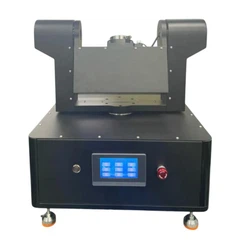
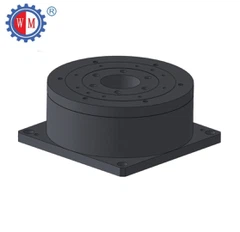
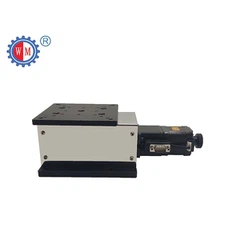
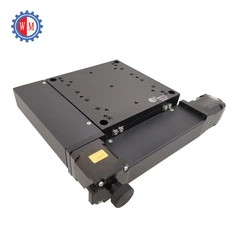
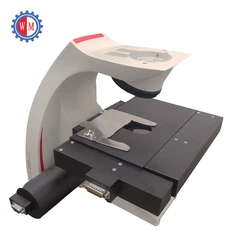
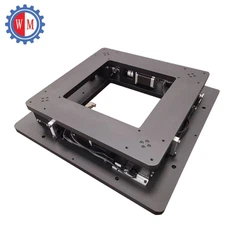
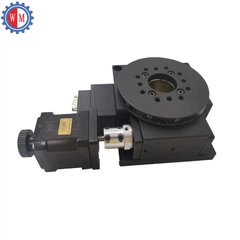
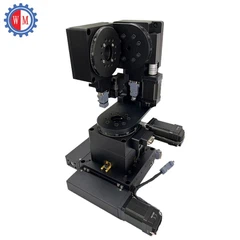
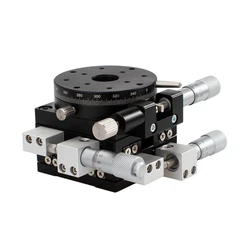
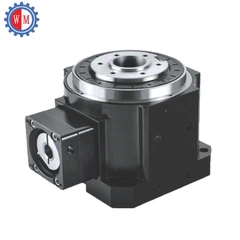


As a leading supplier of Hollow Rotary Tables, I've had the privilege of witnessing firsthand the diverse applications and the critical role these precision components play in modern industrial machinery. One of the most frequently asked questions by our clients is about the protection levels of a Hollow Rotary Table. In this blog, I'll delve into the different protection levels, their significance, and how they impact the performance and longevity of these essential devices.
Understanding Protection Levels
Protection levels for Hollow Rotary Tables are typically defined by international standards, most notably the Ingress Protection (IP) code. The IP code is an alphanumeric rating system that indicates the degree of protection provided by an enclosure against the intrusion of solid objects (such as dust) and liquids (such as water). The code consists of two digits, with the first digit representing protection against solids and the second digit representing protection against liquids.
First Digit: Protection Against Solids
- 0: No protection against solid objects. This level is rarely used for industrial applications as it offers no safeguard against dust or other debris, which can cause significant damage to the internal components of a Hollow Rotary Table.
- 1: Protection against solid objects larger than 50mm. This level is suitable for environments where there is minimal risk of large objects entering the enclosure, but it does not provide protection against smaller particles.
- 2: Protection against solid objects larger than 12mm. This level can prevent fingers or other small objects from entering the enclosure, which is important for safety reasons in some applications.
- 3: Protection against solid objects larger than 2.5mm. This level is commonly used in industrial settings where there may be some dust or small debris present, but the risk of larger objects entering the enclosure is low.
- 4: Protection against solid objects larger than 1mm. This level provides a high degree of protection against small particles, making it suitable for environments with moderate levels of dust.
- 5: Dust - protected. While not completely dust - tight, this level ensures that the ingress of dust is not sufficient to cause harmful effects on the operation of the Hollow Rotary Table.
- 6: Dust - tight. This is the highest level of protection against solid objects, ensuring that no dust can enter the enclosure. It is ideal for environments with high levels of dust, such as mining or construction sites.
Second Digit: Protection Against Liquids
- 0: No protection against liquids. This level is not suitable for environments where there is any risk of liquid ingress, as it offers no safeguard against water or other fluids.
- 1: Protection against vertically falling drops of water. This level is suitable for indoor environments where there is minimal risk of water splashing onto the enclosure.
- 2: Protection against vertically falling drops of water when the enclosure is tilted up to 15°. This level provides a slightly higher degree of protection against water drops, which may be useful in some applications where the Hollow Rotary Table may be installed at a slight angle.
- 3: Protection against spraying water. This level can withstand water sprayed at an angle of up to 60° from the vertical, making it suitable for environments where there may be some water splashing or light spraying.
- 4: Protection against splashing water. This level provides protection against water splashing from any direction, which is important in industrial settings where there may be water used for cleaning or cooling purposes.
- 5: Protection against water jets. This level can withstand water projected by a nozzle from any direction, making it suitable for environments where there may be high - pressure water cleaning or fire - fighting systems nearby.
- 6: Protection against powerful water jets. This level provides a higher degree of protection against water jets, ensuring that the Hollow Rotary Table can operate safely in harsh environments with high - pressure water sources.
- 7: Protection against the effects of temporary immersion in water. This level is suitable for applications where the Hollow Rotary Table may be temporarily submerged in water, such as in some marine or underwater applications.
- 8: Protection against continuous immersion in water under specified conditions. This is the highest level of protection against liquids, ensuring that the Hollow Rotary Table can operate safely in fully submerged environments.
Importance of Protection Levels
The protection level of a Hollow Rotary Table is crucial for several reasons. Firstly, it directly impacts the reliability and longevity of the device. In a dusty or wet environment, if the protection level is not sufficient, dust or water can enter the enclosure and cause damage to the internal components, such as the bearings, gears, and motors. This can lead to increased wear and tear, reduced performance, and ultimately, premature failure of the Hollow Rotary Table.
Secondly, the protection level is also important for safety reasons. In some applications, such as in the food and beverage industry or in medical equipment, a high level of protection against dust and liquids is necessary to prevent contamination and ensure the safety of the end - users.


Finally, choosing the appropriate protection level can also help to reduce maintenance costs. A Hollow Rotary Table with a higher protection level is less likely to require frequent cleaning and maintenance, which can save both time and money in the long run.
Selecting the Right Protection Level
When selecting a Hollow Rotary Table, it is essential to consider the specific operating environment. For example, if the table will be used in a cleanroom environment, a high - level dust - tight protection (IP6X) may be required. On the other hand, if the table will be installed outdoors or in a wet environment, a high - level protection against liquids (IPX7 or IPX8) may be necessary.
Our company offers a wide range of Hollow Rotary Tables with different protection levels to meet the diverse needs of our clients. For instance, our 4th and 5th Axis Rotary Table is available in various IP ratings, allowing you to choose the level of protection that best suits your application. Our High Speed Hollow Rotary Table is also designed to withstand different environmental conditions, with options for both dust and water protection. Additionally, our Closed Loop Control Hollow Rotary Actuator can be customized with the appropriate protection level to ensure optimal performance in your specific environment.
Conclusion
In conclusion, understanding the protection levels of a Hollow Rotary Table is essential for ensuring its reliable operation and longevity. By choosing the right protection level based on the specific operating environment, you can protect your investment and minimize the risk of downtime and maintenance costs.
If you are in the market for a Hollow Rotary Table and need assistance in selecting the appropriate protection level for your application, please do not hesitate to contact us. Our team of experts is ready to provide you with personalized advice and help you find the perfect solution for your needs. We look forward to working with you to meet your industrial automation requirements.
References
- International Electrotechnical Commission (IEC) 60529 - Degrees of protection provided by enclosures (IP Code)
- Manufacturer's specifications and technical documentation for Hollow Rotary Tables


