
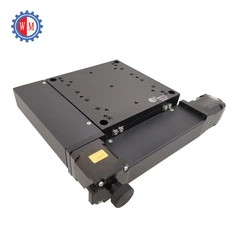
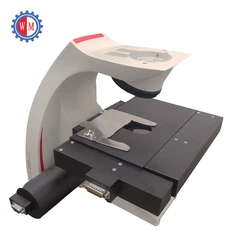
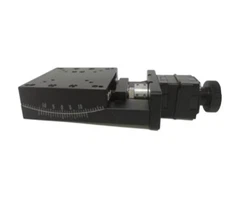
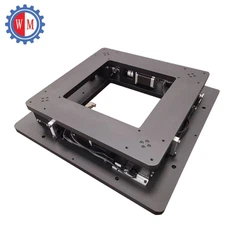
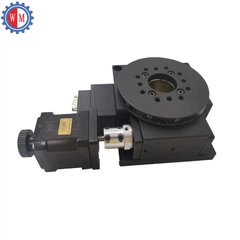
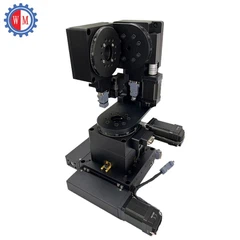
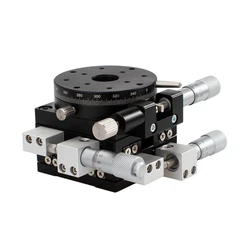
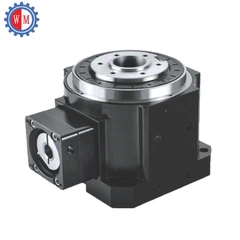


Manual stages are fundamental tools in various scientific, industrial, and research applications, offering precise positioning and movement control. As a supplier of manual stages, I've witnessed firsthand the diverse challenges that users often encounter. In this blog, I'll delve into the common problems associated with manual stages, providing insights based on my experience in the industry.
1. Precision and Repeatability Issues
One of the primary expectations from a manual stage is the ability to achieve accurate and repeatable positioning. However, several factors can compromise these critical aspects.
Wear and Tear
Over time, the mechanical components of a manual stage, such as the lead screws, gears, and bearings, are subject to wear. This wear can lead to increased backlash, which is the play or clearance between the mating parts. Backlash causes a delay or inconsistency in the movement of the stage when the direction of travel is reversed. For example, when you turn the adjustment knob in one direction and then quickly reverse it, the stage may not immediately move in the opposite direction due to the backlash. This can significantly affect the precision of positioning, especially in applications where fine adjustments are crucial, like microscopy or optical alignment.
Manufacturing Tolerances
Even during the manufacturing process, there are inherent tolerances in the production of manual stage components. These tolerances can accumulate and result in variations in the actual movement of the stage compared to the intended specifications. For instance, if the lead screw has a slightly irregular pitch or the gears have minor deviations in their tooth profiles, it can lead to non - linear movement and reduced repeatability. This is particularly problematic in applications where precise and consistent positioning is required, such as in semiconductor manufacturing or laser processing.
Environmental Factors
Environmental conditions can also have a significant impact on the precision and repeatability of manual stages. Temperature fluctuations, for example, can cause thermal expansion or contraction of the stage components. This can lead to changes in the dimensions of the stage, affecting the accuracy of positioning. Humidity can also cause corrosion of the metal components, which can further degrade the performance of the stage over time. Vibration and mechanical shock from the surrounding environment can also disrupt the positioning of the stage, making it difficult to achieve and maintain the desired precision.
2. Smoothness of Movement
Another common issue with manual stages is the lack of smooth movement. A smooth - moving stage is essential for accurate and controlled positioning.
Friction and Lubrication
Friction between the moving parts of a manual stage can impede smooth movement. Insufficient lubrication can exacerbate this problem, causing the stage to stick or jerk during operation. This is often the case in older stages or those that have been used in harsh environments. For example, if the stage is used in a dusty or dirty environment, the dust particles can accumulate on the moving parts and increase friction. On the other hand, over - lubrication can also be a problem, as it can attract dirt and debris, leading to clogs and reduced performance.
Mechanical Binding
Mechanical binding can occur when the components of the stage are not properly aligned or assembled. This can cause the stage to resist movement in certain directions or at specific positions. For example, if the linear guides are not parallel or the lead screw is misaligned, the stage may experience binding, making it difficult to move smoothly. This can also lead to increased wear on the components and reduced overall lifespan of the stage.
3. Limited Range of Motion
In some applications, the range of motion provided by a manual stage may be insufficient.
Design Constraints
The design of the manual stage can limit its range of motion. Some stages are designed with compact dimensions to fit into specific setups, which may result in a shorter travel distance. For example, in a space - constrained optical setup, a manual stage with a limited range of motion may be used to save space. However, this can be a problem if the application requires a larger range of movement, such as in large - scale imaging or scanning applications.
Mounting and Compatibility
The way the manual stage is mounted and its compatibility with other equipment can also affect its range of motion. If the stage is mounted in a way that restricts its movement or if it is not compatible with the other components in the system, it may not be able to achieve its full range of motion. For example, if the mounting brackets are too tight or if the stage is not properly aligned with the other equipment, it can limit the movement of the stage.
4. Ease of Use
The ease of use of a manual stage is an important consideration, especially for users who need to make frequent adjustments.
Knob Design
The design of the adjustment knobs can significantly impact the ease of use of a manual stage. If the knobs are too small or difficult to grip, it can be challenging to make precise adjustments. On the other hand, if the knobs are too large, they may take up too much space and be cumbersome to operate. Additionally, the feel and resistance of the knobs can affect the user experience. A knob that is too loose or too tight can make it difficult to control the movement of the stage accurately.
Accessibility
The accessibility of the adjustment mechanisms is also crucial. In some setups, the manual stage may be located in a hard - to - reach area, making it difficult for the user to access the adjustment knobs. This can be a problem, especially in applications where quick adjustments are required. For example, in a complex optical system, if the manual stage is hidden behind other components, it can be time - consuming and frustrating for the user to make the necessary adjustments.
5. Durability and Reliability
Manual stages are often used in demanding environments, and their durability and reliability are essential for long - term performance.
Material Quality
The quality of the materials used in the construction of the manual stage can significantly affect its durability. Low - quality materials may be more prone to wear, corrosion, and damage. For example, if the stage is made of a soft metal, it may be easily scratched or dented, which can affect its performance. On the other hand, high - quality materials, such as stainless steel or aluminum, can provide better resistance to wear and corrosion, ensuring a longer lifespan for the stage.
Maintenance Requirements
The maintenance requirements of a manual stage can also impact its reliability. Some stages may require frequent lubrication, cleaning, or adjustment to maintain optimal performance. If the user fails to perform these maintenance tasks, the stage may experience problems such as reduced precision, smoothness of movement, or even mechanical failure. For example, if the stage is not lubricated regularly, the friction between the moving parts can increase, leading to premature wear and damage.

Solutions and Recommendations
While these problems are common, there are several solutions and recommendations that can help mitigate them.
Regular Maintenance
Regular maintenance is crucial for ensuring the optimal performance of manual stages. This includes cleaning the stage regularly to remove dust and debris, lubricating the moving parts as recommended by the manufacturer, and checking for any signs of wear or damage. By performing these maintenance tasks, you can extend the lifespan of the stage and maintain its precision and smoothness of movement.
Upgrading Components
In some cases, upgrading the components of the manual stage can improve its performance. For example, replacing the lead screw with a higher - precision one or upgrading the bearings can reduce backlash and improve the smoothness of movement. Additionally, using high - quality materials for the stage construction can enhance its durability and reliability.
Environmental Control
Controlling the environmental conditions in which the manual stage is used can also help improve its performance. This includes maintaining a stable temperature and humidity level, reducing vibration and mechanical shock, and protecting the stage from dust and debris. For example, using a dust cover or installing the stage in a cleanroom environment can prevent the accumulation of dirt and debris on the stage components.
Choosing the Right Stage
When selecting a manual stage, it's important to consider your specific application requirements. This includes the required precision, range of motion, ease of use, and durability. By choosing the right stage for your application, you can minimize the potential problems and ensure optimal performance. For example, if you need a stage with high precision and smooth movement, you may consider a stage with a high - quality lead screw and linear guides. If you need a stage for use in a harsh environment, you may choose a stage made of corrosion - resistant materials.
Conclusion
As a supplier of manual stages, I understand the importance of addressing the common problems associated with these products. By being aware of these issues and implementing the appropriate solutions, users can ensure the optimal performance of their manual stages. Whether you are using a manual stage for scientific research, industrial applications, or any other purpose, it's essential to choose a high - quality stage and take proper care of it.
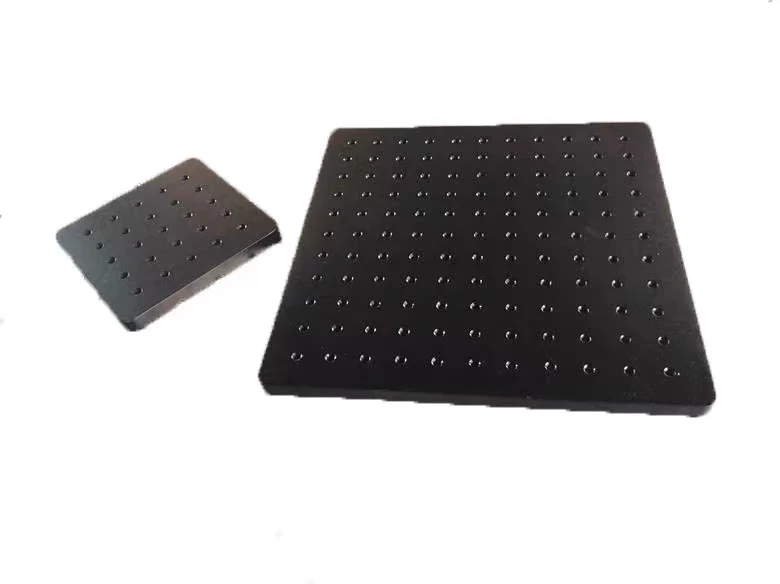
If you are facing any problems with your manual stage or are looking to purchase a new one, I encourage you to contact us for more information and to discuss your specific requirements. We have a wide range of manual stages available, including those with Aluminum Optical Breadboard, which can meet the diverse needs of our customers. Our team of experts is always ready to assist you in finding the right solution for your application.
References
- Smith, J. (2018). Precision Engineering Handbook. New York: Wiley.
- Jones, A. (2019). Handbook of Mechanical Components. London: Elsevier.
- Brown, C. (2020). Environmental Factors in Precision Instrumentation. Berlin: Springer.


